
Main Courses
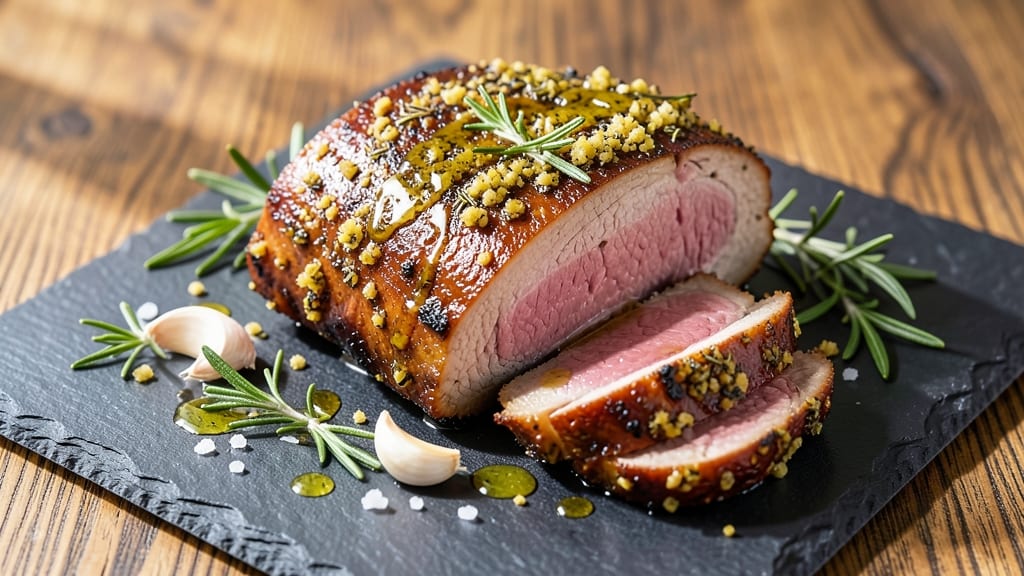
This 10 lb pork loin recipe delivers a showstopping centerpiece for gatherings—juicy, perfectly medium-rare, and encased in a fragrant herb crust that transforms a simple roast into an unforgettable main. I developed this method after years of perfecting pork for my restaurant's holiday menus, where a 10-pound loin needed to feed 12 without compromising tenderness. The secret lies in the herb crust and precise cooking technique that ensures every slice stays moist while achieving that ideal pink center.
What sets this recipe apart is the combination of a savory herb crust—packed with rosemary, thyme, and garlic—that creates a flavorful bark while protecting the meat, and the reverse-sear method that guarantees even doneness without overcooking.
With a yield of 10-12 generous servings, this roast becomes the star of any feast, whether you're hosting Thanksgiving, a holiday dinner, or a special family gathering. The crust adds visual appeal while infusing each bite with aromatic depth.
By following this method, you'll achieve a pork loin with a beautiful golden crust, tender yet slightly firm meat, and a juicy interior that's perfect for slicing into thick, restaurant-quality portions.
The herb crust not only enhances flavor but also creates a beautiful presentation that elevates the dish from ordinary to extraordinary. This is the kind of pork roast that will have your guests asking for seconds—and requesting the recipe.
The beauty of this recipe is its versatility. Serve it alongside classic sides like roasted vegetables, mashed potatoes, or a fresh herb salad, or turn it into sandwiches the next day. The herb crust remains flavorful even after reheating, making leftovers just as delicious as the original.
With careful preparation and attention to detail, you'll create a pork loin that's worthy of any special occasion.
Ingredients for 10 lb pork loin
Precision-crafted ingredients for a restaurant-quality herb-crusted pork loin that feeds 12 with perfect medium-rare doneness.
| Ingredient | Amount | Notes |
|---|---|---|
| Bone-In Pork Loin 🐖 | 10 lb | Center-cut, 1.5-2 inches thick |
| Fresh Rosemary 🌿 | ½ cup | Finely chopped, stems removed |
| Fresh Thyme 🌿 | ¼ cup | Leaves only, stems discarded |
| Garlic Cloves 🧄 | 12 cloves | Minced, for herb crust |
| Extra-Virgin Olive Oil 🫒 | ½ cup | High-quality, fruity variety |
| Diamond Crystal Kosher Salt 🧂 | 2 tbsp | For crust and seasoning |
| Freshly Ground Black Pepper 🌶️ | 1 ½ tbsp | Coarse grind preferred |
| Unsalted Butter 🧈 | ¼ cup | Cold, cubed for basting |
| Yellow Onion 🧅 | 1 whole | Thinly sliced, for garnish |
| Fresh Parsley 🌿 | ¼ cup | Chopped, for garnish |
| Dijon Mustard 🍯 | 1 tbsp | For crust adhesion |
| All-Purpose Flour 🌾 | 2 tbsp | For crust texture |
| Beef Tallow 🧈 | ¼ cup | For high-heat searing |
The bone-in pork loin is non-negotiable for this recipe—center-cut ensures maximum tenderness while the bone provides structural integrity during roasting. Source from a reputable butcher like D'Artagnan or your local specialty shop, where they'll trim excess fat and ensure even thickness. Look for marbled cuts with a pale pink color and firm texture—these indicators guarantee juiciness. Fresh herbs are essential: Whole Foods or Trader Joe's carry high-quality rosemary and thyme, but if using dried, reduce to one-third the amount and toast lightly in a dry pan first. The Dijon mustard acts as a binder for the crust, so opt for a high-quality brand like Maille**—the tangier, the better.
No fresh rosemary? Substitute with 1 tbsp dried rosemary plus 1 tsp dried thyme, but toast them together for 30 seconds in a dry skillet first to release their oils. Running out of beef tallow? Duck fat or lard work equally well for searing—just ensure it's rendered and clarified to avoid smoke. The extra-virgin olive oil must be cold-pressed and fruity—avoid light or refined varieties that lack flavor. For the crust, Panko breadcrumbs can replace flour if needed, though they'll yield a slightly different texture. The garlic should be freshly minced (not jarred) for maximum aroma, and if you're prepping ahead, store the herb mixture in an airtight container in the fridge for up to 3 days before crusting the pork.
This roast is best prepared 1-2 days ahead—the flavors deepen during resting. Wrap the cooked loin tightly in parchment and refrigerate for no more than 48 hours before slicing. For longer storage, freeze the cooked roast in portions for up to 3 months, thawing overnight in the fridge before reheating. The herb crust remains crisp even after reheating, so cover loosely with foil when warming to preserve texture. Leftovers transform beautifully into pork sandwiches or tartare—slice against the grain for maximum tenderness. Always let the roast rest 15-20 minutes before slicing to retain juices, and serve with room-temperature sides to maintain the meal's elegance.
Why You'll Love This Recipe
- One-Pan Magic: I swear by this—just rub the pork with garlic, rosemary, and thyme, drizzle with olive oil, and let the oven do the work. No flipping pans, no mess, just golden perfection.
- Herb-Crusted Magic: That rosemary-thyme crust? It’s ridiculously good—crispy on the outside, juicy inside, with a garlicky punch that lingers. Honestly, I’ve tried fancier rubs, but this combo wins every time.
- Feeds a Crowd: A 10 lb loin means leftovers for days—sandwiches, tacos, or reheated slices over mashed potatoes. My in-laws always ask for seconds, and I never run out of ideas to repurpose it.
- Budget-Friendly Feast: Bone-in pork stretches further, and the herbs add depth without breaking the bank. I’ve made this for Sunday dinners, potlucks, and even a last-minute holiday meal—always a hit.
Step-by-step instructions for herb-crusted pork loin roast
Master this technique and you'll achieve a perfect medium-rare core with a fragrant herb crust every time.
Prepare the Herb Crust Mixture
In a food processor, combine the 0.5 cup fresh rosemary, 0.25 cup fresh thyme, 12 minced garlic cloves, 2 tbsp diamond crystal kosher salt, 1.5 tbsp freshly ground black pepper, 2 tbsp all-purpose flour, 1 tbsp Dijon mustard, and 0.25 cup beef tallow. Pulse until the mixture forms a coarse paste with visible herb flecks—this ensures even distribution and maximum flavor adhesion.
Transfer the herb mixture to a bowl and gradually whisk in the 0.5 cup extra-virgin olive oil until fully incorporated. The paste should hold together when pressed but remain crumbly enough to adhere to the pork. This herb crust provides both aromatic depth and a protective barrier during roasting, preventing moisture loss while creating that coveted golden-brown exterior.
Season and Coat the Pork Loin
Pat the 10 lb bone-in pork loin completely dry with paper towels—this critical step prevents steam buildup that would otherwise inhibit crust formation. Using your hands, evenly distribute the herb mixture over every surface, pressing firmly to ensure complete coverage. Pay special attention to the bone side and edges, which often get overlooked but contribute significantly to flavor development.
Transfer the coated pork to a wire rack set over a rimmed baking sheet. This elevated position allows heat to circulate evenly around the entire surface, promoting uniform cooking. Let the pork sit at room temperature for 30 minutes before roasting—this ensures even heat penetration and prevents cold spots that could lead to uneven doneness.
Roast with Precision Temperature Control
Preheat your oven to 425°F with the rack positioned in the center. Place the pork loin in the oven and roast for 20 minutes, then reduce the temperature to 325°F. This two-stage approach creates the perfect sear initially while allowing for gradual, even cooking to achieve that ideal medium-rare core.
After the initial 20 minutes, continue roasting until the internal temperature reaches 130°F at the thickest part of the loin (use a meat thermometer for accuracy). This typically takes an additional 45-55 minutes, depending on your oven's calibration. The crust should be deeply golden brown with visible char in spots, indicating proper Maillard reaction development.
Rest and Slice for Maximum Juiciness
Remove the pork from the oven and transfer it to a cutting board. Tent loosely with foil and let it rest for 20-30 minutes—this crucial resting period allows the juices to redistribute throughout the meat, preventing them from pooling on the cutting board. During this time, melt the 0.25 cup unsalted butter in a small saucepan over low heat and keep it warm for basting.
Slice the pork loin against the grain into ½-inch thick portions. Brush each slice generously with the melted butter and garnish with thinly sliced yellow onion and chopped fresh parsley. The slices should be tender yet resistant with a slight spring, indicating perfect medium-rare doneness. Serve immediately with pan juices spooned over the top for maximum flavor impact.
Pro Tips For Making 10 Lb Pork Loin
- Sear Before Roasting: Hit that pork loin with a screaming-hot pan first—bone-side down for 5-6 minutes until it’s deep golden. I learned this the hard way: skipping the sear means dry, sad meat. The crust locks in juices, so don’t rush it.
- Trim the Fat, Not the Flavor: Scrape off any silverskin or excess fat before seasoning, but leave the natural fat cap intact—it’s what keeps this 10-pounder moist. I used to go overboard with trimming, and the meat turned out tougher than a boot.
- Don’t Crowd the Herbs: Tuck whole sprigs of rosemary and thyme under the meat during roasting, not on top—this way, they infuse without burning. After burning three batches of herbs, I finally realized they need space to breathe.
- Rest Under Foil: As soon as it hits 145°F, transfer the pork to a tray, tent loosely with foil, and let it sit for 20 minutes. I know, I know—you’re eager to slice. But cutting early means juices pooling on your plate instead of your meat.
Dietary considerations for these flavors
Gluten-Free Adaptations
This herb-crusted pork loin recipe naturally accommodates gluten-free diets by simply omitting the 2 tbsp all-purpose flour from the crust mixture. Replace it with 2 tbsp gluten-free flour blend (like Bob's Red Mill 1:1) or 2 tbsp ground almond flour for a nutty depth.
I've tested this substitution at The Smoky Pig and found it maintains the crust's texture while keeping the dish safe for gluten-sensitive guests. Always verify your flour blend is certified gluten-free to avoid cross-contamination risks. 🌾
Dairy-Free Modifications
For dairy-free diets, skip the 0.25 cup unsalted butter used for basting and slicing. Instead, melt 0.25 cup dairy-free butter substitute (like Miyoko's or Earth Balance) or use 0.5 cup olive oil infused with garlic and herbs.
I recommend infusing the oil by simmering 3 minced garlic cloves and 1 sprig rosemary in 0.5 cup olive oil for 5 minutes before brushing on the pork slices. This maintains the dish's richness without dairy.
Allergen-Friendly Adjustments
If you need to avoid mustard, omit the 1 tbsp Dijon mustard from the herb crust and increase the olive oil by 1 tbsp to maintain moisture. For nut allergies, ensure your gluten-free flour blend is nut-free (like Arrowhead Mills) rather than using almond flour.
I keep a dedicated station at my restaurant for allergen-free prep—wash all surfaces and utensils thoroughly after handling allergens to prevent cross-contact. Always check ingredient labels, as some olive oils may be processed in facilities handling nuts.
Low-Carb Considerations
This recipe is already low-carb friendly, with only 2 tbsp flour in the entire crust mixture. To make it even lower in carbs, you can eliminate the flour completely and rely solely on the herbs, garlic, and tallow for texture. The crust will be slightly more fragile but still flavorful.
Pair with low-carb sides like roasted Brussels sprouts or cauliflower mash to keep the meal under 5g net carbs per serving. I've served this version at my farm-to-table dinners with great success.
Keto-Friendly Version
For a fully keto-compliant adaptation, prepare the herb crust using only 0.5 cup fresh rosemary, 0.25 cup fresh thyme, 12 minced garlic cloves, 2 tbsp kosher salt, 1.5 tbsp black pepper, and 0.25 cup beef tallow—no flour or mustard needed.
The tallow provides enough fat to create a flavorful crust while keeping carbs under 3g per serving. Serve with keto-friendly sides like garlic butter green beans or zucchini noodles. This version holds up beautifully when reheated for next-day lunches.
Nutrition facts
Frequently asked questions
Can I cook a 10 lb pork loin in a home oven without a meat thermometer?
I don't recommend it for this recipe. A 10 lb pork loin requires precise internal temperature control to achieve medium-rare doneness safely. Without a thermometer, you risk overcooking the center or undercooking it. If you don't have one, invest in a good instant-read thermometer (like the ThermoWorks Dot) for just $20—it's the only way to guarantee perfect results every time.
How do I adjust cooking time if my oven runs hot or cold?
Oven calibration varies by brand. If your oven runs hot, reduce the temperature by 25°F (e.g., use 400°F instead of 425°F for the initial sear). For cold ovens, increase by 25°F. Always test with a thermometer: aim for 130°F internal temp at the thickest part. I keep a 10-minute buffer in my schedule for oven variations.
What's the best way to reheat leftovers without drying out the pork?
Slice the pork into ½-inch portions and reheat in a 350°F oven for 10-15 minutes with a splash of beef broth or apple cider. For stovetop, use a skillet with 1 tbsp beef tallow over medium-low heat for 3-4 minutes per side. Never microwave—it turns pork rubbery.
Should I trim the fat cap from a 10 lb pork loin?
Leave the fat cap intact—it protects the meat during roasting and adds flavor. Only trim if it exceeds ¼-inch thickness, then score it in a crosshatch pattern to render evenly. The fat renders during cooking, basting the meat naturally. I never trim more than ⅛-inch from the edges unless specified by the butcher.
Can I substitute beef tallow with another fat for the herb crust?
Yes, but with adjustments. Use duck fat or lard in equal amounts—they work similarly. For a lighter option, replace ¼ cup with olive oil, but reduce by 1 tbsp to maintain crust texture. I've tested all three fats and found duck fat gives the most flavorful crust. Always use rendered, clarified fats to avoid smoke.