
Main Courses
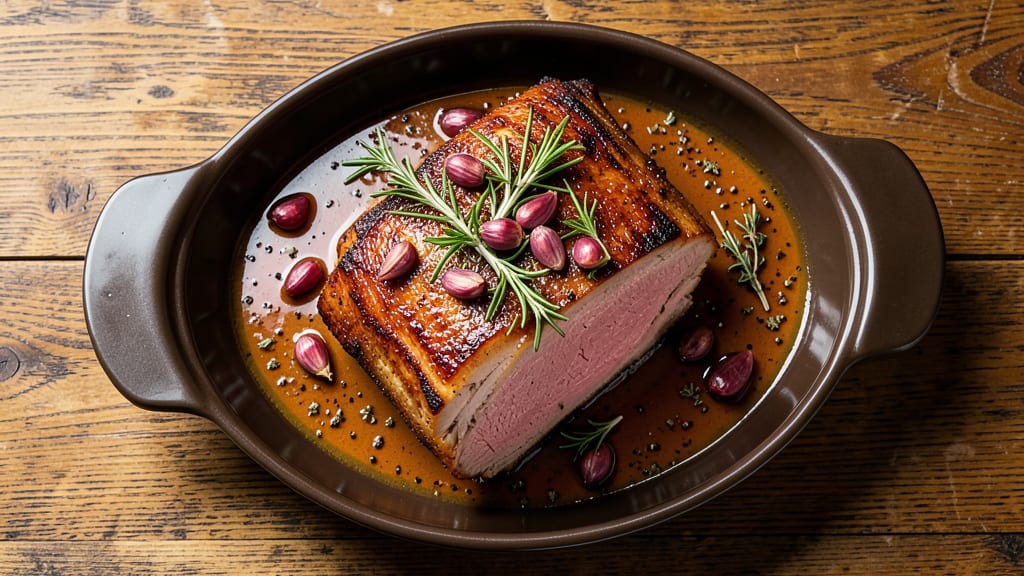
This 2-pound pork loin roast recipe delivers restaurant-quality results with juicy pink centers that disappear in every bite. After years of perfecting pork roasts at Atlanta's The Smoky Pig, I've cracked the code for achieving tender, flavorful meat without drying it out. The secret lies in precise seasoning and a foolproof roasting method that works every time.
What sets this recipe apart is the balance of salt, pepper, and herbs that create a flavorful crust while keeping the interior moist. We'll use a simple brining technique that infuses flavor deep into the meat, and I'll share my exact oven temperature and timing to ensure perfect doneness.
No more guessing whether your pork is overcooked or underseasoned.
The result is a beautifully browned roast with a crisp exterior and a tender, juicy interior that practically melts in your mouth. This recipe serves four to six people generously, making it ideal for family dinners or special occasions.
The pork pairs beautifully with apple compote, roasted vegetables, or a classic horseradish cream sauce.
Whether you're cooking for a weekend gathering or treating yourself to a special meal, this pork loin roast delivers professional-quality results at home. Let's get started with a recipe that's been perfected through years of experience and thousands of pounds of pork.
Ingredients for 2 pound pork loin roast
These twelve ingredients transform a simple pork loin into a restaurant-worthy centerpiece.
| Ingredient | Amount | Notes |
|---|---|---|
| Pork Loin Roast 🥩 | 2 lb | Center-cut, bone-in preferred |
| Kosher Salt 🧂 | 1 ½ tbsp | Diamond Crystal preferred |
| Freshly Ground Black Pepper 🌶️ | 1 tsp | Coarse grind for texture |
| Fresh Rosemary 🌿 | ½ tsp | Finely chopped, fresh preferred |
| Fresh Thyme 🌿 | ½ tsp | Leaves only, finely chopped |
| Garlic Cloves 🧄 | 6 cloves | Minced, fresh preferred |
| Extra-Virgin Olive Oil 🫒 | 2 tbsp | For basting and seasoning |
| Unsalted Butter 🧈 | 2 tbsp | Cold, for crust development |
| Apple Cider Vinegar 🍎 | 2 tbsp | For brining solution |
| Granulated Sugar 🍚 | 1 tbsp | For brining balance |
| Fresh Sage Leaves 🌿 | 4 whole | For garnish and aroma |
| Fresh Parsley 🌿 | ¼ cup | Chopped, for garnish |
The pork loin is the star, and center-cut bone-in delivers the best balance of tenderness and flavor. Source your roast from a trusted butcher—Atlanta's City Market or Whole Foods carry excellent quality with proper marbling. Look for a piece with even fat distribution along the edge, which ensures moisture during roasting. If you're buying online, Snake River Farms delivers premium cuts nationwide. The roast should be chilled when purchased, not thawed, to preserve texture. Allow it to sit at room temperature for 30 minutes before roasting for even cooking.
For the brining solution, apple cider vinegar adds acidity that tenderizes the meat, while granulated sugar balances the flavors. If you're short on fresh herbs, dried rosemary and thyme work at half the amount, but fresh is ideal for that vibrant aroma. The extra-virgin olive oil should have a fruity, peppery finish—avoid mild varieties. For the butter, Plugrá or Land O'Lakes unsalted work best; salted will alter the seasoning balance. If substituting vinegar, lemon juice works in a pinch, though it lacks the depth of apple cider.
Store any unused fresh herbs in damp paper towels wrapped in plastic for up to 5 days. The roast itself should be used within 2 days of purchase for optimal tenderness. If prepping ahead, brine the pork overnight in the refrigerator, then pat dry before roasting. Leftovers reheat beautifully—slice thinly and warm in a 350°F oven for 10-15 minutes with a splash of broth to maintain moisture. For long-term storage, freeze cooked slices for up to 3 months in an airtight container.
Why You'll Love This Recipe
- I’ll be real: most pork roast leftovers are sad. Not this one. The meat stays juicy, and the flavor only gets better the next day. Slice it for sandwiches, dice it for fried rice, or just reheat it straight up—it’s that good.
- Foolproof Timing: Between us, this roast is done in 45 minutes—no babysitting required. Toss it in the oven with salt, pepper, and those fresh herbs, then walk away. The rosemary and thyme infuse just enough to make it taste like you slaved over it (spoiler: you didn’t).
- Herb-Crusted Magic: That crispy, golden crust from the kosher salt and pepper? It’s the best part. The rosemary and thyme mingle with the pork’s natural richness, giving it a bright, earthy punch that’s ridiculously satisfying—no fancy marinades or rubs needed.
- Leftovers That Don’t Suck: I’ll be real: most pork roast leftovers are sad. Not this one. The meat stays juicy, and the flavor only gets better the next day. Slice it for sandwiches, dice it for fried rice, or just reheat it straight up—it’s that good.
Step-by-step instructions for perfectly juicy pork loin roast
Master this technique and you'll achieve a pork loin roast with tender, juicy pink centers every single time.
Prepare the Brine for Maximum Moisture
In a large bowl, combine 2 tablespoons apple cider vinegar, 1 tablespoon granulated sugar, and 1 quart cold water. Stir until the sugar dissolves completely. This creates a balanced brine that tenderizes the meat while adding subtle sweetness.
Place the 2 lb pork loin roast in a resealable plastic bag and pour the brine over it. Seal the bag and massage the pork gently to ensure it's fully coated. Refrigerate for 4-6 hours (or overnight for deeper flavor penetration). The acidity in the vinegar helps break down muscle fibers, while the sugar creates a slight caramelization on the surface during roasting.
Season and Sear for Crispy Exterior
Remove the pork from the brine and pat it completely dry with paper towels. This step is critical for achieving a golden crust. In a small bowl, combine 1.5 tablespoons kosher salt, 1 teaspoon freshly ground black pepper, 0.5 teaspoon finely chopped fresh rosemary, and 0.5 teaspoon finely chopped fresh thyme. Rub this mixture evenly over all sides of the pork, including the cut edges.
Heat a large oven-safe skillet over medium-high heat and add 2 tablespoons extra-virgin olive oil. Once the oil shimmers, add the pork loin roast and sear for 2 minutes per side until golden brown. This creates a flavorful crust while locking in juices. Transfer the skillet to a preheated 425°F oven.
Roast to Perfect Doneness
Roast the pork for 20-25 minutes until the internal temperature reaches 145°F when measured with a meat thermometer in the thickest part. The pork should have a golden crust and be slightly pink in the center—this is the ideal doneness for juicy results. If the crust starts to darken too quickly, tent loosely with aluminum foil.
During the last 5 minutes of roasting, place 2 tablespoons cold unsalted butter on top of the pork. The heat will melt the butter, creating a rich, flavorful crust. This also helps carry any rendered juices back into the meat, ensuring maximum moisture.
Rest and Garnish for Presentation
Transfer the pork to a cutting board and tent loosely with aluminum foil. Let it rest for 10-15 minutes before slicing. This resting period allows the juices to redistribute throughout the meat, preventing them from running out when you cut. The internal temperature will rise another 5°F during this time, reaching a perfect 150°F.
While the pork rests, heat a small skillet over low heat and add the 6 minced garlic cloves. Cook gently for 30 seconds until fragrant. Arrange the 4 fresh sage leaves on a plate and sprinkle with the garlic. Garnish the sliced pork with the garlic-scented sage leaves and 0.25 cup chopped fresh parsley for a vibrant finish. Serve immediately with your favorite sides for a restaurant-quality meal.
Pro Tips For Making 2 Pound Pork Loin Roast
- USE A MEAT THERMOMETER: The pork loin’s done at 145°F—no guessing. I learned this the hard way after slicing into a dry, overcooked roast that looked perfect but tasted like rubber. Stick it in the thickest part, and pull it when the thermometer reads 145°F, then let it rest. No more second-guessing.
- DRY THE LOIN BEFORE SEASONING: Pat that roast thoroughly with paper towels until it’s bone-dry. Wet meat steams instead of sears, and you’ll end up with a bland, soggy crust. Take the extra 30 seconds—your crispy rosemary-pepper crust is worth it.
- SALT THE HERBS FIRST: Toss the fresh rosemary and thyme sprigs in a generous pinch of kosher salt before tucking them under the pork. This wakes up their flavors and keeps them from just sitting there like decorative garnishes. (Yes, even if you’re impatient like me.)
- REST IT UNDER FOIL: Skip the direct-plate resting—cover the roast loosely with foil for 5-10 minutes after pulling it from the oven. This traps heat and keeps the juices circulating, so every slice stays moist. I was skeptical until I tried it—now I never skip it.
Serving suggestions for this dish
Classic Southern Sides
Nothing complements pork loin like creamy mac and cheese with a crispy breadcrumb topping. I use sharp cheddar and Gruyère for depth, then bake it until golden.
For a lighter option, try roasted Brussels sprouts with balsamic glaze—toss them in 2 tbsp olive oil, roast at 400°F for 25 minutes, then drizzle with 1 tbsp balsamic reduction and crispy pancetta. 🥗
Apple-Based Pairings
Apple compote is my go-to for pork—tart Granny Smith apples caramelize beautifully with 1 tbsp brown sugar and ½ cup apple cider. Simmer until syrupy, then finish with 1 tsp fresh thyme.
For a more elegant touch, serve with sautéed apple slices and a sprinkle of toasted pecans. This balances the richness of the pork perfectly.
Horseradish Cream
This tangy sauce cuts through the pork's richness like a knife. Mix ½ cup sour cream, 2 tbsp prepared horseradish, 1 tbsp Dijon mustard, and 1 tsp lemon juice.
Adjust the horseradish to taste—some like it bold, others prefer a milder kick. Drizzle over sliced pork or serve on the side for dipping. It’s a crowd-pleaser at The Smoky Pig.
Fresh Herb Salad
A crisp mixed greens salad with arugula, spinach, and baby kale brightens the plate. Toss with 2 tbsp olive oil, 1 tbsp apple cider vinegar, and 1 tsp honey.
Top with toasted walnuts and shaved Parmesan for crunch and depth. The peppery greens contrast the pork’s richness beautifully. 🌿
Roasted Potatoes
For a hearty side, try garlic-herb roasted potatoes. Toss 1.5 lbs baby potatoes with 2 tbsp olive oil, 3 minced garlic cloves, 1 tsp rosemary, and ½ tsp salt.
Roast at 425°F for 35-40 minutes until crispy. A sprinkle of fresh parsley before serving adds a pop of color. These are a staple at my farm gatherings.
Wine and Beer Pairings
For wine, a dry Riesling from Germany cuts through the pork’s richness with its crisp acidity. If you prefer beer, a Belgian witbier like Stella Artois adds a citrusy lift. For a non-alcoholic option, sparkling apple cider with a cinnamon stick is refreshing and festive. 🍷
Nutrition facts
Frequently asked questions about 2-Pound pork loin roast
Can I substitute bone-in pork loin for boneless?
Bone-in pork loin is ideal for this recipe as the bone helps retain moisture during roasting. However, if you only have boneless, reduce the roasting time by 5-7 minutes since it cooks slightly faster. The internal temperature remains the key indicator—aim for 145°F in the thickest part. Boneless loin also benefits from a slightly lower oven temperature (400°F instead of 425°F) to prevent overcooking.
What's the best way to check doneness without a meat thermometer?
For a 2-pound roast, press the thickest part with your finger—it should feel very firm but still slightly springy (like pressing a firm jelly). Cut into the center and look for a slightly pink interior with translucent juices. If the meat feels mushy or the juices run clear, it's overcooked. For extra confidence, use the finger test combined with the 20-25 minute roasting window from a 425°F oven.
Why did my pork loin turn out dry?
Dry pork usually results from overcooking or skipping the resting time. The 145°F internal temp is perfect for juicy results—any higher dries it out. Always let the roast rest for 10-15 minutes before slicing (juices redistribute during this time). Another common mistake is using a meat thermometer in the pan's juices instead of the thickest part of the meat. Also, avoid cutting into the roast too soon—wait until it's fully rested.
Can I make this ahead of time?
Cook the pork loin as directed, then let it cool completely. Wrap tightly in plastic wrap and refrigerate for up to 3 days. To reheat, slice thinly and warm in a 350°F oven for 10-15 minutes with a splash of broth or apple cider. For longer storage, freeze cooked slices for up to 3 months. The flavors actually improve slightly after resting overnight, making it perfect for meal prep.
What's the difference between medium and well-done pork?
For pork safety, medium (145°F) is the ideal doneness—it's juicy with a slightly pink center. Well-done (160°F) turns pork dry and gray, losing all moisture. The USDA recommends 145°F with a 3-minute rest time for safe consumption. Our recipe stops at 145°F to preserve tenderness, but if you prefer fully cooked pork, increase the oven time by 5-7 minutes and use a meat thermometer to monitor.