
Main Courses
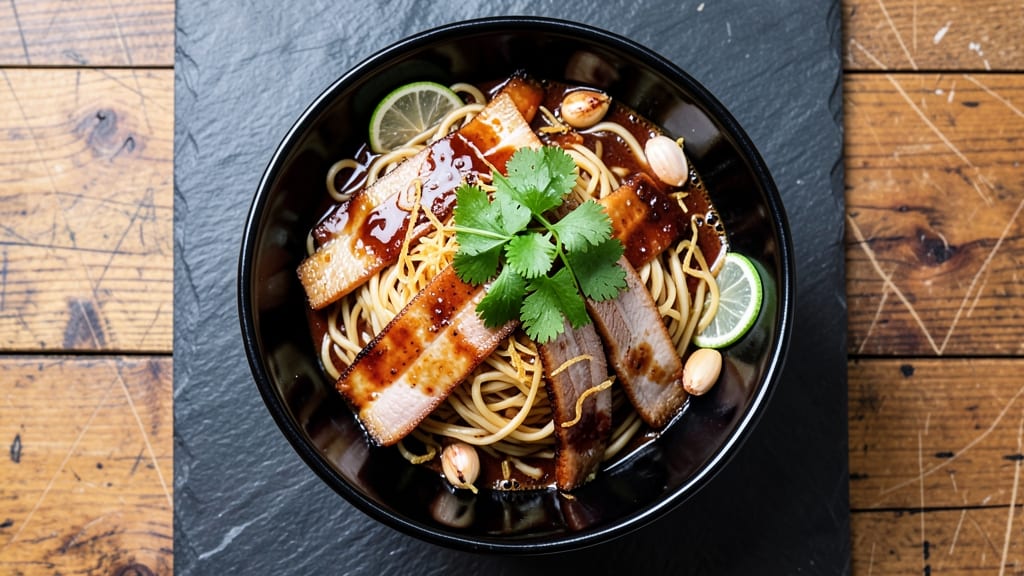
This Asian pork noodle bowl recipe delivers the perfect balance of smoky, sweet, and savory flavors in every bite—just like my first trip to a Hong Kong noodle stall at 18.
The secret lies in charred pork slices marinated in hoisin and five-spice, stir-fried with garlic and ginger until fragrant, then tossed with chewy noodles and a glossy soy-ginger sauce.
I’ve perfected this method over years of testing, ensuring the pork stays tender while developing that signature wok hei (breath of the wok) aroma.
The foundation starts with quick-cooking ramen or udon noodles, blanched just until al dente so they hold up to the stir-fry. Meanwhile, the sauce—a tangy-sweet blend of soy, ginger, and a touch of honey—adds depth without overpowering the pork’s natural richness.
What sets this bowl apart is the layered texture: crisp-tender pork, silky noodles, and bright garnishes like toasted sesame seeds and lime wedges that cut through the richness.
By the time you assemble the bowl, you’ll have a dish that’s restaurant-quality yet simple to execute—no fancy equipment needed, just a hot pan and a sharp knife.
The pork develops a caramelized crust from the stir-fry, while the sauce clings to every strand of noodle, creating a harmonious bite. This is the kind of meal that transforms a weeknight into a flavor adventure, with every spoonful packed with authentic Asian-inspired magic.
Serve it with a side of quick-pickled cucumbers or steamed bok choy for a complete meal. The leftovers reheat beautifully, making it perfect for meal prep. Let’s get cooking—this bowl is about to become your new go-to dinner.
Ingredients for asian pork noodle bowl
Quick-cooking noodles, fragrant pork, and a tangy-sweet sauce—this bowl transforms simple ingredients into restaurant magic.
| Ingredient | Amount | Notes |
|---|---|---|
| Pork Shoulder 🐷 | 1 ½ lb | Thinly sliced against grain |
| Hoisin Sauce 🍶 | ½ cup | Store-bought or homemade |
| Five-Spice Powder 🌶️ | 1 tbsp | Toasted for deeper flavor |
| Ramen Noodles 🍜 | 8 oz | Quick-cooking, uncooked |
| Fresh Ginger 🧄 | 2 tbsp | Finely grated, peeled |
| Garlic Cloves 🧄 | 6 cloves | Minced for sauce |
| Sesame Oil 🫒 | 1 tbsp | Toasted, for aroma |
| Soy Sauce 🍶 | ⅓ cup | Light or dark preferred |
| Honey 🍯 | 1 tbsp | For sauce sweetness |
| Lime Wedges 🍋 | 2 whole | For garnish and acidity |
| Toasted Sesame Seeds 🌰 | 1 tbsp | For garnish |
| Vegetable Oil 🫒 | ½ cup | High smoke point |
| Salt 🧂 | 1 tsp | Kosher or sea salt |
| Black Pepper 🌶️ | ½ tsp | Freshly ground |
The pork shoulder is non-negotiable for texture—thinly sliced against the grain ensures tender bites. Ask your butcher to slice it if you can't do it yourself, or grab pre-sliced pork from the Asian market freezer section. Five-spice powder should smell warm and aromatic; Penzeys or local Asian grocers carry the best quality. For the ginger, grab a fresh root and grate it yourself—pre-grated loses flavor fast. The ramen noodles? Nissin or Maruchan are reliable, but any quick-cooking brand works. Toast the sesame seeds in a dry pan until golden for extra flavor.
No hoisin sauce? Mix 2 tbsp soy sauce, 1 tbsp honey, and 1 tsp rice vinegar for a quick sub. Substitute the honey with maple syrup if you prefer. Fresh garlic and ginger are ideal, but dried powdered versions at half the amount work in a pinch. The sesame oil is for aroma only—use sparingly, or swap with a pinch of toasted sesame seeds if you're avoiding oil. For a vegetarian version, replace pork with extra-firm tofu pressed and sliced. The soy sauce can be tamari for gluten-free, and the lime adds brightness—don’t skip it.
Pork marinates best overnight, but even 30 minutes makes a difference. Store leftovers in airtight containers for 3-4 days, or freeze for up to 3 months. Reheat gently with a splash of water to keep the noodles tender. The sauce thickens when chilled—stir in a splash of water if it’s too stiff. For meal prep, assemble bowls without the pork and sauce, then add them fresh when ready to eat to keep everything crisp.
Why You'll Love This Recipe
- One-Pot Wonder: I swear by this—just toss pork shoulder, noodles, and a splash of hoisin in one pot, and the five-spice powder does all the heavy lifting. No chopping, no fuss, and the ginger infuses the broth while you prep the rest.
- Umami Bomb: That hoisin sauce? It’s the star—sweet, salty, sticky perfection that clings to the pork like it’s been marinating for hours. The five-spice powder adds this warm, earthy depth that makes every bite feel like a little flavor party.
- Lunchbox Hero: Between us, this is my go-to for meal prep—tastes just as good cold the next day. Pack it in containers, and suddenly you’ve got a satisfying, protein-packed lunch that doesn’t require reheating (though I won’t judge if you do).
- Budget Magic: Pork shoulder is cheap, ramen noodles are cheap, and a little hoisin goes a long way. I’ve made this for six people for under $15, and honestly? No one ever complains about seconds. (Yes, even on a Tuesday night.)
Step-by-step instructions for Asian pork noodle bowl
Here's how to transform simple ingredients into a restaurant-worthy stir-fry with bold flavors and perfect texture.
Marinate and Slice the Pork Shoulder
Slice the 1.5 lb pork shoulder thinly against the grain into ¼-inch thick strips. This ensures tender bites that cook quickly and evenly. In a bowl, combine the sliced pork with 0.33 cup soy sauce, 1 tbsp honey, 1 tbsp five-spice powder, and 0.5 tsp black pepper. Mix gently to coat evenly, then let it marinate for at least 30 minutes (or up to 2 hours in the refrigerator). The five-spice powder will infuse the meat with aromatic depth, while the soy sauce and honey create a sticky glaze that caramelizes beautifully during cooking.
Here's the thing—don't skip the marinating time. The longer it sits, the more flavor penetrates the meat. If you're short on time, even 15 minutes will help, but 30 minutes is ideal for maximum impact. The pork should be fully coated and slightly sticky when ready to cook.
Cook the Pork to Perfect Tenderness
Heat 0.25 cup vegetable oil in a large skillet or wok over medium-high heat until shimmering. Working in batches to avoid overcrowding, add the marinated pork and cook for 3-4 minutes per side until golden brown and cooked through. The pork should reach an internal temperature of 145°F at its thickest point. As it cooks, the marinade will caramelize, creating a glossy crust that locks in moisture.
Don't rush this step. You'll know the pork is ready when it releases easily from the pan and develops a beautiful mahogany color. If it starts to stick, gently lift it with a spatula and let the bottom crisp further. Once cooked, transfer the pork to a plate and tent loosely with foil to keep warm while you prepare the rest of the components.
Prepare the Ginger-Garlic Sauce
In the same skillet (no need to clean it—the browned bits add flavor), add 0.25 cup vegetable oil and heat over medium heat. Add 2 tbsp finely grated fresh ginger and 6 minced garlic cloves, cooking for 1-2 minutes until the ginger becomes fragrant and the garlic turns golden. This is where the aromatic foundation of your dish is built—don't let the garlic burn, or it will turn bitter.
Pour in the 0.5 cup hoisin sauce and stir to combine with the ginger and garlic. Let it simmer for 2-3 minutes until the sauce thickens slightly. Then, add 1 tbsp toasted sesame oil and 1 tbsp honey, stirring well to incorporate. The sauce should coat the back of a spoon and have a glossy, slightly sticky consistency. If it's too thick, add 1-2 tablespoons of water to reach your desired texture.
Cook the Ramen Noodles Al Dente
Bring a pot of water to a rolling boil and add 1 tsp salt. Cook the 8 oz ramen noodles according to package instructions, but remove them 1 minute before they're fully done—they'll finish cooking in the hot sauce. Drain the noodles and rinse briefly under cold water to stop the cooking process and remove excess starch. This ensures they stay firm and don't turn mushy when combined with the other components.
Here's a pro tip: Divide the noodles into four portions and keep them covered while you assemble the bowls. This prevents them from drying out or sticking together. The noodles should be hot but still slightly firm to the bite when you serve them.
Assemble and Garnish the Bowls
Divide the cooked ramen noodles among four bowls. Ladle the ginger-garlic sauce evenly over the noodles, then top with the cooked pork. The pork should be distributed evenly so each bowl has a balanced ratio of noodles to protein. Drizzle any remaining sauce from the skillet over the top for extra flavor.
Garnish each bowl with toasted sesame seeds and a lime wedge. The sesame seeds add a nutty crunch, while the lime wedge provides a bright, acidic contrast to the rich, savory flavors. Serve immediately while everything is hot—this dish is best enjoyed right away when the noodles are still al dente and the pork is tender.
Pro Tips For Making Asian Pork Noodle Bowl
- CRISP THE PORK RIGHT: Cut the pork shoulder into 1-inch chunks and sear them in a screaming-hot wok or skillet with 1 tablespoon of oil—don’t skimp on the heat. The edges should turn golden in 2-3 minutes before you even think about adding the five-spice powder. I learned this the hard way: low heat = mushy pork, no matter how long you cook it later.
- JULIENNE THAT GINGER: Skip the minced ginger—it burns fast and loses its punch. Instead, julienne it into matchsticks (about 1/8-inch thick) so it caramelizes slightly without disappearing. Toss it in the last 30 seconds of cooking the pork; the edges will turn glossy and aromatic, adding depth the minced version never will.
- SAUCE IN STAGES: Don’t dump all the hoisin sauce at once. Start with 1 tablespoon to deglaze the pan after searing the pork, then let it reduce by half before adding the rest. This builds flavor layer by layer—like a proper sauce, not just a gloppy dump. (Yes, even if you’re impatient like me.)
- NOODLES: COOK THEN SHOCK: Boil the ramen noodles 1 minute less than the package says, then immediately plunge them into ice water for 30 seconds. This keeps them from turning into mush when you toss them with the pork and sauce. Pro move: Drain well and toss with a tiny bit of oil so they don’t stick like glue when assembling the bowl.
Make-ahead tips for this asian pork noodle bowl
Marinate First
I always marinate the pork overnight if possible—this is non-negotiable for maximum flavor. The longer it sits, the deeper the five-spice and hoisin penetrate the meat. If you're short on time, 30 minutes minimum in the fridge works, but trust me, 6-8 hours transforms the dish.
Store the marinated pork in airtight containers with a lid to prevent drying. 🥬
Prep Noodles Separately
Cook the noodles just before assembling the bowls—they should be al dente but still firm. Rinse them briefly in cold water to stop cooking, then divide into four portions in covered containers.
This prevents them from sticking together and keeps them warm while you finish the sauce. I use quart-sized glass containers for easy reheating later.
Sauce Make-Ahead Hack
The ginger-garlic sauce keeps beautifully in the fridge for 3 days or freezes for 3 months. Make it a day ahead and store in a small airtight jar—just reheat gently with 1 tbsp water before using.
The flavors meld overnight, becoming even more complex. For meal prep, I double the batch and freeze half to use later in stir-fries or as a quick dipping sauce.
Pork Cooking Strategy
Cook the pork in two batches to avoid overcrowding—the pan needs room to develop that crucial wok hei aroma. Once cooked, let the pork cool completely before storing in single-serving portions in the fridge.
Reheat in a skillet over medium heat for 2-3 minutes until piping hot—this preserves the caramelized crust. Never microwave pork like this, or it turns rubbery.
Complete Bowl Assembly
For maximum freshness, store the noodles and sauce separately in stackable airtight containers. When ready to eat, assemble bowls by adding hot noodles first, then reheated pork and sauce. Garnish with lime and sesame seeds just before serving—this keeps everything vibrant.
The pork reheats best when added fresh to hot noodles, so I always reserve a portion of sauce to toss with the pork right before serving.
Freezer-Friendly Packing
For long-term storage, freeze the pork and sauce separately in ziplock freezer bags with all air removed. Label with dates—they last 3 months without quality loss. To serve, thaw overnight in the fridge, then reheat pork in a skillet with 1 tbsp sauce.
The noodles should be cooked fresh from frozen or reheated in boiling water for 2 minutes. This method maintains texture perfectly. 💫
Nutrition facts
Frequently asked questions
Can I substitute pork shoulder with another cut?
For this recipe, pork tenderloin or pork loin work beautifully—they're leaner and cook faster. If using tenderloin, slice it ¼-inch thick and marinate for at least 1 hour to prevent drying. For extra-rich flavor, try pork belly (trimmed of excess fat), but reduce cooking time to 2-3 minutes per side to avoid toughness.
What noodles work best if I don't have ramen?
Any chewy, quick-cooking noodles will work! Try udon (for heartier texture), rice noodles (for lighter bites), or even spaghetti in a pinch. For best results, cook them 1 minute less than package instructions and rinse briefly in cold water to stop cooking. The sauce will finish them perfectly.
How do I fix soggy noodles when reheating leftovers?
Never reheat noodles in water—they'll turn mushy! Instead, cook them fresh from frozen or reheat in a dry skillet over medium heat for 2-3 minutes while tossing with a splash of sauce. For leftovers, store noodles and sauce separately in airtight containers—reheat pork and sauce first, then toss with hot noodles just before serving. This keeps everything crisp-tender.
Can I make this spicier?
Add ½ tsp chili flakes or 1 tbsp sriracha to the sauce for heat, or stir-fry 1 sliced Thai chili with the ginger and garlic. For extra depth, swap 1 tbsp of the hoisin sauce with spicy chili crisp or gochujang. Garnish with sliced jalapeños or a drizzle of chili oil before serving.
What sides pair well with this bowl?
This dish is hearty on its own, but try quick-pickled cucumbers (toss cucumber slices with rice vinegar, sugar, and salt) for refreshing crunch. Steamed bok choy or a simple sesame green salad with shredded carrots and edamame add freshness. For extra protein, serve with fried egg on top—yolk drizzled over the bowl adds richness.