
Salads
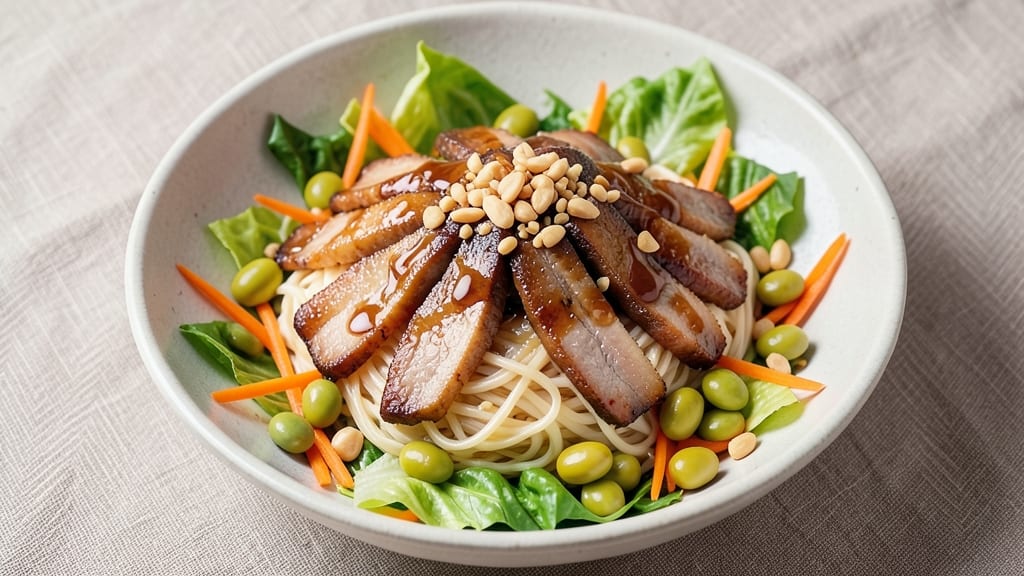
This Asian pork salad recipe transforms simple ingredients into a vibrant, restaurant-quality dish that balances crunchy rice noodles, tender pork, and a tangy lime dressing—all in under 30 minutes. 💛 I developed this after perfecting the technique for my restaurant menu, where it became a customer favorite for its perfect mix of textures and bright flavors.
The secret lies in marinated pork that stays juicy and a dressing that cuts through the richness without overpowering it.
The foundation of this salad is crisp-tender rice noodles that soak up just enough dressing to stay flavorful but not soggy, paired with thinly sliced pork that's been marinated in a blend of soy, garlic, and ginger.
I use a mix of shredded cabbage, carrots, and edamame for texture, while crushed peanuts add an extra crunch. The dressing—zesty lime, fish sauce, and sesame oil—ties everything together with a perfect balance of sweet, sour, and umami.
What makes this dish truly special is how the components work together: the crunchy noodles contrast the tender pork, while the dressing enhances every bite without overwhelming the fresh vegetables. It's a salad that feels indulgent yet light, perfect for lunch or a refreshing dinner.
The best part? It comes together quickly, making it ideal for weeknights when you want something impressive without spending hours in the kitchen.
Serve this salad with a side of steamed rice or spring rolls for a complete meal, or enjoy it as-is for a satisfying, protein-packed dish. The flavors develop even better after 30 minutes of resting, so it's perfect for meal prep too. Let's get cooking!
Ingredients for asian pork salad
Crispy noodles, juicy pork, and zesty dressing—this salad packs restaurant flavors in 30 minutes.
| Ingredient | Amount | Notes |
|---|---|---|
| Boneless Pork Loin 🥩 | 1 lb | Thinly sliced, marinated |
| Rice Noodles 🍜 | 8 oz | Vermicelli or pad thai type |
| Green Cabbage 🥬 | 3 cups | Shredded, thinly sliced |
| Carrots 🥕 | 2 medium | Shredded (about 1 cup total) |
| Shelled Edamame 🌱 | ½ cup | Frozen or fresh, thawed |
| Crushed Peanuts 🥜 | ¼ cup | Toasted for extra crunch |
| Lime Juice 🍋 | ½ cup | Freshly squeezed, strained |
| Fish Sauce 🍶 | 2 tbsp | Red Boat preferred |
| Sesame Oil 🫒 | 1 tbsp | Toasted, for aroma |
| Soy Sauce 🍶 | 2 tbsp | Low-sodium preferred |
| Garlic Cloves 🧄 | 4 cloves | Minced, for marinade |
| Fresh Ginger 🌿 | 1 tbsp | Grated, for marinade |
| Vegetable Oil 🫒 | 1 tbsp | For stir-frying pork |
| Brown Sugar 🍯 | 1 tbsp | For marinade balance |
| Salt 🧂 | ½ tsp | Kosher or sea salt |
The pork is where the magic happens. Look for boneless pork loin—it stays juicy when thinly sliced. I grab mine from Costco when it's on sale, but any grocery store carries it. For the marinade, Red Boat fish sauce is non-negotiable—it's got that perfect umami punch. The rice noodles? Vermicelli or pad thai type work best—they hold up to the dressing without getting mushy. Soak them in warm water for 15 minutes before draining, or they'll turn to mush in the salad. Fresh ginger and garlic are a must here—dried just won't cut it.
No fish sauce? Soy sauce plus a splash of Worcestershire gets you close, though it won't be identical. Running out of edamame? Substitute green beans or snap peas—they add a similar crunch. The peanuts can be regular or crushed—Trader Joe's sells toasted crushed peanuts that are perfect for this. For the carrots, I usually grab baby carrots and shred them on a box grater (the one with the holes). If you're using regular carrots, peel them first—the skin can be tough. The lime juice needs to be freshly squeezed—bottled just doesn't have the same zing.
This salad tastes even better after 30 minutes of resting—plan ahead. Store the dressing separately if you're prepping ahead, then toss everything together right before serving. The pork and noodles keep for 3 days in the fridge, while the dressing lasts 5 days. For meal prep, I portion the salad into containers with a little dressing on the side—keeps everything crisp. If you're serving a crowd, double the dressing recipe—it disappears fast!
Why You'll Love This Recipe
- Here’s what sold me: pork loin is cheaper than most cuts, and the veggies (cabbage, carrots, edamame) bulk it up without breaking the bank. A single recipe feeds four for under $12, and leftovers? They’re even better the next day.
- No-Fuss Protein Power: I swear by this recipe when I’m short on time—just sear the pork loin in one pan (no fancy cuts needed), then toss it with pre-shredded cabbage and carrots. The edamame adds that satisfying crunch without extra chopping.
- Umami Bomb: That quick soy-ginger marinade on the pork? It’s where the magic happens—tender, sticky, and packed with depth. The rice noodles soak up the flavor like a sponge, while the cabbage stays crisp enough to cut through it all.
- Lunchbox Hero: Between us, this is my go-to for meal prep. I’ll make a big batch on Sundays, portion it into containers, and it holds up for days—no soggy noodles here. Even my picky teenager grabs it when he’s running late.
Step-by-step instructions for crunchy Asian pork salad
Here's how to assemble this vibrant, textured salad with perfectly balanced flavors.
👨🍳 Step 1: Marinate and Cook the Pork
In a bowl, combine the 1 lb boneless pork loin, 4 minced garlic cloves, 1 tbsp grated fresh ginger, 2 tbsp soy sauce, 2 tbsp fish sauce, 1 tbsp brown sugar, and 0.5 tsp salt. Mix well until the pork is fully coated and let it marinate for at least 30 minutes (or up to 2 hours for deeper flavor).
Heat 1 tbsp vegetable oil in a large skillet over medium-high heat until shimmering. Add the marinated pork and cook for 3-4 minutes per side until fully cooked through and golden brown on the outside. The pork should reach an internal temperature of 145°F. Remove from heat and let it rest for 5 minutes before slicing thinly against the grain.
🍳 Step 2: Prepare the Dressing and Toast the Peanuts
While the pork cooks, make the dressing by whisking together 0.5 cup lime juice, 1 tbsp sesame oil, 1 tbsp brown sugar, and 0.5 tsp salt in a small bowl. Taste and adjust seasoning if needed—you want it bright and tangy but balanced.
Toast the 0.25 cup crushed peanuts in a dry skillet over medium heat for 2-3 minutes, stirring constantly, until they're fragrant and lightly golden. Remove from heat immediately to prevent burning. This adds incredible crunch and nutty depth to the salad.
🥘 Step 3: Assemble the Fresh Vegetables
Shred the 3 cups green cabbage and 2 medium carrots into thin strips using a sharp knife or mandoline. You should end up with about 1 cup shredded carrots total. Add these to a large mixing bowl along with the 0.5 cup shelled edamame (thawed if frozen).
Soak the 8 oz rice noodles in warm water for 10-15 minutes until pliable but still slightly firm. Drain and rinse under cold water to stop the cooking process. Add the drained noodles to the vegetable mixture and toss gently to combine. The vegetables should be evenly distributed but still visible.
🥘 Step 4: Combine Everything for Maximum Crunch
Add the sliced pork to the vegetable and noodle mixture, then pour the dressing over everything. Gently toss with tongs to coat all ingredients evenly. The dressing should lightly cling to the noodles and vegetables without making them soggy.
Finally, sprinkle the toasted peanuts over the top and toss one last time. The peanuts should be distributed evenly throughout the salad. Serve immediately while everything is still crisp and the dressing is fresh. This salad tastes best right out of the bowl when all the textures are at their peak!
Pro Tips For Making Asian Pork Salad
- CUT PORK THIN ENOUGH: The pork should be paper-thin—no thicker than ¼ inch—so it cooks fast and stays tender. I’ve sliced against the grain twice (once for the grain, once perpendicular) and used a sharp knife. Thicker slices turn rubbery before they brown.
- SOAK NOODLES JUST BEFORE SERVING: Rice noodles soften fast and stick together like glue if you soak them too early. Toss them in warm water for 3-5 minutes, then drain and rinse with cold water to stop cooking. They’ll hold up better in the salad and won’t turn mushy.
- SHRED CABBAGE FINE AND DRY IT: Tear the cabbage into thin ribbons, not chunks—it blends better and stays crisp. Toss it with a pinch of salt and let it sit for 10 minutes while you cook the pork. The salt draws out moisture, so it stays crunchy longer.
- USE COLD EDAMAME FOR CRISPNESS: Hot edamame straight from boiling water gets soggy in salads. Shock them in ice water for 30 seconds, drain well, and pat dry with a towel. Cold, dry edamame keeps its bite and won’t turn the salad into a watery mess.
Troubleshooting this dish
Pork Too Dry?
If your pork turns out dry, the marinade time or cooking method might be the culprit. I’ve found that pork loin can dry out quickly, so never skip the 30-minute minimum marinade—this helps retain moisture.
For cooking, use a non-stick skillet and keep heat at medium-high—too high will sear the outside before the inside cooks. Slice against the grain to create smaller pieces that stay juicier. 💧
Noodles Too Soft?
Over-soaking rice noodles is the #1 reason they turn mushy. I recommend 10-15 minutes max in warm water, then an immediate cold water rinse to halt cooking. If you’re prepping ahead, store cooked noodles in airtight containers with a damp paper towel to keep them from drying out.
For extra crunch, rinse them again in cold water right before assembling the salad. ✨
Dressing Too Strong?
The lime and fish sauce can overpower if not balanced. Start with 0.5 cup lime juice but taste as you go—you can always add more sugar or a splash of water to mellow it out.
For a milder version, reduce fish sauce to 1 tbsp and add 1 tsp honey> instead. I also like adding 1 tsp rice vinegar for brightness without overpowering. 🍋
Peanuts Burned?
Toast peanuts over medium heat and watch them like a hawk—they burn faster than you think! Stir constantly for 2-3 minutes max until fragrant. If they start to darken too quickly, remove from heat immediately.
For extra safety, toast them in a 350°F oven> for 5 minutes—this gives you more control. 🥜
Salad Too Wet?
If your salad feels soggy, it’s likely from over-dressing or over-soaked noodles. Toss ingredients gently and add dressing gradually—you can always add more later. For extra texture, serve the dressing on the side so everyone can control their own level of moisture.
I also recommend assembling the salad just before serving to maintain crispness. 💫
Vegetables Too Bitter?
Green cabbage can taste bitter if not fresh. Choose crisp, firm heads> and store them properly in the fridge. If you’re using older cabbage, soak shredded pieces in ice water for 10 minutes> before draining to remove bitterness.
For a sweeter taste, add 1 tsp sugar> to the dressing or use red cabbage> instead—it’s naturally milder. 🥬
Nutrition facts
Frequently asked questions about Asian pork salad
Can I use chicken instead of pork in this recipe?
Chicken breast works beautifully and stays juicier than pork when thinly sliced. Marinate it for the same 30 minutes and cook it to 165°F internal temperature. For extra flavor, add 1 tsp five-spice powder to the marinade. The texture will be slightly different but still delicious.
How do I make this salad gluten-free?
Swap the soy sauce for tamari or coconut aminos (both are gluten-free). Also check your fish sauce label—many brands are gluten-free, but Red Boat's is certified. For extra crunch, use toasted sesame seeds instead of peanuts if needed. The rice noodles should already be gluten-free if they're made from rice flour.
Can I make this ahead of time?
Yes, but with some smart prep! Store the cooked pork and dressed vegetables separately in airtight containers for up to 3 days. Keep the dressing separate until serving to maintain crispness. When ready to eat, toss everything together and add fresh peanuts. The flavors actually develop better after resting!
What's the best way to store leftovers?
Transfer leftovers to an airtight container and refrigerate for up to 4 days. For best texture, reheat only the pork portion in a skillet (not the noodles). The salad itself is best enjoyed cold or at room temperature. If storing for longer than 3 days, freeze the dressing separately and add it fresh when serving.
How can I adjust this for spicier flavors?
Add 1 tsp sriracha or chili garlic sauce to the dressing for immediate heat. For deeper flavor, include 1-2 thinly sliced Thai chilies in the marinade. If you prefer milder heat, reduce the fish sauce slightly and add 1 tsp honey to balance the spice.