
Main Courses
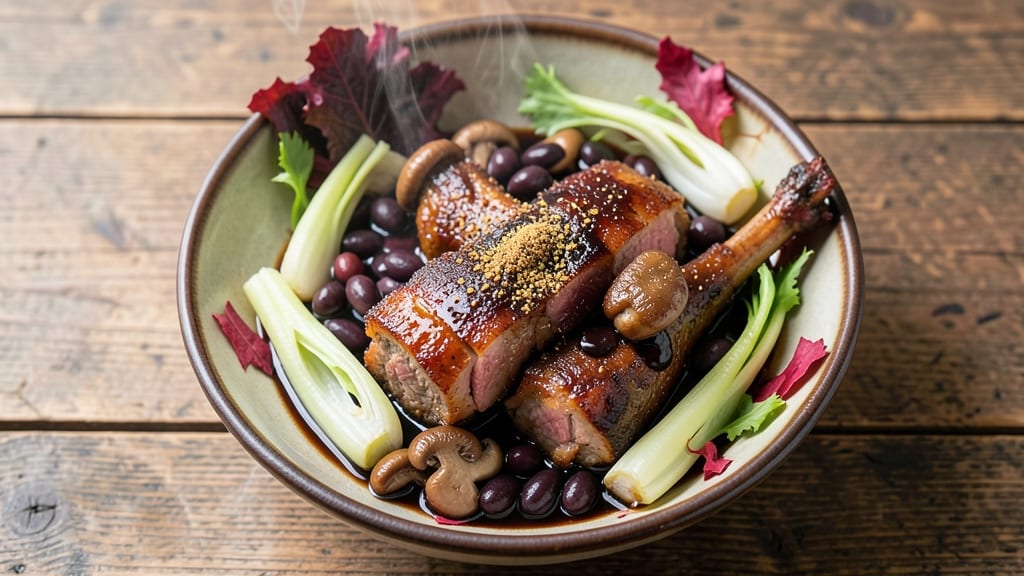
This Asian pork shank recipe transforms tough cuts into melt-in-your-mouth perfection through slow braising—where smoky five-spice marinade meets celery crown crunch for a dish that feels both rustic and refined.
The key lies in patience: letting pork shanks simmer until they fall apart while developing deep, complex flavors that balance sweet, spicy, and umami notes.
My version builds on Charleston-style braising techniques I perfected during my apprenticeship, adapted with Asian pantry staples for a fusion that works equally well for weeknight dinners or holiday feasts.
The magic happens in the marinade—a blend of five-spice powder, soy sauce, and fermented chili that creates a sticky, aromatic crust on the pork.
Celery crowns add a satisfying crunch and subtle bitterness that cuts through the richness, while the braising liquid reduces into a glossy sauce thick enough to coat each tender bite. This isn't just comfort food; it's a restaurant-quality technique simplified for home cooks who want restaurant results without the fuss.
By the time you're done, you'll have fall-apart pork shanks with crispy edges, swimming in a sauce that's both savory and subtly sweet. The celery crowns add texture contrast that keeps every bite exciting, while the five-spice blend delivers that signature Asian warmth.
Serve it over steamed jasmine rice or with quick-pickled vegetables to balance the richness—this dish deserves to be the centerpiece of your table.
What makes this recipe special is its versatility: use it as a main course with rice, or slice the pork for tacos, banh mi sandwiches, or ramen toppings.
The leftovers reheat beautifully, making it perfect for meal prep. Here's how to make it—where slow cooking meets bold Asian flavors in one unforgettable dish.
Ingredients for asian pork shank
Pantry staples meet Asian market finds for a dish that delivers restaurant-quality depth at home.
| Ingredient | Amount | Notes |
|---|---|---|
| Pork Shanks 🐖 | 2 lb | Bone-in, 1.5-2 inches thick |
| Celery Crowns 🧅 | 1 whole | Trimmed, cut into 2-inch pieces |
| Five-Spice Powder 🌶️ | 2 tbsp | Authentic blend for depth |
| Dark Soy Sauce 🍶 | ½ cup | For umami richness |
| Fermented Black Beans 🫘 | ¼ cup | Drained, for funky depth |
| Dried Shiitake Mushrooms 🍄 | ¼ oz | Rehydrated, sliced |
| Garlic Cloves 🧄 | 6 cloves | Smashed, skin-on |
| Fresh Ginger 🌿 | 2 tbsp | Grated, aromatic |
| Honey 🍯 | 1 tbsp | Local raw preferred |
| Sesame Oil 🫒 | 1 tbsp | Toasted, for aroma |
| Balsamic Vinegar 🍷 | 1 tbsp | For balance |
| Jasmine Rice 🍚 | 1 ½ cups | Uncooked, long-grain |
| Olive Oil 🫒 | 2 tbsp | For searing |
| Salt 🧂 | 1 ½ tsp | Diamond Crystal preferred |
| Black Pepper 🌶️ | 1 tsp | Freshly cracked |
The pork shanks are non-negotiable—bone-in cuts with good marbling deliver the best texture. Look for thick-cut shanks at your local Asian market, where they often carry premium cuts like those from Whole Foods or H Mart. If you can't find them, a good butcher will help. The celery crowns? Fresh is key—they should be crisp and vibrant, not rubbery. Trim the leafy tops but leave the stems intact for that signature crunch. Fermented black beans and dried shiitake mushrooms add layers of umami that transform this from ordinary braise to something extraordinary—stock up at an Asian grocery if you don't have them already.
No five-spice powder? Mix 1 tsp each of cinnamon, star anise, fennel, clove, and Szechuan peppercorn—it's worth the effort. Substituting dark soy sauce? Light soy plus 1 tsp molasses works, but you'll lose some depth. Fresh ginger is ideal, but powdered works at half the amount if that's what you've got. The honey should be local and raw—avoid processed versions that can taste artificial. For the mushrooms, rehydrate them in hot water for 20 minutes before using—don't skip this step, or they'll turn to mush. The sesame oil is for aroma only—add it at the very end to preserve its nutty punch.
This dish tastes even better the next day—plan ahead. Store the pork and sauce separately in airtight containers for up to 5 days in the fridge, or freeze for 3 months. The celery crowns? Use them within 2 days or they'll get soggy. I like to make a double batch of the marinade and sauce—it's perfect for stir-fries or noodle dishes later in the week. The rice? Cook it fresh, but day-old rice reheats beautifully for fried rice. Every component keeps well, so you can assemble this dish whenever you're ready.
Why You'll Love This Recipe
- One-Pot Magic: I swear by this recipe—just toss everything in one pot, walk away, and come back to tender, flavor-packed pork. The celery crowns and fermented black beans release their magic while you’re doing other things, and the five-spice powder does the work of three spices.
- Umami Bomb: That dark soy sauce and fermented black beans? Absolute flavor gold. The pork ends up fall-off-the-bone tender with a deep, savory richness that hits different—like a hug from your favorite Asian takeout spot, but better.
- Meal Prep MVP: Between us, this is my go-to for lazy Sundays or busy weeks. The leftovers? Even better the next day, especially reheated with a splash of water to revive that glossy, sticky sauce. Pack it for lunches or freeze portions—it’s that reliable.
- Budget Feast: Pork shanks stretch like crazy, and the ingredients? Most are shelf-stable or affordable. You’re feeding a crowd for less than you’d spend on takeout, and honestly, no one will guess it’s not a restaurant dish. (My wallet thanks me every time.)
Step-by-step instructions for Asian pork shank braise
This method delivers melt-in-your-mouth pork with deep umami flavor and satisfying crunch.
Prepare the Pork Shanks for Maximum Flavor
Pat the 2 lb pork shanks completely dry with paper towels—this ensures a better sear. In a small bowl, mix together the 2 tbsp five-spice powder, 1.5 tsp salt, and 1 tsp freshly cracked black pepper. Rub this generously over all sides of the pork, pressing it into the meat so it adheres well.
Let the seasoned pork sit at room temperature for 30 minutes while you prepare the rest of your ingredients. This step is crucial—it helps the spices penetrate the meat and prevents temperature shock when you sear. If you're short on time, at least let them sit for 15 minutes, but don't skip this entirely.
Sear the Pork Until Deeply Browned
Heat a heavy Dutch oven over medium-high heat until it's smoking hot. Add the 2 tbsp olive oil and swirl to coat the bottom evenly. Place the pork shanks in the pan, fat-side down, and let them sear undisturbed for 5-6 minutes until they develop a deep golden-brown crust. You'll know they're ready when they release easily from the pan.
Flip the shanks and sear the other side for another 5-6 minutes. While they're searing, you'll notice the fat rendering out—this is what creates that rich, caramelized flavor. Don't be tempted to move them around too much; let them develop that beautiful crust. Once both sides are deeply browned, transfer the pork to a plate.
Build the Aromatic Braising Base
In the same Dutch oven, add the 2 tbsp grated fresh ginger and 6 smashed garlic cloves (skin-on). Sauté for 1-2 minutes until the ginger becomes fragrant and the garlic just begins to turn golden. Add the 1 whole trimmed celery crown, cut into 2-inch pieces, and cook for another 2 minutes until it softens slightly.
Stir in the 0.25 oz rehydrated and sliced dried shiitake mushrooms (soak them in hot water for 20 minutes first) and cook for 1 minute to let their earthy flavor meld with the aromatics. Pour in the 0.5 cup dark soy sauce and 0.25 cup drained fermented black beans, scraping up any browned bits from the bottom of the pan—this is where all the flavor lives.
Braise Until Fork-Tender
Return the pork shanks to the Dutch oven, fat-side up. Add 1 cup of water, cover tightly with a lid, and transfer to a preheated 325°F oven. Braise for 2 hours, then carefully flip the shanks and add another ½ cup water. Return to the oven and cook for another 1-2 hours until the pork is fork-tender and easily pulls apart.
Here's the thing about braising—patience is key. The pork should have a deep mahogany color and the meat should separate cleanly at the bone. If it's not quite there after 3 hours, add another ½ cup water and continue cooking. The celery crowns should be tender but still hold their shape, adding that satisfying crunch to each bite.
Finish with Sweet and Tangy Balance
Once the pork is tender, remove it from the oven and let it rest for 10 minutes. In the same pot, reduce heat to medium and add the 1 tbsp honey, 1 tbsp toasted sesame oil, and 1 tbsp balsamic vinegar. Simmer for 3-4 minutes until the liquid reduces slightly and the flavors meld together beautifully.
Return the pork shanks to the pot, spooning the aromatic sauce over them generously. Let everything heat through for 2-3 minutes, then serve the pork shanks over the 1.5 cups cooked jasmine rice, spooning the rich braising liquid on top. The combination of tender pork, sweet-tangy sauce, and crisp celery crowns makes this dish truly special.
Pro Tips For Making Asian Pork Shank
- SEAR UNTIL BROWN: Don’t rush the initial sear—get those pork shanks deep golden, not just light brown. I used to walk away too soon, and the sauce never stuck like it should. Crank the heat, add 1-2 tablespoons of oil, and let them sit undisturbed for 3-4 minutes per side until a crust forms. That’s the flavor anchor for the whole dish.
- BLANCH THE BEANS: Fermented black beans need a quick rinse and 30-second blanch in boiling water before adding them to the pot. This cuts the funk and softens them faster—no more chewy, undercooked beans ruining the texture. Drain well, or your sauce will turn slimy.
- SIMMER LOW AND SLOW: After the initial sear and braising liquid, reduce to a gentle simmer—tiny bubbles, not a rolling boil. I’ve learned this the hard way: rushing it makes the pork shanks tough. Cover and let it cook at 300°F (150°C) for 2-2.5 hours, stirring occasionally. Patience here makes all the difference.
- SALT THE SHANKS FIRST: Season the pork shanks with salt and five-spice powder before searing—let them sit 15 minutes uncovered on a wire rack. This ensures the salt penetrates deep and the crust forms properly. I skip this step sometimes, and the meat ends up bland, no matter how much soy sauce I add.
Creative variations of this recipe
Japanese Miso-Glazed Twist
Swap the five-spice marinade for a miso glaze—mix 3 tbsp white miso paste, 2 tbsp mirin, 1 tbsp sake, and 1 tbsp honey. Brush this over seared shanks before braising.
The umami depth from miso transforms the dish into a Japanese-inspired version with a glossy, caramelized crust. Serve with steamed bok choy and sesame seeds for extra texture. 🌟
Thai Coconut Curry Braise
Infuse the braising liquid with 1 can (14 oz) coconut milk, 2 tbsp red curry paste, and 1 tbsp fish sauce after searing. Add 1 stalk lemongrass (bruised) and 2 kaffir lime leaves for aroma.
Simmer for 3-4 hours until the pork is tender and the sauce thickens. Garnish with Thai basil and crushed peanuts for a street-food-inspired finish. 🌶️
Korean Gochujang Marinade
Marinate the shanks in 3 tbsp gochujang, 2 tbsp soy sauce, 1 tbsp sesame oil, and 1 tbsp brown sugar for 4 hours (or overnight). After searing, braise with 1 cup water, 1 tbsp toasted sesame seeds, and 1 sliced Korean radish (for texture).
The spicy-sweet sauce pairs perfectly with steamed rice and kimchi. 🔥
Vietnamese Pho-Inspired Version
Simmer the pork with 1 cinnamon stick, 3 star anise pods, and 1 tbsp fish sauce in the braising liquid. After cooking, strain the pork and reduce the broth until thick.
Serve over rice noodles with bean sprouts, Thai basil, and hoisin sauce for a Pho-style dish. The aromatic broth elevates this to restaurant-quality at home. ✨
Spicy Szechuan Fusion
Add 1 tbsp Szechuan peppercorns (toasted and crushed) and 2 tbsp chili bean paste to the marinade. Braise with 1 tbsp doubanjiang (fermented chili bean paste) and 1 tsp MSG for depth.
Finish with scallions and toasted cumin seeds for a numbing-spicy kick. This version is perfect for bold flavor lovers. 💥
Nutrition facts
Frequently asked questions
Why does this recipe use five-spice powder instead of individual spices?
Five-spice powder is a pre-blended mix of star anise, cinnamon, fennel, clove, and Szechuan peppercorn that creates a harmonious, aromatic profile perfect for pork. Using it saves time while delivering that signature Asian warmth. If you can't find it, mix the individual spices in equal parts—just remember the Szechuan peppercorn adds a subtle numbing sensation that's key to the flavor.
Can I substitute bone-in pork shanks with boneless ones?
While you can use boneless shanks, they won't yield the same restaurant-quality results. The bone adds depth to the flavor and helps keep the meat moist during braising. If you must use boneless, look for thick-cut pork chops (about 1.5-inch thick) and increase braising time by 30-45 minutes. The texture will be slightly different but still delicious.
How do I know when the pork shanks are fully cooked?
The pork is done when it reaches an internal temperature of 203°F and the meat separates easily at the bone with a fork. For best results, use a meat thermometer—this ensures perfect tenderness without overcooking. If the meat isn't falling apart after 3 hours, add another ½ cup water and continue braising for 30-60 minutes more.
What can I do with the leftover braising sauce?
This rich sauce is incredibly versatile! Use it as a marinade for grilled meats, stir it into noodle dishes, or drizzle it over rice bowls. For extra depth, reduce it further on the stove until syrupy, then store in the fridge for up to 5 days. It also freezes beautifully for up to 3 months—perfect for quick weeknight meals.
Can I make this recipe in a slow cooker instead of the oven?
Follow the same searing steps, then transfer everything to a slow cooker and cook on low for 6-8 hours or high for 4-5 hours. The celery crowns will soften more but still add flavor. For best results, add ½ cup water after the first 4 hours to prevent drying out. The texture will be slightly different but still delicious.