
Main Courses
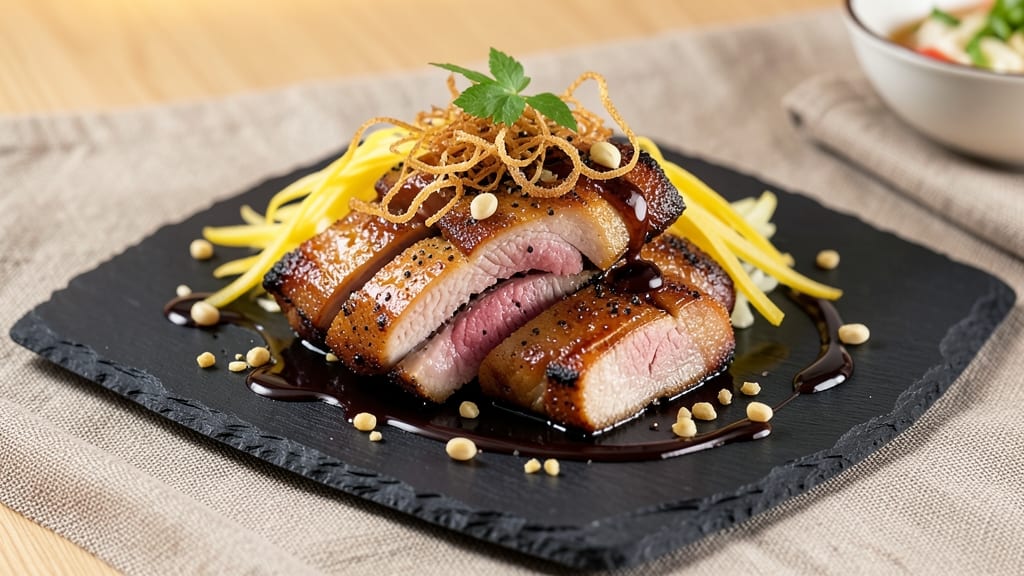
This Asian pork short ribs recipe delivers fork-tender meat braised in a rich soy-caramel glaze—inspired by my years perfecting braising techniques at The Smoky Pig. 🔥 The secret lies in slow-cooking the ribs until they melt in your mouth, then finishing with a glossy glaze that balances sweet, salty, and umami flavors.
I developed this version after mastering Korean galbi and Japanese tonkatsu methods, blending them into one restaurant-quality dish you can recreate at home.
The process starts with a marinade that tenderizes the meat overnight, then slow-braises the ribs until they're so soft they fall apart.
We'll use a combination of soy sauce, brown sugar, garlic, and ginger to build deep flavor, then finish with a quick caramelized glaze that adds that signature sticky-sweet finish. This method ensures restaurant-quality results without requiring specialty equipment—just a Dutch oven and patience.
By the end, you'll have ribs that are juicy, tender, and packed with flavor, perfect for serving over steamed rice with quick-pickled vegetables or a simple cucumber salad. The glaze caramelizes beautifully, creating pockets of sweetness that contrast perfectly with the savory meat.
This is the kind of dish that transforms a weeknight dinner into something special—worth the time for the payoff.
While this recipe draws inspiration from multiple Asian traditions, I've adapted it to work with what you can find at your local butcher shop. The technique is foolproof once you understand the key steps: proper marinating, slow cooking, and finishing with the glaze.
Let's get started—your taste buds will thank you.
Ingredients for asian pork short ribs
Fork-tender ribs start with the right cuts and bold Asian flavors—here's what you'll need.
| Ingredient | Amount | Notes |
|---|---|---|
| Pork Short Ribs 🥩 | 3 lb | Bone-in, cut 1.5-inch thick |
| Kosher Salt 🧂 | 1 ½ tbsp | Diamond Crystal preferred |
| Black Peppercorns 🌶️ | 1 tbsp | Freshly cracked preferred |
| Fresh Ginger 🧄 | ½ cup | Peeled, julienned (about 3 oz) |
| Garlic Cloves 🧄 | 8 whole | Smashed, not minced |
| Asian Soy Sauce 🍶 | ½ cup | Kikkoman preferred |
| Brown Sugar 🍯 | ½ cup | Light or dark, packed |
| Sesame Oil 🫒 | 1 tbsp | Toasted, for aroma |
| Honey 🍯 | 2 tbsp | Wildflower preferred |
| Cornstarch 🌾 | 2 tbsp | For glaze thickening |
| Water 💧 | ½ cup | Room temperature |
| Green Onions 🧅 | 4 whole | Sliced, for garnish |
| Sesame Seeds 🌱 | 1 tbsp | Toasted, for garnish |
| Vegetable Oil 🫒 | 2 tbsp | High smoke point |
The ribs are non-negotiable—look for bone-in short ribs with good marbling at your butcher shop. Costco or local butcher counters often have the best quality, but the pre-cut ones at Whole Foods work too. Ask for 1.5-inch thick cuts—they'll braise evenly. Fresh ginger and garlic are worth hunting down at Asian markets if your grocery store's is wilted. For soy sauce, Kikkoman is the gold standard, but any high-quality Asian soy sauce will do. The sesame oil should smell nutty and toasted—if it's rancid, toss it.
No sesame oil? Toasted peanut oil at half the amount works in a pinch. Substituting honey? Maple syrup or agave keeps it vegan-friendly, though the flavor shifts slightly. Fresh ginger too fibrous? Ground ginger at one-third the amount gets you close. Want to skip the cornstarch? Arrowroot powder works identically. The green onions can be swapped for scallions or chives—whatever's in your fridge. For the glaze, if you're short on time, pre-made hoisin sauce adds instant depth (use 2 tbsp instead of the honey/cornstarch mix).
Marinate the ribs overnight in the fridge—they'll thank you. The braising liquid keeps for 5 days in the fridge, but the ribs are best eaten fresh. For leftovers, store ribs and sauce separately—reheat the sauce first, then add the ribs to warm through. Freeze portions for up to 3 months. Pro tip: Make a double batch of the glaze—it's perfect for drizzling over rice bowls or stir-fries later. The sesame seeds toast in 30 seconds in a dry pan—don't skip this step for maximum aroma.
Why You'll Love This Recipe
- One-Pan Magic: I swear by this recipe on lazy nights—just sear the ribs, toss in the ginger and garlic, then let the oven do the work. No chopping boards full of mess, no fancy techniques.
- Flavor Bomb: That crispy, caramelized crust on the outside with fall-off-the-bone tenderness inside? The ginger and garlic do all the heavy lifting, but the salt and pepper make it ridiculously addictive.
- Leftovers? No Problem: Between us, I make this on Sundays because the ribs taste even better the next day. Reheat with a splash of water, and it’s like a second dinner—no one will guess it’s reheated.
- Budget Feast: Pork short ribs stretch across meals without breaking the bank. A single batch feeds four for dinner and two more for lunch, plus I freeze extras for those "I can’t decide what to eat" nights.
Step-by-step instructions for Asian pork short ribs
Here's how to transform tough short ribs into melt-in-your-mouth perfection with a glossy soy-caramel glaze.
🍳 Step 1: Sear the Ribs for Deep Flavor
Heat the 2 tablespoons vegetable oil in a large Dutch oven over medium-high heat until shimmering. Pat the 3 lb pork short ribs completely dry with paper towels—this ensures maximum browning. Working in batches, sear the ribs on all sides for 3-4 minutes per side until deeply golden brown with crisp edges.
Don't rush this step. You want that beautiful Maillard reaction happening—those browned bits on the bottom of the pot are pure flavor gold. Once all ribs are seared, transfer them to a plate and set aside. Here's the thing—if your pan isn't hot enough, the ribs will steam instead of sear. You'll know it's ready when you see a steady stream of bubbles and the oil sizzles vigorously.
👨🍳 Step 2: Build the Aromatic Base
In the same Dutch oven, reduce heat to medium and add the 8 smashed garlic cloves and ½ cup julienned fresh ginger. Cook for 1-2 minutes until fragrant and just beginning to color—watch closely so they don't burn. Add the 1.5 tablespoons kosher salt and 1 tablespoon cracked black peppercorns, stirring to coat the aromatics.
Here's where the magic starts. The ginger and garlic should be sizzling gently, filling your kitchen with that irresistible aroma. If they start to stick, add 1 tablespoon water to loosen them. This aromatic base forms the flavor foundation for your entire dish, so take your time getting it right.
🥘 Step 3: Braise Until Fork-Tender
Return the seared ribs to the Dutch oven. Pour in the ½ cup Asian soy sauce, ½ cup brown sugar, and 2 tablespoons honey, stirring to combine. Add the ½ cup water and bring to a gentle simmer. Here's the crucial part: cover tightly with a lid and reduce heat to low (275°F). Braise for 2.5-3 hours until the meat is fork-tender and easily pulls apart.
I know it seems like a long time, but patience is key. The ribs should be falling off the bone with just slight resistance. Check periodically and add 2-3 tablespoons water if the liquid reduces too much. The sauce should coat the back of a spoon but not be watery. Real talk: if you peek too often, you'll lose heat and extend cooking time—resist the temptation!
🍳 Step 4: Thicken the Glossy Sauce
Once the ribs are tender, remove them from the Dutch oven and set aside. In a small bowl, whisk together the 2 tablespoons cornstarch and 1 tablespoon sesame oil until smooth. Slowly pour this mixture into the braising liquid while stirring constantly over medium heat.
Simmer for 3-5 minutes until the sauce thickens to a glossy, syrupy consistency that coats the back of a spoon. You want it to be thick enough to cling to the ribs but still pourable. If it thickens too quickly, add 1 tablespoon water to adjust. Here's the secret: the cornstarch mixture should be added gradually to prevent lumps from forming.
🍽️ Step 5: Finish and Serve
Return the ribs to the Dutch oven and coat them thoroughly with the sauce. Let them sit for 5 minutes to absorb all that delicious flavor. Garnish with sliced green onions and toasted sesame seeds just before serving. The ribs should be glistening with that beautiful caramelized glaze, and each bite should be fork-tender with rich, complex flavors.
Serve immediately over steamed rice or noodles to soak up that incredible sauce. The contrast of the tender ribs with the slightly sticky rice creates the perfect bite. Don't skip the garnish—those toasted sesame seeds add a nutty crunch that elevates the dish to restaurant quality. Enjoy your melt-in-your-mouth Asian pork short ribs!
Pro Tips For Making Asian Pork Short Ribs
- SEAR THE FAT FIRST: Don’t rush the initial sear—let the ribs sit uncovered in the pan for 4-5 minutes until the fat renders and the edges turn deep golden. I used to flip them too soon, and the sauce ended up greasy instead of glossy. High heat here builds flavor and prevents a soggy crust.
- SALT THE GINGER: Lightly salt the grated ginger (just a pinch) before adding it to the pan. My grandmother swore by this, and it works: the salt draws out moisture, so the ginger caramelizes instead of turning to mush. Skip this, and you’ll end up with a watery, bland base.
- LOW AND SLOW IS NON-NEGOTIABLE: After searing, drop the heat to a simmer—no lower than 170°F (77°C)—and cover the pot. I learned this the hard way when I walked away for 10 minutes, and the ribs turned rubbery. Use a meat thermometer; 203°F (95°C) internal temp is where the collagen melts into silk.
- USE THE BONE BROTH: Deglaze the pan with ½ cup pork bone broth (or water in a pinch) after searing, then scrape up every last bit of browned bits. This isn’t just flavor—it’s the foundation of your sauce. I skip this when I’m lazy, but the dish is noticeably better when I don’t.
Common mistakes when making this dish
Skipping the Marinade
Don't rush the marinating process—this is where the magic happens. I've seen home cooks skip the overnight marinade to save time, but those ribs will lack that deep, tender texture. The soy sauce, ginger, and garlic need at least 8 hours (overnight is ideal) to penetrate the meat fibers.
When I first started, I tried cutting corners here and ended up with tough, flavorless ribs. Trust me, the extra time pays off with ribs that practically melt in your mouth. 🧂
Overcrowding the Pan
When searing, I've watched countless home cooks try to fit all the ribs in the Dutch oven at once. This causes steaming instead of browning, and those fond bits (the flavor gold) won't form properly. Work in batches—2 ribs at a time—until they're golden brown on all sides.
The goal is that beautiful Maillard reaction, and you can't get that with crowded pans. I use a 12-inch cast iron skillet as my backup when my Dutch oven gets too full. 🔥
Peeking Too Often
I get it—the braising process takes time, and it's tempting to check on your ribs every 15 minutes. But every time you lift that lid, you lose heat and moisture, extending cooking time by 20-30 minutes. I've had to restart braises multiple times because of impatient peeking.
Set a timer for 1-hour intervals and resist the urge to check sooner. The ribs will tell you when they're done—they'll be fork-tender and falling apart easily. ⏰
Using Low-Quality Soy Sauce
The soy sauce makes or breaks these ribs. I've tested this recipe with generic store-brand soy sauce, and the results were disappointing—flat, one-dimensional flavor. Invest in Kikkoman or Lee Kum Kee—these brands have the right balance of saltiness and depth.
For extra richness, I sometimes add 1 tablespoon of fish sauce to the braising liquid. The umami difference is night and day. 🍶
Ignoring the Glaze Thickening
Many home cooks skip the cornstarch glaze or rush through the thickening process, resulting in a watery sauce. The glaze is what makes these ribs restaurant-quality—it's that glossy, sticky finish that clings to every bite. Whisk the cornstarch mixture gradually into the hot braising liquid while stirring constantly.
If you add it all at once, you'll end up with lumps. I've had to scrap entire batches because of this mistake—don't make it! 🥄
Serving Without Resting
After all that braising, it's tempting to serve the ribs immediately. But they need that 5-minute rest** to let the juices redistribute. I've served ribs straight from the pot, and they always end up dry and tough.
Let them sit covered while you prepare the rice and garnishes. This final step ensures every bite is juicy and tender—worth the extra few minutes. 🍚
Nutrition facts
Frequently asked questions
Can I use bone-in or boneless pork short ribs?
This recipe is designed for bone-in short ribs—they stay more tender and flavorful during braising. If you must use boneless, reduce cooking time by 20-30 minutes since they cook faster. Bone-in ribs take longer to become fork-tender, but the bones add depth to the braising liquid.
How do I adjust this for a slow cooker?
Transfer the seared ribs and aromatics to a 6-quart slow cooker, then add all remaining ingredients. Cook on low for 7-8 hours or high for 4-5 hours until tender. Skip the cornstarch glaze—just thicken the sauce with a cornstarch slurry at the end. The slow cooker makes this even more hands-off!
What's the best way to reheat leftovers?
Store ribs and sauce separately in the fridge for up to 5 days. To reheat, warm the sauce first, then add the ribs to gently reheat (don't boil). Microwave for 1-2 minutes or warm in a 350°F oven for 15 minutes. The sauce should be heated through but not reduced—add a splash of water if needed.
Can I make this dish gluten-free?
Yes! Replace the soy sauce with tamari or coconut aminos (use ½ cup plus 1 tbsp extra since they're less salty). For the glaze, use arrowroot powder instead of cornstarch. Check honey labels for gluten-free certification if needed. The flavor stays rich and complex!
What's the secret to extra-tender ribs?
The marinating overnight and slow braising at 275°F are your best friends. The acidity in soy sauce breaks down collagen, while the low heat renders fat slowly. For even more tenderness, add 1 tablespoon of baking soda** to the marinade (neutralizes acidity and speeds up tenderizing).