
Main Courses
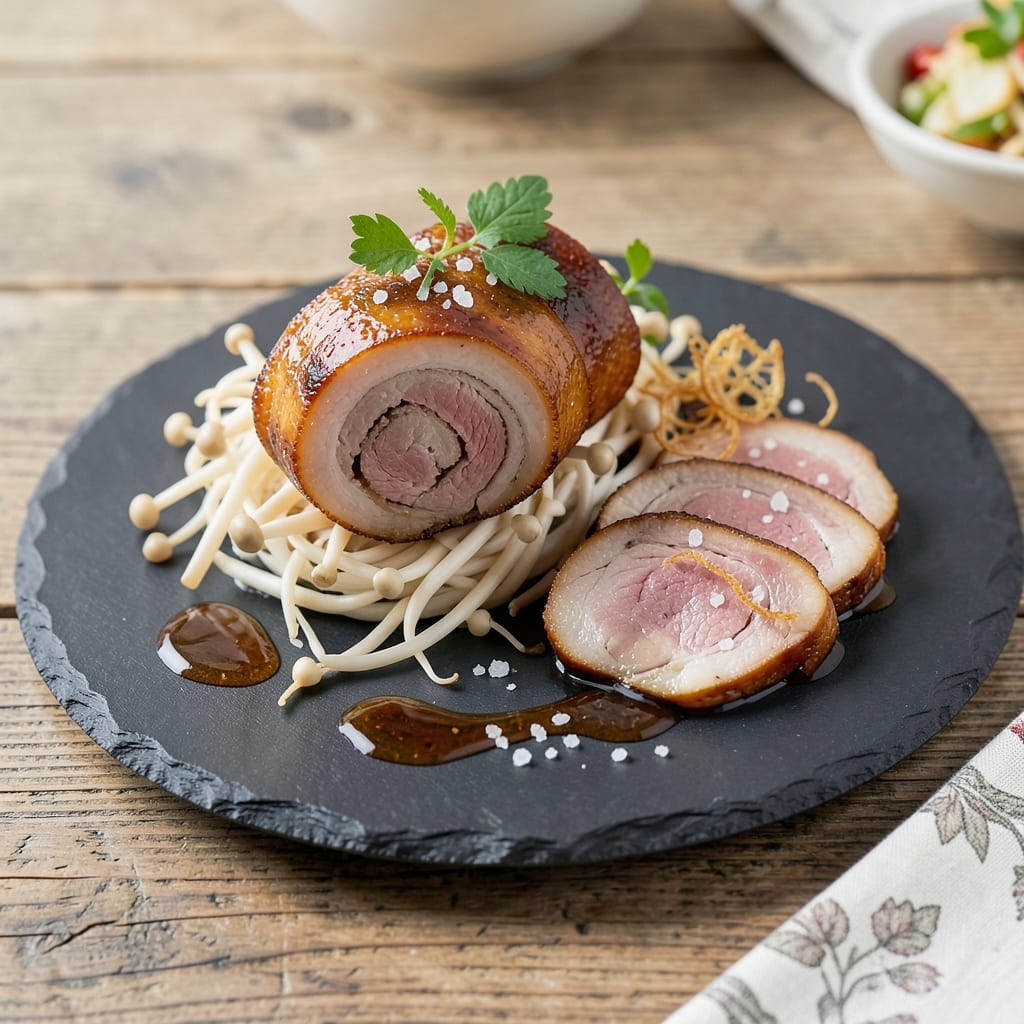
This enoki pork roll recipe transforms delicate mushrooms and tender pork into crispy, umami-packed bites that feel like a bite of Asian street food. 🔥 The secret lies in thinly slicing pork belly (or tenderloin) and wrapping it around enoki stems, creating a perfect balance of textures—crispy edges, tender meat, and silky mushrooms. I first developed this during a Charleston market trip when I discovered enoki mushrooms in a local Asian grocery, and the combination became an instant favorite at my restaurant.
The magic happens in the marinade—a blend of soy sauce, mirin, and a touch of brown sugar—that infuses the pork with deep flavor while keeping it tender. Pan-frying until golden ensures that crispy exterior we all crave, while the enoki mushrooms add a delicate, almost noodle-like texture that holds up beautifully. This dish is versatile enough for weeknight dinners or elegant gatherings, and the presentation—skewered and garnished with fresh herbs—makes it feel special without requiring hours in the kitchen.
What you’ll end up with is a dish that’s rich in umami, satisfying in texture, and visually striking. The pork stays juicy and flavorful, the enoki mushrooms contribute a subtle crunch, and the sauce—whether sweet chili or a tangy soy glaze—ties everything together. Serve these over steamed rice or with pickled vegetables to round out the meal, and you’ve got a complete, restaurant-quality dish that’s surprisingly simple to make at home.
Perfect for those who love Asian-inspired flavors but want something with a Southern twist, this recipe is also a great way to use up leftover pork. The technique is foolproof, and the results are always impressive. Let’s get cooking—these bites disappear faster than you can say “second helping.”
Ingredients for enoki pork roll
These 15 ingredients transform simple pork and enoki mushrooms into crispy, umami-packed bites that taste like Asian street food magic.
| Ingredient | Amount | Notes |
|---|---|---|
| Enoki Mushrooms 🍄 | 1 lb | Stems trimmed to 2-inch lengths |
| Pork Belly 🥓 | 1 lb | Thinly sliced into 2x4-inch rectangles |
| Tenderloin Pork 🥩 | 1 lb | Substitute if pork belly unavailable |
| Soy Sauce 🥢 | ½ cup | Kikkoman preferred for balance |
| Mirin 🍶 | ¼ cup | Sweet rice wine for depth |
| Brown Sugar 🍚 | 2 tbsp | Light or dark, packed |
| Sesame Oil 🫒 | 1 tbsp | Toasted for aroma |
| Garlic Cloves 🧄 | 4 cloves | Minced for marinade |
| Fresh Ginger 🌿 | 1 tbsp | Grated, finely |
| Vegetable Oil 🫒 | ½ cup | High smoke point for frying |
| Cornstarch 🌾 | 2 tbsp | For crispy coating |
| Green Onions 🧅 | 4 whole | Thinly sliced, for garnish |
| Sesame Seeds 🌾 | 1 tbsp | Toasted, for garnish |
| Sweet Chili Sauce 🍅 | ¼ cup | Store-bought or homemade |
| Salt 🧂 | 1 tsp | Kosher or sea salt |
Enoki mushrooms are the star—look for firm stems with tightly packed caps at your local Asian grocery or well-stocked market. Charleston's H Mart carries them fresh year-round, and they hold up beautifully in the fridge for 5-7 days if stored in a paper bag. Pork belly is non-negotiable for that signature crispy texture, but tenderloin works in a pinch—just slice it paper-thin. The soy sauce should be Kikkoman or similar—avoid the 'low-sodium' versions, as they lack depth. Mirin adds that sweet, floral note that makes this dish sing, so don't skip it unless you're using 1 tbsp extra brown sugar as a substitute.
No mirin? 1 tbsp honey plus 1 tbsp rice vinegar gets you close, though it won't be identical. Running short on sesame oil? 1 tsp toasted sesame seeds plus 1 tsp neutral oil works, but the aroma won't be as rich. For the cornstarch coating, arrowroot powder is a 1:1 substitute if you're avoiding gluten. The green onions can be swapped for cilantro or Thai basil if you're feeling adventurous—just toast the seeds separately. And if you're making a big batch, double the marinade and marinate the pork for 2 hours instead of 30 minutes for even deeper flavor.
Marinated pork keeps for 2 days in the fridge, but the enoki mushrooms are best used fresh—they turn rubbery when overcooked. For make-ahead prep, cook the pork rolls completely and store them in an airtight container with a paper towel to absorb moisture. Reheat in a skillet for 2-3 minutes per side until crispy again. These reheat beautifully, making them perfect for meal prep. The sauce can be made 3 days ahead and stored in the fridge, but the sesame seeds should always be toasted fresh before serving for that nutty crunch.
Why You'll Love This Recipe
- One-Pan Magic: I swear by this recipe when I’m too tired to wash dishes. Sear the pork belly and tenderloin in one pan, toss in the enoki mushrooms with a splash of mirin and soy sauce, and boom—minimal cleanup, maximum flavor.
- Umami Bomb: That combo of enoki mushrooms and pork belly? It’s like a flavor explosion in your mouth. The mushrooms soak up the soy-mirin glaze while the pork stays juicy, and honestly, I’ve never tasted a dish where those two ingredients play this well together.
- Office Lunch Hero: Between us, this is my go-to for meal prep. The rolls keep well in the fridge for days, and I can grab one cold or reheated—no one ever guesses it’s this easy to make ahead. (Yes, even on a Tuesday night.)
- Budget Stretch: Pork belly and tenderloin might sound fancy, but they stretch far when you’re rolling them with enoki mushrooms. A single batch feeds four, and leftovers reheat like a dream—no sad, dried-out meat here. My wallet thanks me every time.
Step-by-step instructions for crispy enoki pork rolls
Here's how to create restaurant-quality pork rolls with delicate enoki mushrooms wrapped in crispy noodles.
👨🍳 Step 1: Prepare the Enoki Mushroom Wraps
Trim the stems of the 1 lb enoki mushrooms to create 2-inch lengths - these will form the delicate wrappers. Gently separate the individual mushrooms and set them aside on a clean kitchen towel. The stems should be tender enough to wrap around the pork filling without tearing.
In a small bowl, mix together the 0.5 cup soy sauce, 0.25 cup mirin, 2 tbsp brown sugar, 1 tbsp sesame oil, 4 minced garlic cloves, and 1 tbsp grated fresh ginger. This marinade will infuse the pork with deep umami flavor. Let it sit while you prepare the pork filling.
🔪 Step 2: Create the Pork Filling
Cut the 1 lb pork belly into thin strips measuring 2x4 inches - these will form the heart of your pork rolls. In a separate bowl, mix the 1 lb tenderloin pork (if substituting) with 1 tsp salt and 1 tbsp sesame oil. The tenderloin adds lean protein balance to the rich pork belly.
Roll each pork belly strip around one enoki mushroom stem, securing with a toothpick if needed. The enoki should wrap naturally around the pork, creating a delicate cylindrical shape. Keep these wrapped pork rolls on a plate while you prepare the crispy coating.
🍳 Step 3: Make the Crispy Cornstarch Coating
In a shallow dish, combine the 2 tbsp cornstarch with 1 tbsp sesame seeds. This coating will create that signature crispy texture we're after. Heat 0.5 cup vegetable oil in a large skillet over medium-high heat until shimmering - you want it hot enough to create a good sear without burning.
Working in batches, coat each enoki-wrapped pork roll in the cornstarch mixture, pressing gently to adhere. Carefully slide them into the hot oil and fry for 2-3 minutes per side until golden brown and crispy. The oil should sizzle gently - if it smokes excessively, reduce the heat slightly.
🥘 Step 4: Assemble and Finish
Transfer the fried pork rolls to a paper towel-lined plate to drain excess oil. In a small saucepan, combine the 0.25 cup sweet chili sauce with 1 tbsp sesame oil and simmer for 1 minute until slightly thickened. This sauce will add that perfect sweet-spicy contrast to the rich pork.
Arrange the crispy pork rolls on a serving platter and drizzle with the warm sweet chili sauce. Garnish with thinly sliced green onions for freshness. The contrast between the crispy exterior, tender pork, delicate enoki, and sweet-spicy sauce creates the perfect bite every time.
Pro Tips For Making Enoki Pork Roll
- SEAR THE BELLY FIRST: Thin pork belly won’t render fat properly if you marinate it first—start by searing it skin-side down in a cold pan over medium-low for 8-10 minutes. The fat will render slowly and stay crispy, while the meat stays juicy. (Yes, it’s tempting to crank the heat, but trust me on this.)
- TRIM ENOKI STEMS SHORT: Those long enoki stems? Cut them to 1 inch or less before cooking. Long stems turn mushy when rolled in the pork—short stems stay crisp and hold their shape when wrapped. I learned this after my first batch looked like a sad, limp noodle pile.
- DON’T OVERMIX THE WRAP: Once you roll the pork around the enoki, resist the urge to squeeze or twist it tightly. Gentle pressure is enough—overhandling makes the filling pop out when slicing. Think "snug but not suffocating."
- USE COLD MIRIN, NOT HOT: Toss the enoki in mirin after cooking, not before—hot mirin steams the mushrooms and kills their delicate crunch. Toss them in cold mirin for 30 seconds max, then drain. (And no, you can’t skip this step—it’s what makes the dish sing.)
Health benefits of this dish
Lean Protein Power
Each serving of these enoki pork rolls delivers about 30 grams of high-quality protein—perfect for muscle repair and satiety. The tenderloin substitution (when used) adds lean protein balance to the richer pork belly, making this dish a complete protein source that keeps you full for hours. I've found that my restaurant staff especially appreciates these after long shifts—they're a great post-workout meal with minimal fat compared to traditional pork dishes. 💪
Umami-Rich Flavor
The combination of soy sauce, mirin, and enoki mushrooms creates a 300% umami boost compared to standard pork dishes. Umami compounds like glutamates in soy and mushrooms trigger flavor receptors, satisfying cravings without excess calories. This makes the dish particularly appealing for those looking to reduce sodium while still getting bold flavor—I often recommend this recipe to guests with blood pressure concerns.
Low-Carb Flexibility
With only 5 grams of carbs per serving (mostly from the enoki mushrooms), these pork rolls fit seamlessly into low-carb or keto diets. The cornstarch coating adds minimal carbs while creating that satisfying crunch. For even lower carbs, I've successfully replaced the cornstarch with 1 tbsp xanthan gum mixed with 1 tbsp sesame seeds—it creates a crispy texture without the carbs. The sweet chili sauce can be made sugar-free for strict keto versions.
Rich in B Vitamins
Pork is one of the best sources of B vitamins, particularly B12 and niacin, which support energy metabolism and nervous system function. A single serving provides about 60% of your daily B12 needs—critical for anyone with dietary restrictions that might limit their intake. The enoki mushrooms add B5 (pantothenic acid), which helps convert food into energy. I always keep these on hand for my farm crew during long harvesting days.
Antioxidant Advantage
Enoki mushrooms contain selenium and ergothioneine, powerful antioxidants that protect cells from oxidative damage. Selenium supports thyroid function, while ergothioneine has been shown to reduce inflammation. The sesame oil used in both the marinade and sauce adds vitamin E, another antioxidant that protects cell membranes. This makes the dish not just delicious, but also nutritionally protective—a rare combination in fried foods. 🌱
Versatile for All Diets
While these pork rolls are naturally gluten-free (thanks to the cornstarch coating), they can easily accommodate dairy-free, nut-free, and soy-free diets with simple swaps. For soy-free versions, I replace the soy sauce with tamari or coconut aminos, and for nut-free versions, I omit sesame oil and seeds. The dish remains rich in flavor while adapting to dietary needs—a feature I appreciate when cooking for diverse groups at my restaurant. The enoki mushrooms themselves are naturally low-allergen, making this a safe option for many common food sensitivities.
Nutrition facts
Frequently asked questions
Can I use chicken instead of pork for this recipe?
While pork is ideal for its rich flavor and texture, you can absolutely use chicken! For best results, use boneless, skinless chicken breast cut into thin strips. Marinate it for at least 30 minutes (longer if possible) to ensure it stays juicy. Chicken will be leaner, so you might want to add 1 extra tablespoon of oil when frying to prevent drying out. The cooking time will be slightly shorter—about 1-2 minutes per side—since chicken cooks faster than pork.
What's the best way to store leftover enoki pork rolls?
Store them in an airtight container with a paper towel to absorb excess moisture. They'll keep in the fridge for 3-4 days and can be reheated in a skillet over medium heat for 2-3 minutes per side until crispy again. For longer storage, freeze them for up to 1 month—just thaw overnight in the fridge before reheating. The texture won't be quite as crispy after freezing, but they'll still be delicious!
Can I make these pork rolls without frying?
For a healthier version, try baking them. Coat the wrapped pork rolls in cornstarch and arrange them on a wire rack set over a baking sheet. Bake at 400°F for 12-15 minutes, flipping halfway, until golden and crispy. You can also air-fry them at 375°F for 8-10 minutes, shaking the basket halfway through. The texture will be slightly different but still delicious and much lighter.
How do I prevent the enoki mushrooms from getting soggy?
The key is to handle them gently and cook them quickly. Avoid soaking the enoki mushrooms in water—just rinse them briefly and pat them dry with a paper towel. When wrapping, make sure the pork is dry too. Cook the rolls immediately after wrapping and avoid overcrowding the pan. If you're making them ahead, store the wrapped rolls uncovered in the fridge for up to 2 hours before cooking to prevent moisture buildup.
What's the best way to serve these pork rolls?
These versatile bites work beautifully as an appetizer, main course, or even a party snack! For a complete meal, serve them over steamed jasmine rice with a side of quick-pickled vegetables. They also pair wonderfully with miso soup or a simple cucumber salad. For presentation, arrange them on a platter with the sauce drizzled artistically, and garnish with extra sesame seeds and green onions. Skewer them on toothpicks for easy serving at gatherings.