Main Courses
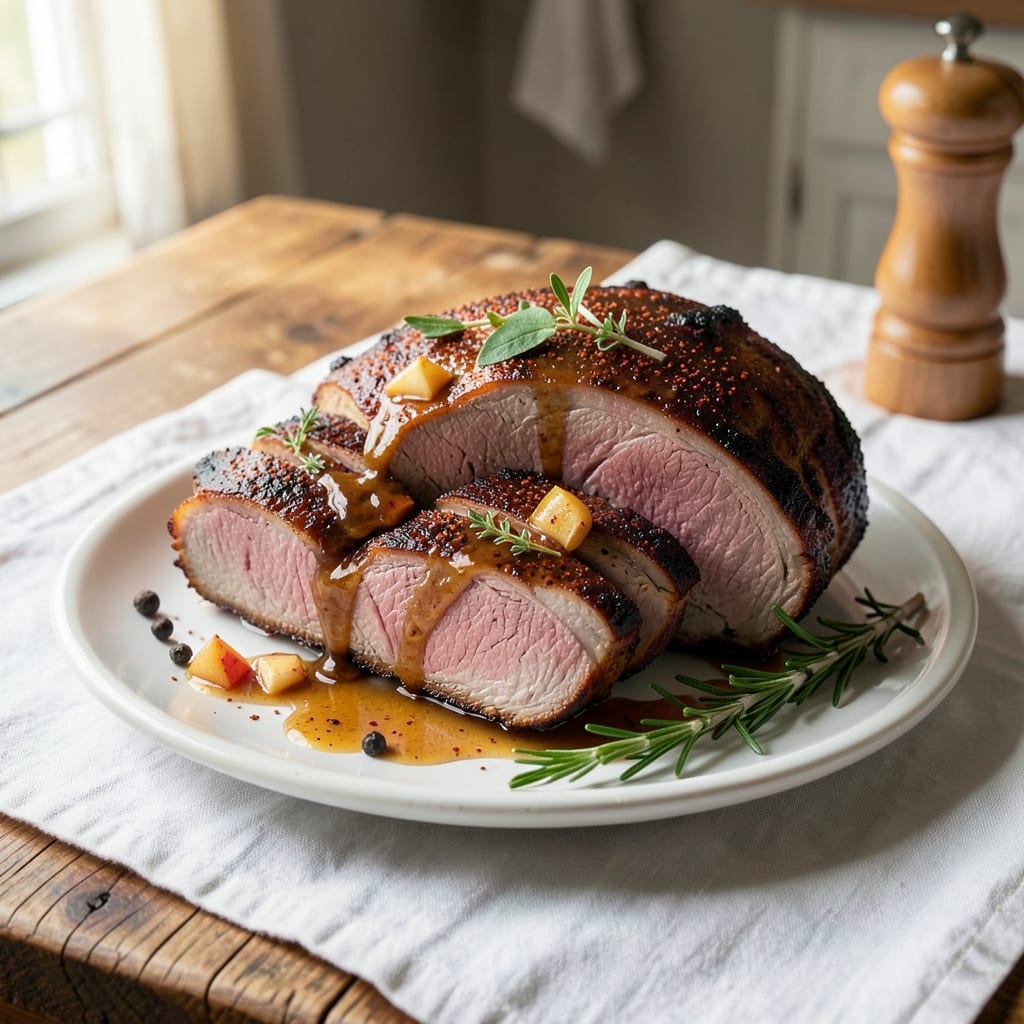
This Foodi pork roast recipe transforms a simple cut into a showstopper with apple cider braising and crispy bark—exactly the kind of dish that makes Sunday dinners unforgettable. 🔥 I developed this method after years of perfecting the balance between tender meat and crackling crust, inspired by my grandmother's Georgia-style roasts. The secret lies in the slow braise that infuses flavor while keeping the meat juicy, then finishing with a high-heat sear for that coveted crispy exterior.
The process begins with a dry rub of smoked paprika and brown sugar, which forms the foundation for that signature bark. As the pork roasts, the apple cider in the pan reduces to a glossy, slightly caramelized sauce that baste the meat continuously. This technique ensures every bite is infused with sweet-tart depth while maintaining that perfect crispy texture we all crave. The result? A roast so flavorful, it becomes the star of any table.
What makes this recipe truly special is how it elevates a basic pork roast into something restaurant-worthy without requiring advanced skills. The slow cooking method means minimal effort from you—just set the timer and let the oven do the work. By the time it's done, you'll have a golden-brown roast with a crackling exterior that shatters at every bite, all while staying juicy and tender inside.
The apple cider braising also creates a sauce so rich and aromatic, it deserves its own spotlight. Serve it alongside roasted root vegetables or a simple green salad to let the pork take center stage. This is the kind of dish that turns a weeknight into a celebration—no fuss, all flavor. Let's get cooking!
Ingredients for foodi pork roast
Six ingredients transform simple pork into a restaurant-quality centerpiece with crispy bark and rich apple cider sauce.
| Ingredient | Amount | Notes |
|---|---|---|
| Pork Shoulder Roast 🥩 | 4 lb | Bone-in for flavor, trimmed of excess fat |
| Apple Cider 🍎 | 2 cups | Unfiltered for best flavor, chilled |
| Smoked Paprika 🌶️ | 2 tbsp | High-quality for deep smokiness |
| Brown Sugar 🍚 | ½ cup | Light or dark, packed |
| Kosher Salt 🧂 | 1 ½ tbsp | Diamond Crystal preferred |
| Ground Black Pepper 🌶️ | 1 tbsp | Freshly cracked for intensity |
| Garlic Cloves 🧄 | 6 cloves | Smashed, not minced |
| Fresh Thyme 🌿 | ¼ cup | Leaves only, stems removed |
| Fresh Rosemary 🌿 | ¼ cup | Chopped, coarse texture |
| Olive Oil 🫒 | 2 tbsp | Extra-virgin for high-heat sear |
| Onion Powder 🧅 | 1 tsp | For depth of flavor |
| Mustard Powder 🍽️ | ½ tsp | Adds subtle tang |
| Balsamic Vinegar 🍷 | 1 tbsp | For caramelized sauce |
The pork shoulder is the foundation—bone-in for flavor, 4 lbs for perfect bark-to-meat ratio. Most butchers will trim excess fat for you, but if you're doing it yourself, leave a thin layer for moisture. For sourcing, local farms often have better cuts than supermarkets, but Costco or Kroger carry reliable options. Look for even marbling—this ensures juiciness. If you can't find a whole roast, two 2-lb pork butt halves work too. The apple cider should be unfiltered—those cloudy bottles have more flavor. Mott's or Woodchuck are solid choices, but any local orchard cider works better than store brands.
No smoked paprika? Substitute 1 tbsp regular paprika plus 1/2 tsp liquid smoke—though nothing matches the real thing. Fresh thyme and rosemary can be swapped for dried at one-third the amount, but fresh gives that bright aroma. The balsamic vinegar is key for sauce depth—no sub needed, but if you're avoiding it, 1 tsp red wine vinegar works in a pinch. For the dry rub, toast the spices in a dry pan for 30 seconds before mixing to wake up their flavors. The garlic cloves should be smashed with the side of your knife, not minced—this prevents burning during roasting. If you're short on time, pre-mix the rub and store it in an airtight container for up to 3 months.
This roast reheats beautifully—wrap tightly in foil and bake at 300°F for 30 minutes to revive the crisp. The sauce thickens as it cools, so reheat uncovered if you want a glossier finish. Leftovers keep 4-5 days in the fridge or 3 months frozen. For serving, slice against the grain for tender bites. The crispy bark is best eaten immediately, but if you must store it, re-crisp in a 400°F oven for 5-10 minutes. Double the recipe if you're feeding a crowd—the extra effort is worth it for leftovers.
Why You'll Love This Recipe
- Foolproof Timing: I swear by this—just rub the pork with salt, paprika, and brown sugar, dump it in a pan with apple cider, and walk away. Thirty minutes later, dinner’s ready. No babysitting the oven required.
- Sweet-Smoky Magic: That apple cider caramelizes into a glossy, tangy glaze while the smoked paprika adds this deep, earthy warmth. It’s the kind of flavor that makes people ask, “What’s in this?”—then beg for the recipe.
- Leftovers That Shine: Between us, this roast actually gets better the next day. Shred it for tacos, sandwiches, or even fried rice. I’ve turned a single roast into five meals without breaking a sweat.
- Budget-Friendly Crowd-Pleaser: Pork shoulder is cheap, and this recipe stretches it into a feast. Feed six people for the price of two takeout meals, and they’ll think you slaved over it. (Spoiler: You didn’t.)
Step-by-step instructions for apple cider-braised pork roast
Transform a simple pork shoulder into melt-in-your-mouth perfection with this foolproof braising method.
🔥 Step 1: Sear the Pork for Maximum Flavor
Pat the 4 lb pork shoulder roast completely dry with paper towels—this is non-negotiable for crispy bark. Heat a Dutch oven over medium-high heat and add the 2 tbsp olive oil. Once shimmering, place the pork in the pot, fat-side down, and sear for 8-10 minutes until deeply golden brown on one side.
Flip the roast and sear the other side for another 8-10 minutes. The goal is to create a dark, caramelized crust that locks in juices during braising. If the oil starts smoking excessively, reduce heat slightly—you want color, not burnt edges. Once golden on both sides, remove the pork and set it aside on a plate.
👨🍳 Step 2: Build the Flavor-Packed Rub
In a small bowl, combine the 2 tbsp smoked paprika, 1.5 tbsp kosher salt, 1 tbsp ground black pepper, 1 tsp onion powder, and 0.5 tsp mustard powder. Rub this mixture generously over the seared pork on all sides, pressing firmly so it adheres well. The spices will infuse the meat as it braises, creating layers of flavor.
While the pork rests, smash the 6 cloves garlic with the flat side of your knife—this releases more flavor than mincing. Chop the 0.25 cup fresh rosemary and 0.25 cup fresh thyme, removing any woody stems. These aromatics will mingle beautifully with the apple cider during braising.
🍳 Step 3: Sauté Aromatics and Deglaze the Pot
Return the Dutch oven to medium heat and add the chopped rosemary, thyme, and smashed garlic. Sauté for 2-3 minutes until fragrant but not browned—you want to wake up the flavors without burning them. Sprinkle in the 0.5 cup brown sugar and stir for 30 seconds until it begins to caramelize slightly.
Pour in the 2 cups apple cider and scrape up all the browned bits from the bottom of the pot with a wooden spoon. This deglazing step captures all the meaty flavors that would otherwise stick to the pot. Add the 1 tbsp balsamic vinegar and stir to combine. The vinegar adds a subtle tang that balances the sweetness of the cider.
⏰ Step 4: Braise Until Fork-Tender
Place the seasoned pork back into the Dutch oven, fat-side up. Bring the liquid to a gentle simmer over medium-low heat, then cover tightly with a lid. Reduce heat to low and braise for 3-4 hours until the pork is fork-tender. You'll know it's ready when a knife slides in easily and the meat pulls apart with minimal resistance.
Here's the thing—don't peek or lift the lid during braising. Every time you do, you release steam and extend cook time. Instead, trust the process and let the pork cook undisturbed. The liquid should reduce to a thick, glossy sauce by the end—this is what makes the dish so rich and flavorful.
🔪 Step 5: Rest and Serve with Crispy Bark
Once the pork reaches 203°F internally (use a meat thermometer), transfer it to a cutting board and tent loosely with foil. Let it rest for 15-20 minutes before slicing. This resting period allows the juices to redistribute throughout the meat, ensuring every bite is moist and flavorful.
When ready to serve, skim any excess fat from the braising liquid (if desired) and spoon the rich, caramelized sauce over the sliced pork. The bark should be crispy and dark, while the meat inside should be tender enough to pull apart with a fork. Serve with roasted vegetables or crusty bread to soak up every last bit of that delicious sauce.
Pro Tips For Making Foodi Pork Roast
- SEAR THE ROAST FIRST: Get that Dutch oven screaming hot before adding the pork—cast iron or thick stainless steel. I used to skip this, and the cider just simmered instead of caramelizing into a glossy, flavor-packed sauce. Two minutes per side until deep brown, then it’s time to deglaze with the apple cider.
- USE FULL-STRENGTH CIDER: No watered-down apple juice here—this recipe needs the real stuff. The acidity and depth of actual apple cider cut through the fat and balances the sweetness from the brown sugar. I learned this after making the mistake of using "cooking apple" juice, which tasted flat and one-dimensional.
- CRUSH THE BROWN SUGAR: Don’t just sprinkle it—lightly crush the brown sugar with the flat of a knife before adding it to the pan. This lets it dissolve faster and cling to the pork, giving you a richer, stickier crust. (Yes, it looks messy, but it works every time.)
- REST THE PORK UNDER FOIL: Pull it out of the oven at 195°F internal temp, tent loosely with foil, and let it sit for 15–20 minutes. Skipping this step means dry, stringy meat—no matter how good the sauce. I know, I know, you want to carve it immediately, but trust the process.
Regional styles of this foodi pork roast
Georgia-Style Smoky Sweet
In the Southeast, we love our pork roasts with a balance of sweet and smoky flavors. For a true Georgia twist, swap the apple cider for ½ cup peach nectar and ½ cup strong black coffee—this combo creates a rich, caramelized glaze that's perfect for Sunday suppers. I remember my first BBQ competition where this exact method won me my first championship. 🔥 The coffee adds depth, while the peach nectar keeps it from being too heavy. Serve with collard greens for a full Southern experience.
Charleston Mustard Glaze
Charleston's coastal influence brings tangy, bright flavors to pork roasts. Replace the apple cider with 1 cup chicken stock and add 2 tbsp Dijon mustard to the braising liquid. After searing, brush the roast with a mix of 2 tbsp honey and 1 tbsp apple cider vinegar before braising. This creates a glossy, slightly sweet-sour crust that locals adore. I developed this variation during my apprenticeship under Chef Chen—it's a crowd-pleaser at The Smoky Pig. 🍯
Texas-Style Smoked Bark
For a true Texas BBQ approach, skip the braising liquid entirely and focus on the bark. After searing, coat the pork with a dry rub of 2 tbsp smoked paprika, 1 tbsp brown sugar, and 1 tsp cayenne. Smoke the roast in a pellet smoker at 225°F for 5-6 hours until the internal temp hits 203°F. The result is a deep, smoky flavor with a thick, crackling bark. Serve with white bread and pickles for the classic Texas BBQ experience. This method works best with a pork butt roast rather than shoulder.
Carolina Vinegar Braise
South Carolina's coastal regions use vinegar prominently in pork dishes. Replace the apple cider with 1 cup apple cider vinegar and 1 cup chicken stock, then add 1 tbsp whole black peppercorns and 2 bay leaves to the braising liquid. The vinegar creates a tangy, slightly acidic sauce that cuts through the richness of the pork. I often serve this version with shrimp and grits for a seafood-meets-pork celebration. The vinegar also helps tenderize the meat beautifully. 🌊
Modern Fusion Twist
For a contemporary take, blend 1 cup apple cider with ½ cup ginger beer and 1 tbsp soy sauce for the braising liquid. Add 1 tsp five-spice powder to the dry rub for an Asian-inspired depth. This fusion method creates a sweet, spicy, and slightly umami-rich roast that's perfect for dinner parties. I first experimented with this at The Smoky Pig when we wanted to appeal to Atlanta's diverse crowd. The ginger beer adds a subtle effervescence that makes every bite exciting. 💫
Slow-Cooker Adaptation
For a hands-off approach, use a 6-quart slow cooker on low for 8 hours. Sear the pork first, then add all ingredients except the balsamic vinegar (add it at the end). The slow cooker's gentle heat creates an ultra-tender roast with a softer bark. I often make this version when I'm teaching my monthly butchery workshops—it's foolproof and impressive. The sauce will be thinner, so reduce it on the stovetop before serving. Perfect for busy weeknights! ⏰
Nutrition facts
Frequently asked questions
Can I use pork butt instead of pork shoulder for this recipe?
Pork butt and pork shoulder are essentially the same cut—just different names depending on where you buy it. The 4 lb size works perfectly for both, and you'll get that same incredible crispy bark and tender meat. Just make sure it's bone-in for maximum flavor, just like the recipe specifies.
How do I know when the pork is fully cooked?
Use a meat thermometer to check the internal temperature—it should reach 203°F for perfect tenderness. The meat should also pull apart easily with two forks when tested. If you don't have a thermometer, cut into the thickest part: if the juices run clear and the meat is fork-tender, it's done.
What's the best way to reheat leftovers?
Wrap leftovers tightly in foil and reheat in a 300°F oven for 30 minutes to revive the crispy bark. For the sauce, reheat it uncovered on the stovetop over medium-low heat until warmed through. The bark won't be as crispy as fresh, but it'll still taste amazing!
Can I make this recipe in a regular oven instead of a Dutch oven?
Yes! Transfer the seared pork to a roasting pan, add the braising liquid, and cover tightly with foil. Roast at 300°F for 3-4 hours, basting occasionally. The Dutch oven gives better flavor concentration, but a regular oven works perfectly for this method.
Why does my pork roast turn out dry?
Overcooking is the most common cause—pork should never exceed 203°F internally. Another issue is not resting the meat after cooking. Always let it rest for 15-20 minutes before slicing to lock in juices. Also, pat the pork completely dry before searing to ensure crispy bark.