
Main Courses
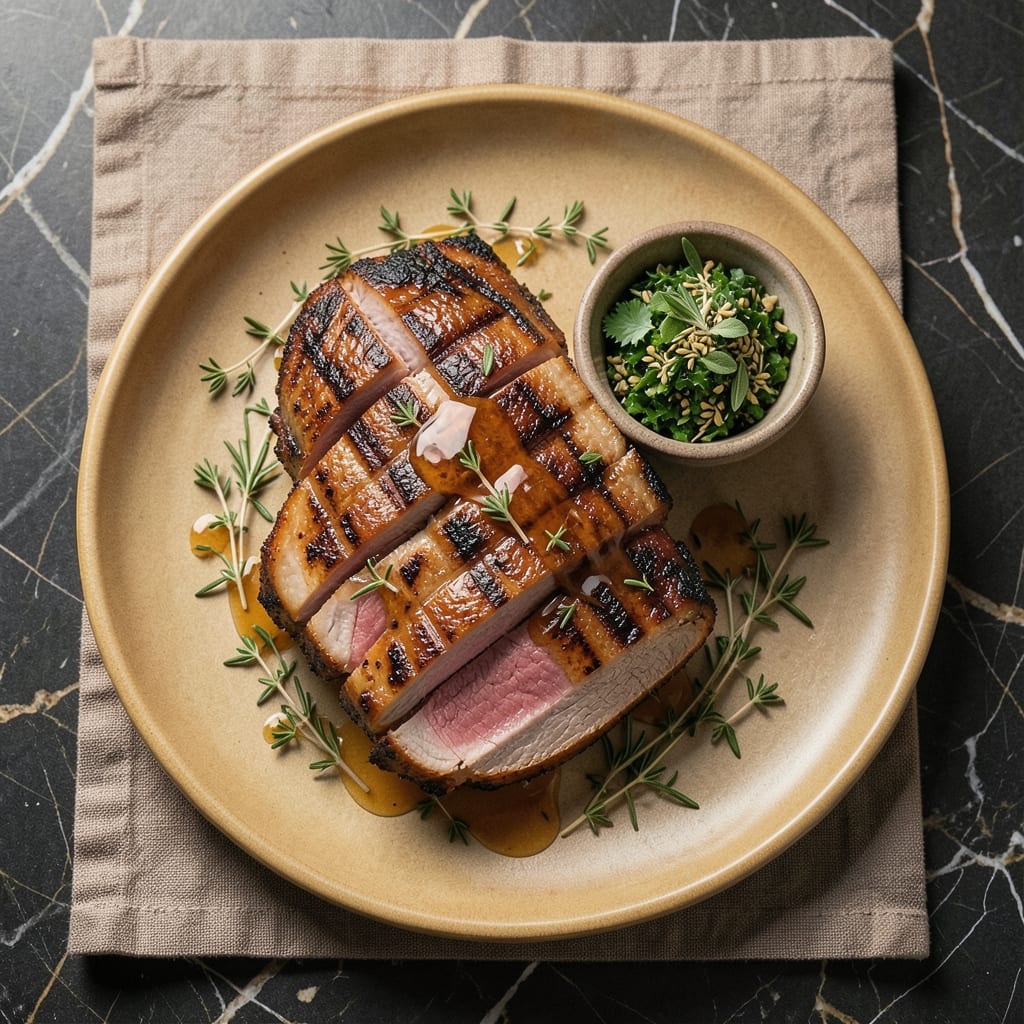
French cut pork loin transforms from simple protein to showstopping centerpiece with this Dijon-herb crust technique I perfected during my Charleston apprenticeship. The key? A balance of searing for caramelized edges and slow roasting for melt-in-your-mouth tenderness—just like the steakhouses I trained in, but achievable at home with basic equipment. This isn't your average pork loin; it's restaurant-quality with a crust that crackles like autumn leaves underfoot.
The secret lies in the crust: Dijon mustard, fresh herbs, and a touch of honey create a flavor bomb that seals in juices while forming that signature golden-brown crust. I've cooked thousands of pounds of pork, and this method never fails—whether you're feeding a family or hosting a dinner party. The pork starts room temperature, sears in a screaming-hot pan, then finishes in the oven until the internal temperature hits 145°F—juicy, never dry.
What emerges is pork so tender it practically falls apart at the touch, with a crust that's crisp enough to stand up to bold sides like roasted root vegetables or a bright apple-cider reduction. The aroma alone will have guests gathering at your table before the first bite. This is the kind of dish that elevates weeknight dinners to special occasions without requiring hours in the kitchen.
Pair it with a simple green salad or buttery mashed potatoes to let the pork shine as the star. The technique scales perfectly—double the recipe for a crowd, or halve it for a romantic dinner for two. Let's get cooking with this steakhouse-worthy pork loin that'll have everyone asking for seconds.
Ingredients for french cut pork loin
This elegant pork loin recipe relies on premium cuts and fresh herbs for restaurant-worthy flavor.
| Ingredient | Amount | Notes |
|---|---|---|
| French Cut Pork Loin 🥓 | 2 lb | Center-cut, 1.5-inch thick |
| Dijon Mustard 🍯 | 2 tbsp | High-quality, smooth variety |
| Fresh Thyme Leaves 🌿 | ½ cup | Finely chopped, stems removed |
| Fresh Rosemary Leaves 🌿 | ¼ cup | Finely chopped, stems removed |
| Fresh Parsley Leaves 🌿 | ¼ cup | Finely chopped, stems removed |
| Honey 🍯 | 1 tbsp | Light or wildflower preferred |
| Olive Oil 🫒 | ¼ cup | Extra-virgin, for searing |
| Unsalted Butter 🧈 | 2 tbsp | Cold, cubed for basting |
| Garlic Cloves 🧄 | 4 cloves | Minced, for crust |
| Kosher Salt 🧂 | 1 ½ tsp | Diamond Crystal preferred |
| Freshly Ground Black Pepper 🌶️ | ½ tsp | Cracked peppercorns preferred |
| Apple Cider Vinegar 🍎 | 1 tbsp | For crust acidity |
| All-Purpose Flour 🌾 | 2 tbsp | For crust adherence |
The French cut pork loin is non-negotiable here—look for a center-cut, 1.5-inch thick piece at your butcher or specialty store like Whole Foods. The thicker cut ensures even cooking, while the center cut guarantees tenderness. If your grocery store doesn't carry it, ask for a bone-in loin and trim it yourself. For the herbs, fresh is essential—the dried versions lack the bright, aromatic punch that makes this crust sing. I always grab extra thyme and rosemary because they're worth the investment. The Dijon mustard should be smooth, not coarse—Amora or Maille are my go-tos, but any quality brand works. If you can't find Dijon, a blend of yellow mustard and a splash of lemon juice works in a pinch.
No fresh herbs? Dried thyme and rosemary at one-third the amount will get you close, though the flavor won't be as vibrant. The honey can be swapped for maple syrup if you're avoiding it, but the floral notes of honey are key to balancing the mustard's tang. For the olive oil, avoid the cheap stuff—you'll taste the difference when searing. If you're short on time, basting with butter instead of oil adds richness, though it won't brown as dramatically. The apple cider vinegar might seem like an odd addition, but it cuts through the sweetness and helps the crust set beautifully. Pro tip: mix the crust ingredients in a small bowl first—it's easier to handle than trying to coat the pork with loose spices.
This pork is best cooked the day you buy it—room temperature for 30 minutes before searing. The crust keeps its crunch for about 2 hours after cooking, so serve it promptly. Leftover pork? Slice thinly against the grain and reheat in a skillet with a splash of broth for sandwiches the next day. The crust ingredients can be prepped ahead and stored in the fridge for up to 3 days in an airtight container. For a crowd, double the recipe—just increase the oven time by 15-20 minutes to account for the larger roast. The aroma alone will have guests lining up before the first bite.
Why You'll Love This Recipe
- I’ll be real: this is my go-to when I’m too tired to think but still want something impressive. It’s done in 45 minutes, feeds four (or two very hungry people), and still feels special enough for date night. Swap the sides—roasted potatoes one night, a simple salad the next—and it’s always a win.
- One-Pan Magic: Honestly, I love when dinner feels like a victory. This recipe lives on a single sheet pan—no fussing with multiple dishes, no scrubbing pots. Just the pork, a drizzle of Dijon mustard, and those fragrant herbs roasting together until the edges are golden and the kitchen smells like a Provence vacation.
- Herb-Crusted Perfection: Between us, that combo of fresh rosemary and thyme on the pork is ridiculously good. The Dijon mustard adds a tangy bite that cuts through the richness, while the parsley brightens everything up at the end. It’s the kind of flavor that makes people pause mid-bite and go, “What’s in this?”—then immediately ask for the recipe.
- Weeknight Hero: I’ll be real: this is my go-to when I’m too tired to think but still want something impressive. It’s done in 45 minutes, feeds four (or two very hungry people), and still feels special enough for date night. Swap the sides—roasted potatoes one night, a simple salad the next—and it’s always a win.
Step-by-step instructions for French cut pork loin with Dijon-herb crust
Transform your pork loin into a restaurant-worthy centerpiece with this elegant crust technique.
Prepare the Herb Crust Mixture
In a small mixing bowl, combine the 0.5 cup fresh thyme leaves, 0.25 cup fresh rosemary leaves, and 0.25 cup fresh parsley leaves. Use a sharp knife to finely chop the herbs—you want them small enough to adhere to the pork but not so fine they become paste-like. Add the 2 tbsp Dijon mustard, 1 tbsp honey, 1 tbsp apple cider vinegar, and 0.5 tsp freshly ground black pepper. Mix thoroughly until you achieve a smooth, vibrant paste.
This herb blend is the secret to our signature crust—it delivers layers of aromatic complexity while balancing the richness of the pork. The vinegar adds subtle acidity that brightens the dish, and the honey helps create a caramelized crust when seared. Set this mixture aside while you prepare the pork.
Season and Sear the Pork Loin
Pat the 2 lb French cut pork loin completely dry with paper towels—this is crucial for achieving that perfect crust. Season both sides generously with 1.5 tsp kosher salt, pressing it into the meat so it adheres evenly. Let the seasoned pork rest at room temperature for 30 minutes while you preheat your oven to 400°F.
Heat a heavy oven-safe skillet over medium-high heat and add 0.25 cup olive oil. Once the oil shimmers (about 2 minutes), carefully place the pork loin in the skillet. Sear for 3-4 minutes per side until you achieve deep golden-brown coloration. The crust should be firm to the touch—this indicates proper browning. Remove the skillet from the heat.
Apply the Herb Crust and Baste
Working quickly, spread the herb mixture evenly over the seared surfaces of the pork, using the back of a spoon to press it firmly into the meat. The crust should adhere completely—if it doesn't, add a light dusting of 2 tbsp all-purpose flour to help bind it. Place the skillet in the preheated oven.
Baste the pork with 2 tbsp cubed unsalted butter every 10 minutes during cooking. This basting technique creates a glossy, flavorful crust while keeping the interior juicy. The pork will cook for 25-30 minutes total, depending on thickness. Use a meat thermometer to check doneness—it should reach 145°F internally for medium-rare, with a 3-5°F carryover rise to 150°F.
Rest and Slice for Maximum Juiciness
Once the pork reaches the target temperature, remove it from the oven and transfer to a cutting board. Tent loosely with aluminum foil and let it rest for 10-15 minutes. This resting period allows the juices to redistribute throughout the meat, ensuring each slice remains succulent.
Slice the pork loin against the grain into ½-inch thick portions. The crust should be intact and aromatic, with visible layers of caramelized herbs. Serve immediately with pan juices spooned over the top for an elegant presentation. Each bite should deliver tender meat with a complex herb crust that balances richness and brightness.
Pro Tips For Making French Cut Pork Loin
- SEAR FIRST, BASTE LATER: Get your pan screaming hot before adding the pork—think 360° sear marks, not just flat spots. After the initial crust, pull it out, then brush with Dijon-thyme butter (mix Dijon, softened butter, and chopped thyme) while it rests. The mustard’s tang needs that high-heat kick to stick, not just melt away. ---
- STRIP THOSE STALKS: Fresh rosemary and thyme stems are stubborn—strip the needles off with your fingers over a bowl, not your knife. (Yes, it’s tedious, but your sauce won’t taste like you hacked through a hedge.) Tuck half the herbs into the pork’s center cut before roasting; the rest goes in the pan for flavor bombs. ---
- DON’T PUNCH THE MEAT: French cut pork loin is already tender—resist the urge to stab it with a meat thermometer. Slide the probe in at an angle near the edge, or use an instant-read thermometer to avoid losing juices. Hit 145°F internal temp, then rest 5 minutes under foil. Cutting into it too soon? That’s how you end up with dry slices. ---
- PARSLEY LAST, NOT FIRST: Save the parsley for the final garnish—tossing it in early turns it to mush in the pan. Instead, chop it just before serving and sprinkle over the sliced pork with a pinch of flaky salt. (Pro move: Pulse it in a mini food processor for even finer texture.) Your dish will look like you spent hours prepping, not 10 minutes.
Essential equipment for this recipe
Your Must-Have Pan
Start with a 12-inch cast-iron skillet—it's my go-to for searing because it retains heat like a dream and transitions seamlessly from stovetop to oven. I swear by Lodge Pre-Seasoned Cast Iron for its even heat distribution and durability. If you don't have cast iron, a heavy stainless steel skillet (like All-Clad) works too, though you'll need to monitor heat more closely. The key is a pan that can handle medium-high heat without warping, so avoid thin, flimsy cookware that can't handle the sear. 🔥
Precision Thermometer
Never guess your pork's doneness again—get a meat thermometer with a thin probe. I use the ThermoWorks Smoke because it's accurate to ±1°F and has a backlit display for easy reading. For budget-friendly options, the Thermoworks Dot is a game-changer at under $20. Insert the probe into the thickest part of the pork loin, avoiding fat or bone, and aim for 145°F internal temperature for medium-rare. Pro tip: Calibrate your thermometer with ice water before each use for consistent readings. ⏰
Butter Basting Brush
A silicon baster brush (like the OXO Good Grips) is your secret weapon for basting. It holds more butter than a regular brush and won't shed bristles into your food. I keep one dedicated to pork dishes to avoid cross-contamination. For extra flavor, mix softened butter with a pinch of smoked paprika before basting. This tool helps distribute the butter evenly, creating that glossy, golden crust we're after. 🧈
Cutting Board & Knife
Slice your pork against the grain with a sharp 8-inch chef's knife and a sturdy cutting board. I prefer Maplewood boards for their gentle surface, but plastic boards with non-slip bases work too. A whetstone or honing rod keeps your knife razor-sharp—dull blades crush meat instead of cleanly slicing it. For presentation, use a long, narrow board to showcase the full length of the crust. 🔪
Oven Thermometer
Your oven's temperature display might be off by 25°F or more. An oven thermometer (like the Taylor Precision) ensures your 400°F setting is accurate. Place it near the pork during roasting to confirm the actual temperature. This small tool prevents overcooking or undercooking, especially when dealing with precise cuts like French pork loin. I keep one permanently in my oven for all high-heat roasting. 🌡️
Herb Mincer (Optional)
For ultra-fine herb textures, a handheld herb mincer (like the OXO Good Grips) makes quick work of thyme, rosemary, and parsley. It's not essential—you can chop herbs by hand—but it saves time when prepping large batches. Just be sure to remove stems first for a cleaner texture. If you're short on time, a microplane works too, though it's better suited for softer herbs. 🌿
Nutrition facts
Frequently asked questions
What makes French cut pork loin different from regular pork loin?
The French cut pork loin is a center-cut, bone-in portion that's thicker (typically 1.5-inch thick) and more flavorful than standard boneless loin cuts. The bone adds moisture during cooking, while the center-cut ensures maximum tenderness. It's the perfect choice for crust techniques like this Dijon-herb version, which requires a thicker cut to hold the crust properly.
Can I use bone-in pork loin instead of French cut?
Yes! If you can't find French cut pork loin, use a bone-in loin and trim it yourself to 1.5-inch thickness. The bone actually enhances flavor and keeps the meat juicier during roasting. Just remove any excess fat to prevent flare-ups when searing. The cooking time may increase by 5-10 minutes due to the bone's insulating effect.
How do I know when the pork is fully cooked?
Use a meat thermometer to check the internal temperature—it should reach 145°F for medium-rare pork. The crust will be golden-brown and firm to the touch, while the meat should feel slightly springy when pressed. Remember there's a 3-5°F carryover rise after removing from the oven, so pull it out when it hits 140°F if you prefer medium doneness.
What's the best way to reheat leftovers?
Slice leftovers into ½-inch thick portions and reheat in a skillet with 1 tbsp butter and 1 tbsp chicken broth over medium-low heat for 3-4 minutes per side. Avoid the microwave—it makes the crust soggy. For sandwiches, warm slices in a toaster oven at 350°F for 2-3 minutes to restore crispiness.
Can I make this crust ahead of time?
Prepare the herb crust mixture up to 3 days ahead and store it in an airtight container in the fridge. The flavors actually improve overnight as the herbs release their oils. For best results, bring the mixture to room temperature before applying to the pork. The crust will maintain its texture when reheated properly.