Main Courses
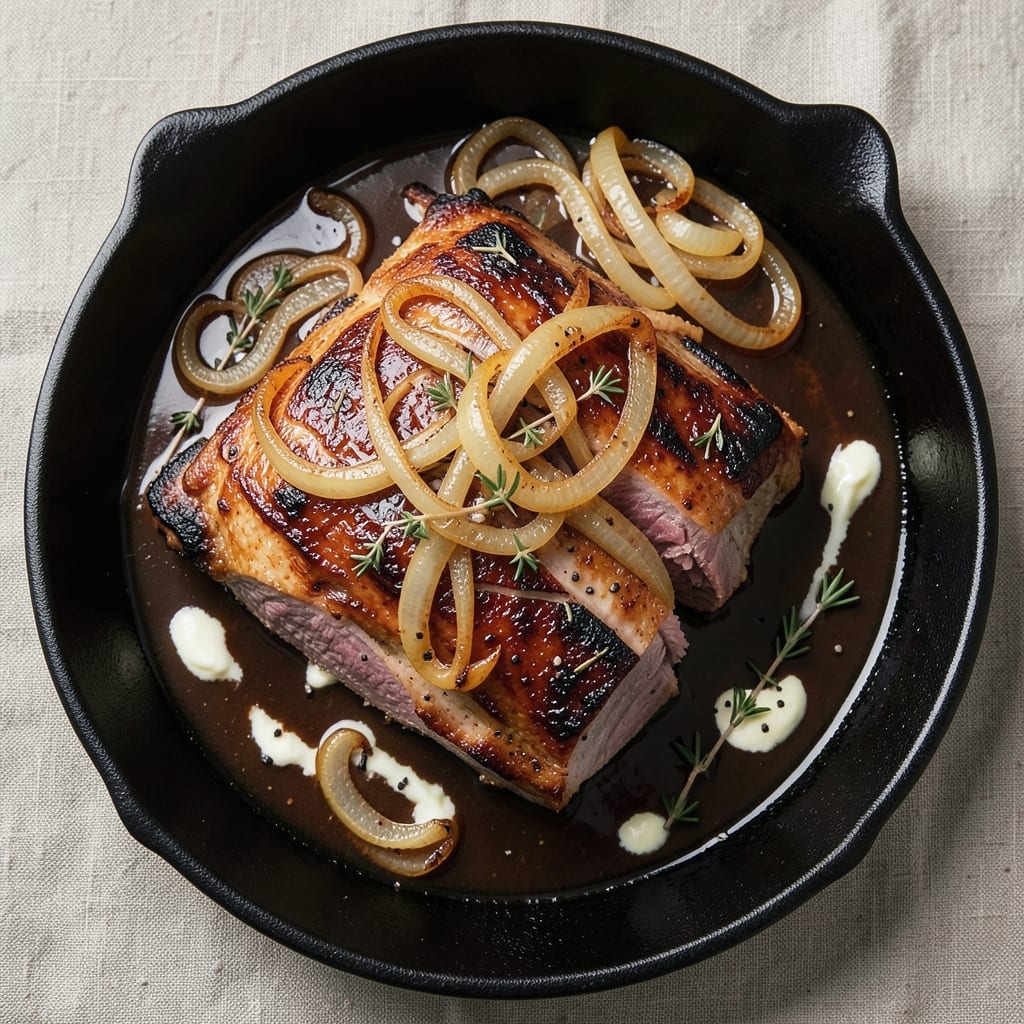
This French onion pork roast recipe delivers the perfect harmony of crispy bark and tender meat infused with caramelized onion essence—just like my grandmother used to make in Georgia. The secret lies in slow-roasting a well-seasoned pork shoulder until the exterior develops that coveted mahogany crust while the interior remains juicy and melt-in-your-mouth tender. I've perfected this technique over years of cooking for family gatherings, where it always disappears before the mashed potatoes do.
The process begins with a dry rub of aromatic spices that penetrate the meat overnight, followed by a slow roast that transforms simple onions into sweet, caramelized layers beneath the pork. This isn't your average pork roast—it's a showstopper that combines French techniques with Southern comfort food traditions. The key is patience: letting the pork cook low and slow while the onions caramelize naturally in their own juices creates depth of flavor that can't be rushed.
What you'll end up with is a restaurant-quality roast that's crispy on the outside, tender on the inside, and bursting with onion flavor in every bite. The caramelized onions underneath add another layer of complexity, while the crackling bark makes it impossible to resist cutting into the roast. This is the kind of dish that transforms a weeknight dinner into a special occasion meal without requiring hours in the kitchen.
Pair it with creamy mashed potatoes and a simple green salad for a complete meal that's sure to impress. The leftovers reheat beautifully too, making this an excellent recipe for feeding a crowd or meal prepping for the week. Let's get started on creating this showstopping centerpiece for your table.
Ingredients for french onion pork roast
Six pounds of pork shoulder and pounds of onions make this Southern-French showstopper.
| Ingredient | Amount | Notes |
|---|---|---|
| Pork Shoulder (Boston Butt) 🍖 | 6 lb | Bone-in, well-marbled cut |
| Yellow Onions 🧅 | 6 lb | Sweet varieties preferred |
| Unsalted Butter 🧈 | ½ cup | Cold, cubed for caramelizing |
| Brown Sugar 🍯 | ½ cup | Light or dark preferred |
| Dried Thyme 🌿 | 2 tbsp | Or 1 tbsp fresh thyme |
| Ground Black Pepper 🌶️ | 2 tbsp | Freshly cracked preferred |
| Kosher Salt 🧂 | ½ cup | Diamond Crystal preferred |
| Garlic Cloves 🧄 | 8 cloves | Peeled, smashed slightly |
| Beef Broth 🍲 | 1 cup | Low-sodium preferred |
| Apple Cider Vinegar 🍎 | 2 tbsp | For brightness |
| Fresh Rosemary 🌿 | ¼ cup | Chopped, for garnish |
| Olive Oil 🫒 | 2 tbsp | For pork rubbing |
The pork shoulder is everything here. Look for bone-in cuts—they stay juicier during the long roast. I always grab mine from Costco or the butcher counter at Whole Foods because the marbling makes all the difference. If you can't find bone-in, a thick-cut boneless shoulder works too. For the onions, Vidalia or Maui varieties caramelize sweeter than regular yellows. Peel them first to save time later—just leave the root ends intact so they don't fall apart. The butter should be cold when you cube it; Plugrá brand is my go-to for its high milkfat content.
No bone-in pork? Use a 5-pound boneless shoulder and add 30 minutes to the cook time. Running out of thyme? Dried oregano at half the amount works in a pinch. The beef broth can be swapped for low-sodium chicken broth if needed, but don't skip the vinegar—it cuts through the richness. For the caramelized onions, Trader Joe's sells pre-sliced onions in a bag, which saves hours of chopping. If you're making this ahead, caramelize the onions a day early and store them in the fridge—they'll keep for up to 5 days.
This roast tastes even better the next day, so make a double batch if you're feeding a crowd. Store leftovers in the fridge for 4-5 days or freeze for 3 months. I like to portion the caramelized onions separately so I can reheat just the pork if needed. For serving, let the roast rest 20 minutes before slicing—this keeps it juicy. The onions can be served under the pork or on the side; either way, they're the star of the show.
Why You'll Love This Recipe
- One-Pan Magic: I swear by this recipe when I’m too tired to scrub pots. The onions caramelize right alongside the pork—no flipping, no fuss—just a sheet pan that does all the work while you sip wine and pretend you’re a chef.
- Sweet-Savory Boom: That brown sugar and butter combo? It’s like French onion soup met a caramel glaze. The thyme adds this earthy warmth that makes every bite feel like a hug—especially when the pork gets that crispy edge.
- Weeknight Workhorse: I make this when I’m feeding a crowd and don’t want to stress. The leftovers? Even better cold in sandwiches or reheated for a lazy lunch. Honestly, it’s my go-to for game days, potlucks, or when my in-laws show up unannounced.
- Budget Stretch: Pork shoulder is cheap, and onions last forever. I buy the big bag, roast half now, and freeze the rest for when I’m too lazy to cook. Plus, the flavor gets richer the next day—so it’s basically free money in taste.
Step-by-step instructions for French onion pork roast
Transform humble ingredients into a showstopping centerpiece with this foolproof method.
Prepare the Pork with Dry Rub
Start by patting the 6 lb pork shoulder completely dry with paper towels—this is non-negotiable for crispy bark. In a large bowl, combine 0.5 cup kosher salt, 2 tbsp ground black pepper, 2 tbsp dried thyme, and 2 tbsp olive oil. Rub this mixture all over the pork, pressing firmly so it adheres. Let it sit at room temperature for 30 minutes while you prep the onions.
Here's the thing—this resting period allows the rub to penetrate the meat and the pork to come to room temperature, ensuring even cooking. Don't skip this step, even if you're eager to get cooking. The flavor and texture difference is dramatic.
Caramelize the Onions Slowly
Slice the 6 lb yellow onions into ¼-inch thick rings. In a large Dutch oven, melt 0.5 cup unsalted butter over medium-low heat. Add the onions in batches, stirring occasionally, and cook for 45-50 minutes until deeply golden brown. This is where patience pays off—don't rush this step.
When the onions are caramelized, stir in 0.5 cup brown sugar and 2 tbsp apple cider vinegar. Cook for another 10 minutes until the sugar dissolves and the onions develop a glossy sheen. This sweet-savory balance is the soul of French onion flavor. Remove the onions and set aside, reserving any fond in the pot.
Sear the Pork for Maximum Flavor
Increase the heat to medium-high and add the pork shoulder to the Dutch oven, fat-side down. Sear for 8-10 minutes until the fat renders and the skin develops a deep golden crust. Flip the pork and sear the other side for another 8-10 minutes. The goal is to create a flavorful crust that locks in juices.
Real talk: If the onions stick during searing, don't panic—add ½ cup beef broth to deglaze the pan. This liquid will later become part of the rich sauce. Remove the pork and set it aside, tented with foil, while you build the sauce.
Braise Until Fork-Tender
Return the Dutch oven to the heat and pour in the remaining ½ cup beef broth. Scrape up any browned bits from the bottom of the pan—this is where all the flavor hides. Return the pork to the pot, fat-side up, and cover tightly. Transfer to a 300°F oven and braise for 3-4 hours until the internal temperature reaches 195-205°F and the meat is fork-tender.
Here's the magic: The low oven temperature ensures the pork stays moist while the onions and broth create a rich, caramelized sauce. Check the temperature after 2½ hours—your oven might run hot or cold, so adjust timing accordingly. The pork is done when it pulls apart easily with two forks.
Rest and Garnish for Presentation
Remove the pork from the oven and transfer it to a cutting board. Tent loosely with foil and let it rest for 30-45 minutes. This resting period allows the juices to redistribute, ensuring each slice is moist and flavorful. Meanwhile, spoon the caramelized onions and sauce over the top of the pork.
Garnish with 0.25 cup chopped fresh rosemary for a pop of color and freshness. Slice the pork against the grain into ½-inch thick slices. The result should be a masterpiece: crispy bark on the outside, tender meat on the inside, and a luscious caramelized onion sauce tying it all together. Serve immediately with crusty bread to soak up every last bit of sauce.
Pro Tips For Making French Onion Pork Roast
- CRISP THE ONIONS FIRST: Slice your yellow onions into even ¼-inch rings and toss them in cold water for 10 minutes before cooking. This stops them from releasing moisture too fast and guarantees a deep caramelization instead of a soggy mess. I learned this the hard way—my first batch turned into onion soup instead of a golden crust.
- SEAR THE PORK HARD: Don’t skimp on the sear—get that pork shoulder screaming hot in a dry skillet for 8-10 minutes per side until it’s deep brown. The crust locks in flavor and keeps the meat juicy. After burning three batches, I finally figured out: high heat, no crowding, and patience pay off.
- BROWN THE SUGAR: Before adding the onions, melt the butter and cook the brown sugar until it turns a rich amber color—about 2-3 minutes. This adds a deeper, almost toffee-like sweetness that cuts through the richness of the pork. Sounds weird, but it works: skip this, and you’ll miss a key layer of flavor.
- REST THE PORK PROPERLY: Once the pork hits 203°F internally, transfer it to a cutting board and tent loosely with foil for 20-30 minutes. This lets the juices redistribute so every slice stays moist. I skip this when I’m lazy, but the dish is noticeably better when I don’t—no one wants dry, shredded pork.
Essential equipment for this dish
Dutch Oven Essentials
Your Dutch oven is the workhorse of this recipe—it needs to be 12-quart or larger to handle the pork and onions comfortably. I swear by my Lodge 5.5-quart Dutch oven for its even heat distribution and durable cast iron. If you don't have one, a Le Creuset stoneware Dutch oven is a great alternative for its elegant presentation. Preheat your oven with the Dutch oven inside for 30 minutes to ensure even cooking temperatures. 🔥
Meat Thermometer Must-Have
Never guess when cooking pork to 205°F—a reliable meat thermometer is non-negotiable. I use the Thermoworks Smoke for its precision and durability, but even a $10 instant-read thermometer from Amazon works. Insert the probe into the thickest part of the pork, avoiding fat and bone. The 205°F internal temperature ensures fork-tender perfection without drying out the meat.
Heavy-Duty Roasting Pan
For the caramelization step, a heavy-bottomed roasting pan prevents burning while allowing even heat distribution. My go-to is a All-Clad stainless steel roasting pan, but any 5-quart pan with a lid will work. Avoid thin, flimsy pans—they can warp under high heat and ruin your onions. If you're short on space, use your Dutch oven for both the sear and braise steps to save on equipment.
Tongs and Tongs Only
Resist the urge to use forks when handling the pork—heavy-duty tongs (like OXO Good Grips) are your best friend. They prevent piercing the meat, which would release precious juices. I keep a pair of 12-inch stainless steel tongs exclusively for roasting meats. For the onions, a wooden spoon prevents scratching your Dutch oven while stirring.
Butter Cubing Tool
Cold, cubed butter is essential for caramelizing onions without burning. A butter cuber (like the OXO Good Grips Butter Cuber) makes this task effortless, but a sharp knife works in a pinch. Cut ½ cup unsalted butter into ½-inch cubes and freeze them for 10 minutes before adding to the pan. This ensures gradual melting and prevents scorching.
Resting Rack and Board
After roasting, transfer your pork to a wire cooling rack placed on a baking sheet to allow air circulation. I use a Viking brand cooling rack with a wooden cutting board underneath to catch drippings. This setup prevents soggy meat while keeping your countertops clean. Let the pork rest for 45 minutes before slicing—this is where all the magic happens as juices redistribute. 💫
Nutrition facts
Frequently asked questions
Can I use a different cut of pork instead of pork shoulder?
While pork shoulder is ideal for its fat content and tenderness, you can use a bone-in ham hock or pork butt (they're essentially the same cut). For a leaner option, try a pork loin, but reduce the cook time to 2-2.5 hours and watch closely to avoid drying out. Never use ground pork—this recipe requires a substantial cut for proper flavor development.
How do I know when the caramelized onions are done?
The onions should be deep golden brown with a glossy sheen and a sweet, almost jam-like consistency. They'll take 45-50 minutes total. If they start to burn, reduce heat to low and stir more frequently. The sugar should dissolve completely, leaving no grainy texture. Pro tip: The onions are ready when they release their aroma strongly—your kitchen should smell like pure onion bliss!
Can I make this recipe in a slow cooker instead?
After searing the pork, transfer it to a 6-quart slow cooker with the caramelized onions and 1 cup beef broth. Cook on low for 8-10 hours or high for 5-6 hours until tender. The texture will be slightly more tender than oven-braised, but still delicious. Just increase the resting time to 60 minutes to compensate for the longer cook.
What if my pork roast comes out dry?
Dry pork usually means it cooked too long or wasn't rested properly. Next time, check the internal temp at 195°F—it should reach 205°F during resting. Always rest the meat 30-45 minutes before slicing. For extra moisture, brush the roast with 1 tbsp melted butter during the last 30 minutes of cooking. The caramelized onions underneath will also help keep it juicy.
How can I make this ahead of time?
This roast actually tastes better the next day! Cook it completely, then refrigerate for up to 5 days or freeze for 3 months. Reheat in a 350°F oven for 20-30 minutes with 1 tbsp broth or water to keep it moist. The onions can be prepped 2 days ahead and stored separately—they reheat beautifully when warmed through with the pork.