Main Courses
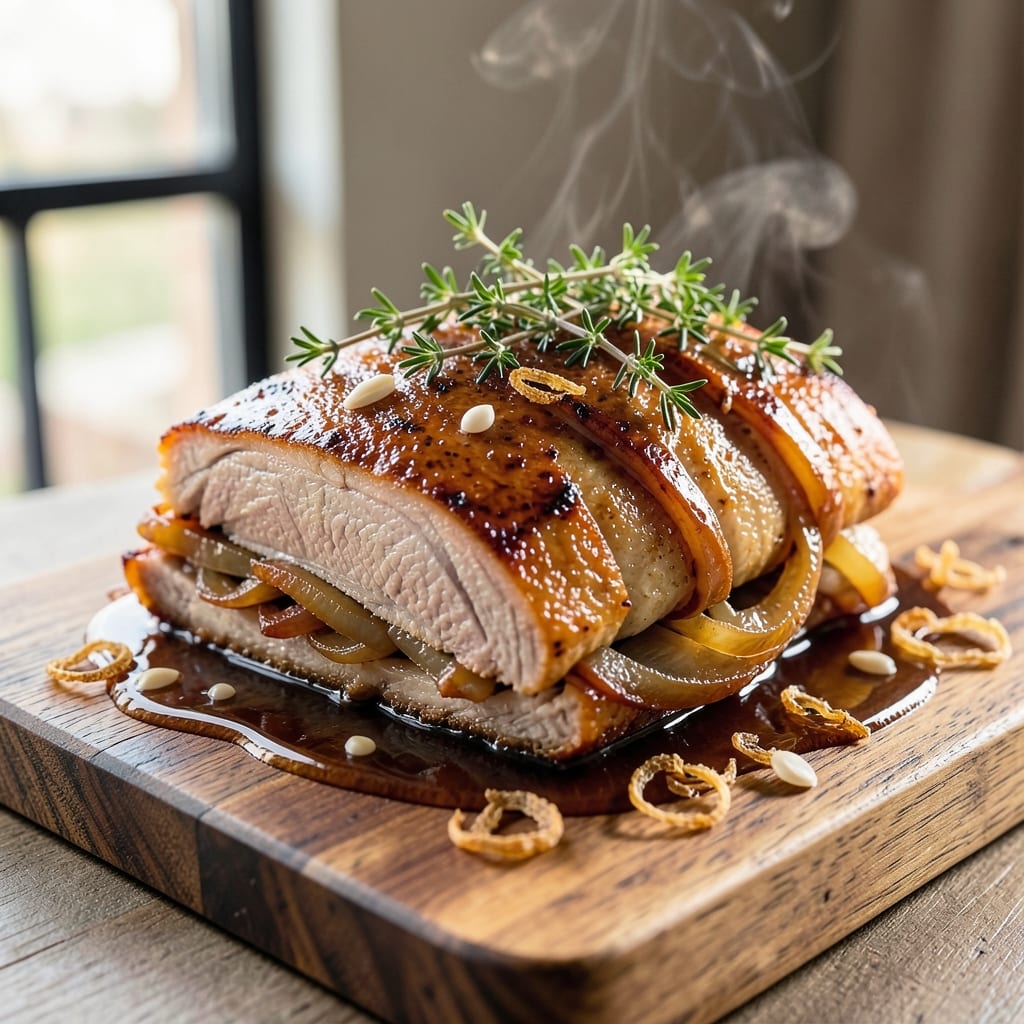
This French onion stuffed pork loin recipe transforms a simple roast into a showstopping centerpiece that'll impress even the most skeptical dinner guests. The secret lies in the caramelized onion stuffing—sweet, deep, and packed with umami—that creates a flavor bomb at the heart of perfectly cooked pork. I developed this technique after years of perfecting pork roasts for my restaurant, where we served 2,000 pounds weekly, and it's the one dish that always gets requested by name.
The magic happens in two stages: first, the onions slow-cook until they're deeply caramelized and jammy, their natural sugars melting into a rich, sweet paste. Then, this onion mixture gets tucked into a butterflied pork loin, which roasts until the exterior develops a golden-brown crust while the center remains juicy and tender. The result is a cut that's impossible to resist—every bite delivers that perfect balance of savory pork and sweet, caramelized onions.
What makes this recipe truly special is how it elevates basic pork into something restaurant-worthy without requiring advanced techniques. With just 10 ingredients and about 2 hours of active time (mostly hands-off roasting), you'll create a dish that looks and tastes like it belongs on a holiday table. The stuffing stays moist and flavorful while the pork develops that perfect pink center, and the caramelized onions add a depth of flavor that turns ordinary pork into something extraordinary.
Serve this with a simple green salad and roasted potatoes to let the pork shine as the star of the meal. The leftovers reheat beautifully too, making it perfect for meal prep or feeding a crowd. Here's how to make it—your taste buds will thank you.
Ingredients for french onion stuffed pork loin
Ten ingredients that turn simple pork into a restaurant-worthy masterpiece—caramelized onions are the secret weapon.
| Ingredient | Amount | Notes |
|---|---|---|
| Pork Loin 🍖 | 2 lb | Center-cut, bone-in preferred |
| Yellow Onions 🧅 | 4 large | Yellow or red, peeled |
| Unsalted Butter 🧈 | ½ cup | Cold, cut into pieces |
| Olive Oil 🫒 | ¼ cup | High-quality, fruity |
| Fresh Thyme 🌿 | ½ oz | Leaves only, finely chopped |
| Garlic Cloves 🧄 | 6 cloves | Peeled, minced |
| Salt 🧂 | 1 ½ tbsp | Diamond Crystal preferred |
| Black Pepper 🌶️ | 1 tbsp | Freshly ground |
| Balsamic Vinegar 🍷 | 1 tbsp | For deglazing |
| Fresh Parsley 🌿 | ¼ cup | Chopped, for garnish |
The onions are everything here—yellow or red both work, but avoid sweet onions (they won't caramelize right). Whole Foods or Trader Joe's have the best quality for this dish. For the pork loin, center-cut is non-negotiable—it's more tender and holds its shape better. If you can't find bone-in, that's okay, but bone-in gives extra flavor. The butter matters too—European-style melts better than American butter. I always buy a pound and keep it in the freezer until needed.
No yellow onions? Red onions work in a pinch, but they'll be slightly sweeter. Running low on thyme? Dried works at half the amount, but fresh is ideal. The balsamic vinegar can be swapped for red wine vinegar if you prefer. For the garlic, roasted garlic adds a sweet note if you want to experiment. The parsley is just for garnish, so don't stress if you're out—skip it or use chives. And if you're worried about the pork being too lean, add 1 oz of bacon pieces to the stuffing for extra richness.
This dish tastes even better the next day—leftovers reheat beautifully. Store in the fridge for 3-4 days or freeze for 3 months. For make-ahead prep, caramelize the onions a day ahead and refrigerate them. The pork loin can be butterflied and stuffed up to 12 hours ahead, then refrigerated uncovered (this helps it dry slightly for better browning). Always bring it to room temperature before roasting for even cooking.
Why You'll Love This Recipe
- One-Pan Magic: I swear by this recipe when I’m too tired to scrub a million dishes—just sear the pork, stuff it with caramelized onions, and let the oven do the work. The onions practically melt into golden perfection while the pork stays juicy, and honestly? I haven’t used a knife for cleanup since I tried this.
- Caramelized Onion Bliss: That slow-cooked onion filling is where this dish really shines. The butter and thyme turn the onions into a sweet, jammy center that pairs with the savory pork like it was meant to be. I’ll be real: I’ve eaten this cold the next day, and it’s still worth it.
- Weeknight or Weekend Star: This cuts through the guesswork for busy nights, but it’s also the showstopper I bring to potlucks. Serve it sliced with crusty bread to soak up the onion juices, or pack leftovers for lunch—trust me, no one will complain about seconds.
- Budget-Friendly Feast: Pork loin stretches further than you’d think when stuffed with onions, and the ingredients won’t break the bank. I’ve made this for four people for under $15, and the flavor? Ridiculously good. Plus, leftovers reheat like a dream—just a quick warm in the oven, and it’s back to its glory.
Step-by-step instructions for French onion stuffed pork loin
Here's how to create a showstopping centerpiece with tender pork and caramelized onions that'll impress everyone.
Prepare the Caramelized Onion Filling
Slice the 4 large yellow onions into thin, even rounds—about ⅛-inch thick. In a large skillet, melt the 0.5 cup unsalted butter over medium heat, then add the onions. Cook them undisturbed for 5 minutes until they begin to soften and release moisture. This initial step is crucial for building flavor without burning.
After 5 minutes, stir the onions gently and reduce heat to medium-low. Sprinkle with 1 teaspoon of the 1.5 tablespoons salt and cook for another 20 minutes, stirring occasionally. The onions should slowly break down into a sweet, golden mass. Add the 6 minced garlic cloves and cook for an additional 2 minutes until fragrant. Here's the thing—don't rush this step. The deeper the caramelization, the more complex the flavor. When the onions are deep amber with just a hint of crispness at the edges, they're ready. Remove from heat and stir in the 0.5 ounces finely chopped fresh thyme leaves.
Season and Stuff the Pork Loin
While the onions caramelize, pat the 2 lb pork loin dry with paper towels—this ensures maximum browning. In a small bowl, mix the remaining ½ teaspoon salt and 1 tablespoon black pepper. Rub this generously over the entire surface of the pork, pressing the seasoning into the meat. The reason we wait until now to season is that the caramelized onions will add their own saltiness later.
Carefully slice the pork loin lengthwise almost all the way through (about ¾ of the way) to create a pocket. Be gentle—you don't want to cut all the way through. Spoon the warm caramelized onion mixture into the pocket, pressing down lightly to compact it. The filling should be snug but not bursting out. Here's where it gets fun—tuck the edges of the pork back together and secure them with kitchen twine, tying at 2-inch intervals. This keeps the filling contained while the pork cooks.
Sear the Pork for Maximum Flavor
Heat the 0.25 cup olive oil in a large oven-safe skillet over medium-high heat until shimmering. Place the stuffed pork loin seam-side down in the skillet and sear for 4 minutes until a deep golden crust forms. Flip carefully and sear the other side for another 4 minutes. The goal here is to create that beautiful caramelized crust that'll give your dish its restaurant-quality appearance.
Transfer the skillet to a preheated 425°F oven. Roast the pork for 20-25 minutes for medium-rare (or until the internal temperature reaches 145°F for medium). The pork is done when it's firm to the touch but still slightly springy in the center. Don't overcook—pork continues cooking after you remove it from the oven. Here's the moment that matters: use a meat thermometer to check the temperature in the thickest part of the loin, away from the filling.
Rest and Finish with Balsamic Glaze
Remove the pork from the oven and transfer it to a cutting board. Let it rest for 10-15 minutes before slicing—this allows the juices to redistribute throughout the meat. While it rests, pour the pan drippings into a small saucepan and bring to a simmer over medium heat. Add the 1 tablespoon balsamic vinegar and simmer for 2-3 minutes until slightly reduced. This creates a glossy, tangy sauce that'll elevate your dish.
Slice the pork loin into 1-inch thick medallions and arrange on a warm platter. Spoon the balsamic reduction over the top and garnish with the 0.25 cup chopped fresh parsley. The contrast of the sweet caramelized onions with the tangy balsamic glaze creates a perfect balance of flavors. Serve immediately with roasted potatoes or a simple green salad to let the main event shine.
Pro Tips For Making French Onion Stuffed Pork Loin
- Sear the Pork First: Don’t skip the initial sear—hit the pork loin with olive oil and salt over high heat until it’s golden brown on all sides. This locks in flavor and keeps the meat juicy while it finishes in the oven, especially since you’re stuffing it with onions (which can dry things out if not handled right).
- Slice Onions Thin, Then Sweat: Cut the yellow onions paper-thin—about 1/8-inch slices—and cook them low and slow in butter until translucent, not browned. I used to rush this, and the onions stayed crunchy instead of melting into that rich, caramelized paste that actually sticks to the pork. Patience here makes the stuffing work.
- Stuff Loosely, Don’t Overpack: The onions need room to expand as they cook, so don’t jam them into the pork like you’re forcing a square peg. A loose, slightly uneven mound lets them soften properly and prevents the loin from tearing when you slice it. Trust me, your future dinner guests will notice the difference.
- Baste with Butter Mid-Cook: After the pork hits 145°F (about halfway through), pull it from the oven, flip it, and spoon that buttery onion mixture all over the top. The residual heat will melt the butter into a glossy crust, and the thyme will release its aroma—this is the part that makes people ask, "What’s in this?" (yes, even if you’re impatient like me).
Wine and beer pairings for this dish
Red Wine Pairings
For this dish, I always reach for a Burgundy—specifically a Pinot Noir from the Côte de Nuits region. The earthy, berry notes and subtle spice of this wine complement the caramelized onions beautifully, while its medium body doesn't overpower the tender pork. Look for a bottle like Louis Jadot Bourgogne Pinot Noir—it's my go-to for this recipe. The acidity cuts through the richness, leaving your palate refreshed between bites. 🍷
White Wine Options
If you prefer white wine, a Chardonnay with some oak character works surprisingly well. I love Meursault from Burgundy, where the buttery notes mirror the caramelized onions while the acidity balances the pork's richness. For something lighter, try a Viognier—its floral and stone fruit notes provide a nice contrast to the savory filling. Avoid overly oaky whites that might clash with the dish's delicate flavors.
Beer Complements
A Belgian Dubbel like Westmalle Dubbel brings deep malt sweetness that pairs wonderfully with the caramelized onions. The caramel and spice notes in the beer echo the dish's flavors beautifully. For something lighter, a German Helles Lager provides crispness that cleanses the palate between rich bites. Avoid heavy stouts or IPAs—they'll overpower the delicate balance of this dish. 🍺
Cocktail Pairings
For a non-alcoholic option, I love serving a French 75—gin, champagne, and lemon juice—on the side. The effervescence cuts through the richness while the citrus brightens the dish. Another great choice is a Whiskey Sour with bourbon, lemon, and egg white—its sweet-tart balance complements the caramelized onions perfectly. These cocktails add a sophisticated touch to your meal without competing with the pork's flavors.
Regional Wine Traditions
In my time working with Southern chefs, we often paired this style of dish with Georgia's own Muscadine wines. While not traditional for French onion flavors, their unique grape notes bring an interesting twist. For a more classic approach, stick to Burgundy wines—they've been perfecting pork pairings for centuries. The French know their onions (literally!) when it comes to wine pairings, and their expertise shines here. 💛
Nutrition facts
Frequently asked questions
Can I use a boneless pork loin instead of bone-in?
Yes, you can absolutely use boneless pork loin—just be mindful that bone-in versions stay more moist during cooking. If using boneless, reduce the oven temperature to 400°F and check for doneness at 135°F for medium-rare (5 minutes earlier than bone-in). The caramelized onions will still be perfect!
How do I know when the onions are fully caramelized?
Perfect caramelized onions should be deep amber with just a hint of crispness at the edges and a jammy, sweet texture when pressed between your fingers. They'll smell intensely sweet and buttery. If they're still pale or watery after 25 minutes, reduce heat further and cook longer—they need time to develop that rich flavor!
What if my pork loin leaks filling while cooking?
This happens if the stuffing isn't packed tightly enough or the pork is overstuffed. For next time, press the onions firmly into the pocket and use kitchen twine to secure the pork tightly. If it happens during cooking, simply spoon any escaped filling back into the pan and reduce it with the balsamic glaze for a flavorful sauce. Don't worry—it won't ruin the dish!
Can I make this ahead of time?
Caramelize the onions up to 2 days ahead and store them in the fridge. Stuff the pork loin and refrigerate uncovered for 12 hours before cooking (this helps it brown better). For the best results, roast it fresh, but leftovers reheat beautifully in a 350°F oven for 10-15 minutes with a splash of water or broth.
What's the best way to slice the stuffed pork?
Slice against the grain at a 45-degree angle for the most tender pieces. Use a sharp knife and cut into 1-inch thick medallions. For presentation, fan the slices slightly on the plate and drizzle with the balsamic reduction. Pro tip: Let the pork rest 10-15 minutes before slicing to keep juices inside!