Main Courses
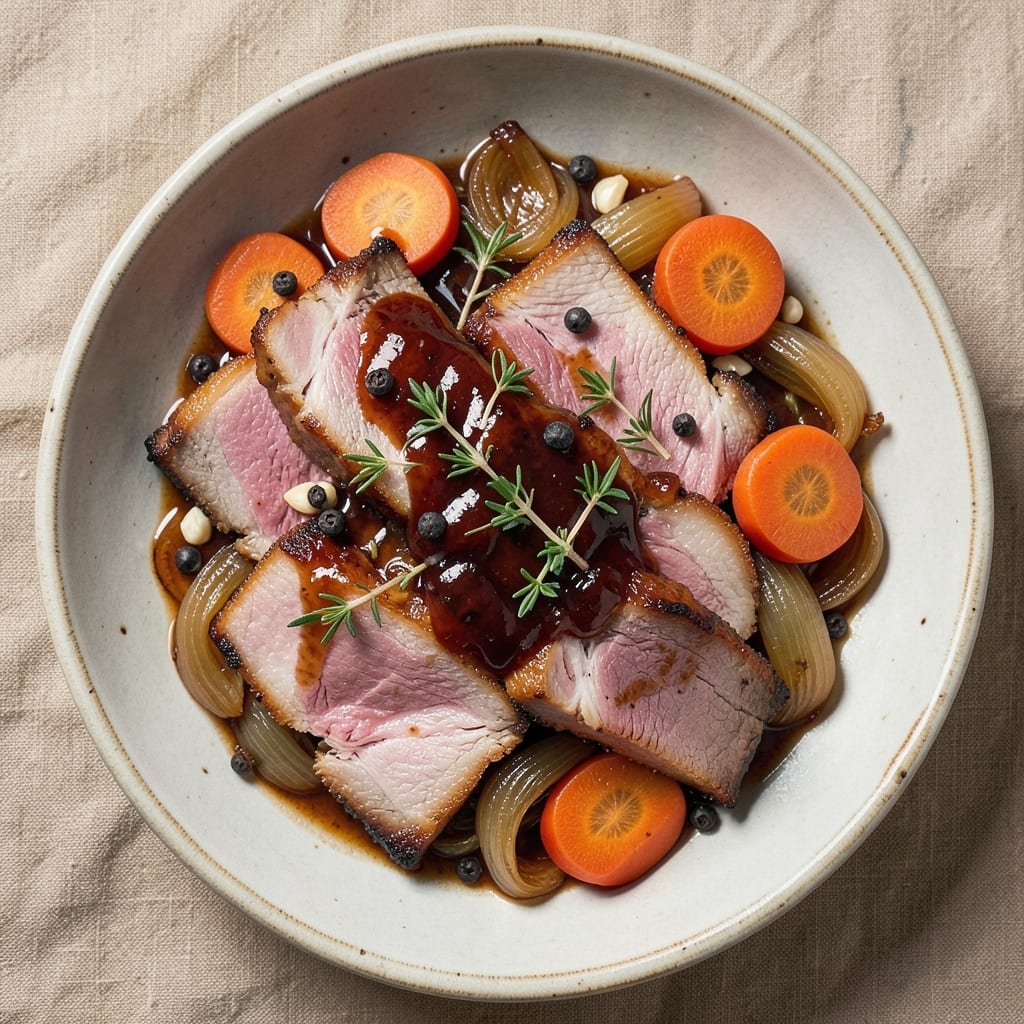
This fresh pork jowl recipe transforms a humble cut into a showstopper with crispy vinegar-kissed skin and melt-in-your-mouth tenderness. Growing up in Georgia, I learned pork jowl was never about waste—it was about turning tough cuts into something extraordinary. The secret lies in slow-cooking until the collagen dissolves into rich, velvety fat, then finishing with a quick sear to create that addictive crunch.
The process begins with a simple brine to keep the meat juicy, followed by hours of gentle cooking that renders the fat into liquid gold. What makes this recipe special is the balance: crispy edges from vinegar and oil, tender meat that falls apart, and a sauce so rich it coats every bite. This isn’t just a side dish—it’s the star of the meal, worthy of any gathering.
By the time you’re done, you’ll have a dish that’s restaurant-quality at home—crispy enough to satisfy crisp lovers, tender enough to melt in your mouth, and flavorful enough to steal the show. The fat renders beautifully, creating a sauce that’s perfect for dipping bread or drizzling over roasted vegetables. It’s the kind of recipe that makes you want to cook it again and again.
Perfect for holiday feasts, weekend brunches, or when you want to impress without fuss. The technique is foolproof, and the results are unforgettable. Let’s get cooking—your taste buds will thank you.
Ingredients for fresh pork jowl
Pork jowl, vinegar, and slow cooking—this trio creates restaurant-worthy crispy skin with melt-in-your-mouth fat.
| Ingredient | Amount | Notes |
|---|---|---|
| Pork Jowl 🥓 | 1 ½ lb | Skin-on, bone-in preferred |
| White Vinegar 💧 | ½ cup | For crispy skin finish |
| Neutral Oil 🫒 | ¼ cup | Vegetable or canola oil |
| Yellow Onions 🧅 | 1 whole | Sliced into wedges |
| Garlic Cloves 🧄 | 4 cloves | Smashed for flavor |
| Carrots 🥕 | 2 medium | Whole, peeled and halved |
| Bay Leaves 🌿 | 2 whole | Dried, removed before serving |
| Fresh Thyme 🌿 | ¼ cup | Leaves only, chopped |
| Salt 🧂 | 1 ½ tbsp | Kosher or sea salt |
| Black Peppercorns 🌶️ | ½ tsp | Freshly cracked |
| Brown Sugar 🍯 | 1 tbsp | Lightly packed |
| Water 💧 | 1 cup | For initial cooking |
| Apple Cider Vinegar 🍎 | 2 tbsp | For final crisping |
The jowl is the star, so look for thick, fatty cuts—that’s what renders into liquid gold. Local butchers often have the best selection, or check the pork section at Whole Foods or Costco for pre-cut jowls. Skip the skinless versions—it’s the skin that crisps up beautifully. If you’re buying whole, ask for the cheek cut (the flat side). For the vinegar, white vinegar works best—it’s sharper and crisps better than apple cider in this step. The onions and carrots? Any variety works, but yellow onions caramelize best, and medium carrots stay intact during cooking.
No white vinegar? Apple cider vinegar or lemon juice will work in a pinch, but taste it first—white vinegar’s sharpness is key for that crispy skin. Fresh thyme is ideal, but dried thyme at one-third the amount gets you close. No brown sugar? White sugar or honey (if not vegan) works too. The jowl’s fat renders beautifully, but if you’re worried about grease, line your pot with foil for easy cleanup. For extra crispiness, add 1 tbsp cornstarch to the vinegar mix before the final sear.
The rendered fat is pure magic—save every drop! It reheats beautifully, so portion it into small jars for dipping bread or drizzling over roasted veggies. Keeps in the fridge for 1 week or frozen for 3 months. The jowl itself? Store in its fat in the fridge for 4 days or freeze for 6 months. Pro tip: Reheat slowly in a 300°F oven to keep it tender, not blasted in the microwave.
Why You'll Love This Recipe
- One-Pan Magic: I swear by this—just sear the jowl in oil, toss in onions and garlic, splash on vinegar, and let it slow-roast. No flipping, no fussing, not even a sink full of dishes. That vinegar cut? It turns tough jowl into melt-in-your-mouth perfection with zero effort.
- Crispy-Creamy Obsession: The outside gets this addictive crackle while the inside stays juicy—like a buttery, savory hug. The vinegar mellows into a tangy sweetness, and the garlic? Oh, it lingers in the best way. Honestly, I’ve made this for potlucks, and people always ask for the recipe.
- Budget Feast: Pork jowl is the unsung hero of affordable cuts—way cheaper than tenderloin, but just as satisfying. A single jowl feeds four, and the leftovers? Even better reheated (yes, really). Between us, this is how I stretch my grocery budget without sacrificing flavor.
- Weeknight Workhorse: Slow-cook it while you prep dinner, or let it simmer overnight for breakfast tacos. Serve it cold in sandwiches, warm over rice, or straight from the pan with crusty bread. I’ll be real: it’s my go-to when I don’t want to think about cooking.
Step-by-step instructions for crispy vinegar-kissed pork jowl
Here's how to transform tough pork jowl into irresistibly crispy, vinegar-brined bites with tender centers.
Prepare the Vinegar Brine for Maximum Crisp
In a large bowl, combine the 1.5 lb pork jowl, 0.5 cup white vinegar, 1.5 tbsp salt, 0.5 tsp cracked black peppercorns, 1 tbsp brown sugar, 2 whole bay leaves, and 0.25 cup chopped fresh thyme. The vinegar will start breaking down the collagen immediately, creating that signature crispy texture while tenderizing the meat.
Massage the mixture with your hands for 2-3 minutes, working the seasoning into every crevice of the jowl. This step ensures even flavor distribution and helps the skin crisp uniformly. Let it marinate uncovered in the refrigerator for at least 4 hours (overnight is even better). The acid in the vinegar will draw out moisture from the surface, which is exactly what we want for that perfect crunch.
Slow Cook Until Fork-Tender
Preheat your oven to 300°F. Place the marinated jowl in a heavy oven-safe pot with the 1 whole yellow onion wedges, 2 medium carrots, 4 smashed garlic cloves, and 1 cup water. The vegetables will infuse the meat with flavor as it cooks.
Cover tightly with foil and cook for 3 hours. Here's the thing—pork jowl needs patience. After 3 hours, check for doneness by inserting a fork into the thickest part. If it slides in easily, it's ready. If not, continue cooking for another 30-60 minutes until fork-tender. The skin should still be pale—this is normal at this stage. The magic happens in the next step.
Achieve the Crispy Vinegar Kiss
Remove the jowl from the pot and discard the vegetables and cooking liquid. In a clean skillet, heat the 0.25 cup neutral oil over medium-high heat until shimmering. Add the jowl skin-side down and cook for 8-10 minutes without moving it. You want the skin to develop a deep golden-brown color—this is where that crispy texture forms.
Once the skin is crispy, carefully flip the jowl and cook for another 2-3 minutes until the meat reaches 145°F internally. Here's a pro tip: add 2 tbsp apple cider vinegar to the skillet during the last minute of cooking. The acid will react with the hot oil and skin, creating that signature crispy, vinegar-kissed texture we're after. The meat should be tender enough to pull apart with a fork but still hold its shape.
Rest and Serve with Confidence
Transfer the crispy jowl to a cutting board and let it rest for 10 minutes. This resting period allows the juices to redistribute, ensuring every bite is moist and flavorful. The skin will stay crispy while the meat finishes carrying over to perfect doneness.
Slice the jowl into ½-inch thick pieces and serve immediately. The contrast of crispy skin and tender, flavorful meat is what makes this dish so special. You'll notice the vinegar-kissed aroma when you cut into it—this is your reward for following the steps carefully. Pair with pickled vegetables or a simple salad to balance the richness.
Pro Tips For Making Fresh Pork Jowl
- SCORE THE JOWL: Use a sharp knife to cut the pork jowl into 1-inch thick slices—thicker pieces stay chewy, thinner ones render faster. I learned this the hard way after serving rubbery slabs that took forever to tenderize. ---
- VINEGAR FIRST: Toss the sliced jowl in white vinegar before frying—this breaks down collagen faster and keeps the meat from drying out. (Yes, it smells like a science lab, but the texture is worth it.) ---
- LOW AND SLOW: After searing, drop the heat to medium-low and let the jowl cook uncovered for 10-15 minutes. Rushing it turns the onions into mush and leaves the pork tough—patience here makes all the difference. ---
- CRISP THE SKIN: Flip the jowl skin-side down in the last 2 minutes of cooking—it’ll blister and crisp like bacon. If it’s not golden, hit it with a splash of vinegar and a quick blast under the broiler. (Your future self will thank you.)
Common mistakes when making this dish
Overcooking the Jowl
Pork jowl is all about patience—pushing it past 145°F internal temperature turns tender meat into dry, stringy disappointment. I’ve seen this happen when people rush the slow cook and then blast it in a hot pan. The collagen needs time to render into fat, not evaporate into nothing. After 3 hours at 300°F, check for doneness with a fork—it should slide in easily. If it’s still tough, add 30 more minutes, not heat. 🌡️
Skipping the Vinegar Brine
The vinegar isn’t just for flavor—it’s the secret to that legendary crispy skin. Without it, your jowl will end up soft and limp. I once forgot to add the brine and ended up with a sad, greasy mess. The acid breaks down collagen and draws out moisture, creating the perfect canvas for crisping. Don’t substitute with lemon juice or apple cider vinegar unless you’re okay with less dramatic results. The white vinegar’s sharpness is non-negotiable here.
Not Rendering the Fat
Pork jowl is fatty for a reason—it’s liquid gold when rendered properly. Draining the fat after slow cooking is a rookie mistake. That fat is your sauce! Save every drop in a jar and reheat it for dipping bread or tossing with roasted veggies. I keep a dedicated glass jar in my fridge just for this purpose. If you’re worried about grease, line your pot with foil, but don’t skip saving the fat—it’s the soul of this dish. ❄️
Flipping Too Soon
The crispy skin forms over 8-10 minutes of undisturbed cooking—flipping early ruins all that hard work. I’ve burned my fingers more times than I’ll admit trying to check the skin before it’s ready. Let the jowl develop that deep golden-brown crust first, then flip once for 2-3 minutes. The apple cider vinegar splash at the end is your cue that it’s time to flip, not before. Patience here makes all the difference.
Using the Wrong Oil
Neutral oils like vegetable or canola have high smoke points, but using olive oil or butter for crisping is a recipe for disaster. I learned this the hard way when my first batch turned into a greasy, burnt mess. The oil needs to stay hot and stable—anything with a low smoke point will break down and create bitter flavors. Stick to neutral oil for that perfect crisp without off-flavors. 🫒
Ignoring the Resting Time
Skipping the 10-minute rest after cooking is the fastest way to end up with dry, uneven slices. The juices need time to redistribute—cutting into the jowl too soon sends all that delicious fat and moisture pooling on your plate instead of in your meat. I’ve seen home cooks rush this step and end up with sad, dry bites. Trust the process: rest, then slice. The crispy skin stays intact while the meat finishes carrying over to perfection.
Nutrition facts
Frequently asked questions about pork jowl
Can I substitute pork jowl with another cut?
Pork jowl is unique for its collagen-rich fat, but you can use pork belly or pork shoulder in a pinch. The belly will render more fat, while shoulder needs longer cooking. For crispy skin, choose cuts with a good fat cap. Avoid lean cuts like tenderloin—they won’t deliver the same texture or flavor.
How do I know when the jowl is fully cooked?
Use a meat thermometer to check for 145°F internal temperature. The meat should be fork-tender but still hold together. If it’s still tough after 3 hours at 300°F, add another 30 minutes—don’t rush it! The skin should be pale before crisping. Overcooking turns it dry and stringy.
What’s the best way to store leftover pork jowl?
Store cooked jowl in its rendered fat in an airtight container for up to 4 days in the fridge. Freeze for 6 months by wrapping tightly in plastic and foil. Reheat slowly in a 300°F oven to preserve moisture—never microwave! The crispy skin stays best when reheated gently.
Can I make this recipe in a slow cooker?
Yes! Brown the jowl first, then transfer to a slow cooker with all ingredients (except oil and vinegar). Cook on low for 6-8 hours or high for 4-5 hours. Finish by crisping in a skillet with oil and vinegar. The slow cooker method is hands-off but may yield slightly less crispy skin—expect 80% of the restaurant-style crunch.
What are the best sides to serve with pork jowl?
Pair with pickled vegetables (like radishes or cucumbers) to cut the richness, or serve with mashed potatoes and gravy. The rendered fat makes an amazing dipping sauce for crusty bread. For a lighter option, try a simple green salad with a tangy vinaigrette.