
Main Courses
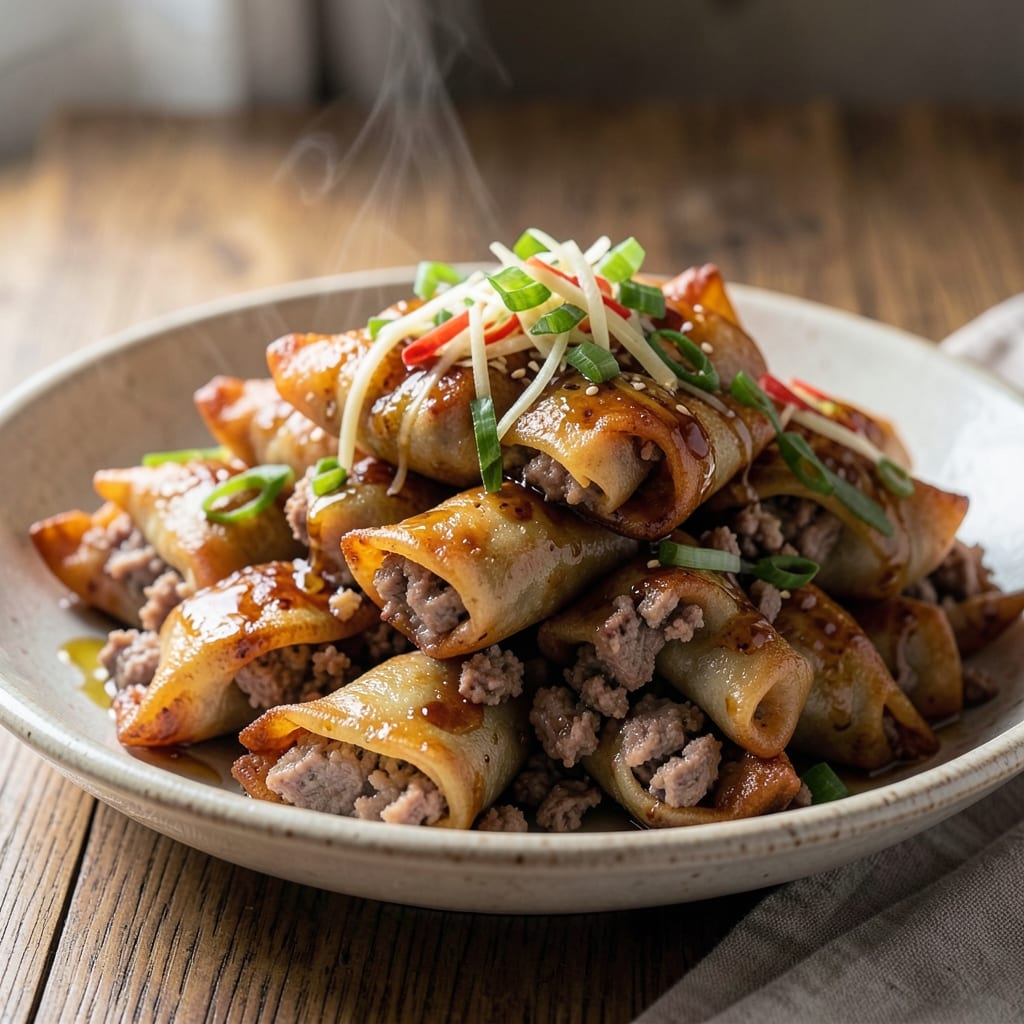
This fried pork wonton filling delivers the perfect balance of crispy edges and juicy centers—the secret weapon behind restaurant-quality wontons. Growing up in Georgia, I learned pork's transformative power, and this recipe captures that same magic in every bite. The key lies in finely mincing the pork, blending it with aromatics, and binding it just enough to hold its shape when fried.
The foundation starts with high-quality pork shoulder, ground to a fine texture that ensures tender, melt-in-your-mouth results. I add a touch of ginger and scallions for brightness, while soy sauce and sesame oil build depth without overpowering. The filling must be chilled before shaping—this crucial step prevents it from sticking during frying and guarantees that signature crispy exterior.
When you fry these wontons, the filling transforms into golden, shatteringly crisp edges while staying juicy inside. The texture contrast is what makes them irresistible—crunchy outside, tender within. This recipe is designed to be versatile: use it for classic fried wontons, dumplings, or even as a filling for spring rolls.
For best results, work with freshly ground pork and keep the filling cold until ready to use. The difference between a good wonton and a great one often comes down to these small details. Let's get started on creating filling that'll have everyone asking for seconds.
Ingredients for fried pork wonton filling
Nine simple ingredients transform into the perfect crispy-juicy pork filling for wontons.
| Ingredient | Amount | Notes |
|---|---|---|
| Pork Shoulder 🥩 | 1 ½ lb | Ground to fine texture |
| Scallions 🧅 | ¼ cup | Finely chopped, green parts |
| Fresh Ginger 🌿 | 1 tbsp | Finely grated, peeled |
| Light Soy Sauce 🥄 | 2 tbsp | For umami depth |
| Sesame Oil 🫒 | 1 tbsp | Toasted for aroma |
| White Pepper 🌶️ | ½ tsp | Freshly ground preferred |
| Cornstarch 🌾 | 1 tbsp | For binding texture |
| Ice Water 💧 | ½ cup | For chilling mixture |
| Vegetable Oil 🫒 | ½ cup | For frying wontons |
| Salt 🧂 | ½ tsp | To taste, adjust after frying |
The pork shoulder is non-negotiable here—look for well-marbled cuts at your butcher or grocery store's meat counter. Costco or Whole Foods usually have great options, but even the regular supermarket pork works if it's fresh. I always ask for it ground extra fine, almost like a paste—this texture is what gives those melt-in-your-mouth centers. For the scallions, grab the freshest bunch you can find (the greener, the better), and save the whites for garnish later. The ginger should be bright yellow and firm—none of that shriveled stuff. Toast your sesame oil in a dry pan for 30 seconds first—that nutty aroma makes all the difference.
No light soy sauce? Dark soy sauce at half the amount works in a pinch, but you'll lose some of that clean umami. Fresh ginger not available? Powdered ginger at one-third the amount, but it's not the same. The cornstarch is crucial—it's what helps bind the filling without making it gummy. If you're out, all-purpose flour works in a 1:1 swap, but the texture might be slightly different. For the ice water, make sure it's actually ice—cold water from the fridge won't chill the mixture enough. And if you're worried about the pork sticking, wet your hands with cold water when shaping the wontons—trust me on this.
This filling needs to stay cold until you're ready to use it—portion it into small containers and press plastic wrap directly on the surface to prevent a skin from forming. Keeps for 3 days in the fridge, but honestly, it's best used fresh. If you make extra, freeze it in 1-tbsp portions—perfect for making individual wontons later. When frying, keep the oil at 350°F—any hotter and you'll burn the outside before the inside cooks. The filling reheats beautifully too—just warm in a skillet with a splash of water for 2-3 minutes.
Why You'll Love This Recipe
- No-Fuss Texture: I swear by this recipe because it’s the only pork filling that stays just tender enough to melt in your mouth while keeping that perfect crispy edge when fried—no overworking the meat, no guesswork. The pork shoulder stays juicy even after reheating, which, honestly, is half the battle.
- Umami Bomb: That combo of light soy sauce and fresh ginger? It’s like a flavor shortcut. The ginger adds a bright kick, the scallions bring freshness, and the sesame oil ties it all together with a nutty finish. It’s the kind of taste that makes you want to eat it straight from the pan.
- Freezer-Friendly Staple: Between us, this filling is my secret weapon for lazy Sundays and last-minute gatherings. Make a big batch, freeze it in portions, and boom—you’ve got ready-to-fry wontons for dumplings, spring rolls, or even stuffed peppers. No one will guess it’s been sitting in the freezer for weeks.
- Budget Meal Maker: Pork shoulder is cheap, and this recipe stretches it far. A single batch feeds a family of four for dinner and gives you leftovers for lunch the next day. Plus, the ingredients are pantry basics, so you’re not scrambling for obscure spices. Solid, reliable, and always a win.
Step-by-step instructions for crispy-edged, juicy pork wonton filling
Here's how to craft the perfect filling—crispy on the outside, tender and flavorful inside.
Grind the Pork Shoulder to a Fine Texture
Start by grinding the 1.5 lb pork shoulder through a fine-disk grinder—this ensures the filling stays juicy and blends smoothly. I like to work in batches if my grinder is small, keeping the meat cold by chilling it between passes. The goal is a texture that's almost like ground beef but slightly coarser, with visible flecks of fat that will render out during cooking.
As you grind, resist the urge to overwork the meat—just pulse it until it's evenly textured. Over-processing can make the filling dense. Spread the ground pork on a plate and let it sit at room temperature for 10 minutes before proceeding. This brief rest helps the flavors meld and makes the filling easier to handle.
Mix in Aromatics and Seasonings
In a large mixing bowl, combine the ground pork with the 0.25 cup finely chopped scallions (green parts only), 1 tbsp finely grated fresh ginger, 2 tbsp light soy sauce, 0.5 tsp white pepper, and 0.5 tsp salt. Use your hands to work the ingredients together—this helps distribute the flavors evenly and breaks up any remaining fat clumps.
Here's the thing—don't rush this step. I like to massage the mixture for about 2-3 minutes, pressing and folding until everything is thoroughly combined. The scallions and ginger should be completely dispersed, and the pork should look uniformly seasoned. If the mixture feels too dry, add 1-2 teaspoons of ice water to help bind it.
Add Sesame Oil and Cornstarch for Binding
Drizzle in the 1 tbsp toasted sesame oil and mix it in completely. The aroma will fill your kitchen—this is where the filling gets its signature nutty depth. Next, add the 1 tbsp cornstarch, which acts as a natural binder to help hold the filling together when fried. Work it in until the mixture is smooth and cohesive, almost like wet sand.
At this stage, the filling should be moist but not sticky. If it feels too loose, add the remaining 0.5 cup ice water a little at a time until it holds together when pressed. The cold water helps set the cornstarch, creating a firm yet pliable texture perfect for shaping. Cover the bowl and refrigerate for 30 minutes to firm up completely.
Shape and Chill the Filling
After chilling, the filling should be firm enough to hold its shape when pinched. Divide it into 4 equal portions (about 6 ounces each) and roll each portion into a log about 12 inches long. Wrap each log tightly in plastic wrap and twist the ends to seal. Freeze the logs for 20 minutes to make them easier to handle—the cold makes them firmer and less likely to stick.
Unwrap one log and slice it into 1-inch thick rounds using a sharp knife. Keep the slices on a plate and cover them loosely with plastic wrap. The filling should hold its shape when sliced, with clean edges that won't crumble when fried. If it feels too soft, return it to the freezer for another 10 minutes before proceeding.
Fry to Crispy Perfection
Heat 0.5 cup vegetable oil in a deep skillet over medium-high heat until it shimmers—350°F is ideal. Test the oil by dropping in a small piece of filling; it should sizzle vigorously and float to the surface within 5 seconds. Add the filling slices in batches, being careful not to overcrowd the pan.
Fry for 2-3 minutes per side until golden brown and crispy on the edges. The filling is done when it releases easily from the oil and the center reaches 160°F internally. Drain on a wire rack or paper towels to remove excess oil. Serve immediately while still hot and crispy—this is where the magic happens!
Pro Tips For Making Fried Pork Wonton Filling
- CHOP GINGER THIN: I learned this the hard way—thick slices of ginger just sit there like chewy rocks in your filling. Use a mandoline or knife to slice it paper-thin (about 1mm), then pound it flat with the side of your cleaver or a heavy pan. This way, it dissolves into the pork instead of turning your wontons into a textural disappointment.
- SALT THE PORK FIRST: Don’t skip this—season the pork shoulder with 1 tsp salt per pound and let it sit uncovered on a rack for 30 minutes before cooking. This draws out moisture, so when you sear it, you get a crisp, caramelized crust instead of a steamed blob. (Yes, even if you’re impatient like me.)
- COOK LOW AND SLOW: After the initial sear, drop the heat to medium-low and let the pork simmer uncovered for 20-25 minutes. Too much heat now, and you’ll end up with dry, rubbery filling. Stir occasionally—just enough to keep it from sticking—until it’s tender enough to shred easily. This is the thing that matters most for juicy wontons.
- STIR-FRY SCALLIONS LAST: Save the scallions for the very end, or they’ll turn bitter and mushy. Toss them in just 30 seconds before removing the pan from heat—high heat, quick stir, then off. Their bright green color and sharp bite are what make fried pork wontons sing, so don’t let them overcook. (Your future self will thank you.)
Flavor customization for these flavors
Spicy Kick Additions
For a bold heat profile, add 1 tsp chili crisp or ½ tsp gochugaru (Korean red pepper flakes) to the filling mix. I like using Penzeys brand chili crisp for its balanced heat and fruity notes—it elevates the umami without overpowering. For a smoky twist, swap ½ tsp white pepper with ½ tsp smoked paprika and add ¼ tsp cayenne for depth. 🌶️
Sweet & Tangy Twists
Balance the savory with 1 tsp honey or ½ tsp hoisin sauce> mixed into the filling. The sweetness caramelizes beautifully during frying, creating a glossy exterior. For tang, add 1 tsp rice vinegar> or ½ tsp lime zest>—this brightens the pork and cuts through the richness. I once added ½ tsp grated orange zest> for a citrusy surprise that my team loved.
Herb & Aromatic Upgrades
Swap scallions for cilantro or Thai basil> (finely chopped) for a fresh, aromatic twist. The cilantro adds a citrusy brightness, while Thai basil brings earthy, licorice-like notes that pair perfectly with pork. For a Southeast Asian fusion, add ½ tsp lemongrass paste> (finely minced) and ¼ tsp galangal> for a fragrant depth. Always toast your herbs lightly in a dry pan first to enhance their flavors.
Umami Boosters
Deepening the umami is my go-to customization. Add 1 tbsp fish sauce> (like Red Boat brand>) or ½ tsp mushroom powder> for an earthy richness. For a smoky umami punch, stir in 1 tsp liquid smoke> (I use Elmer’s brand>) and ½ tsp oyster sauce>. These ingredients transform the filling into a complex, restaurant-quality experience without altering the texture.
Texture Variations
For a lighter filling, replace ½ lb of pork shoulder> with ½ lb ground chicken thigh>—the fat content stays juicy but with a milder flavor. For extra crunch, fold in 1 tbsp toasted sesame seeds> or 2 tbsp finely chopped water chestnuts> into the filling before shaping. These additions add texture contrast that’s especially satisfying in fried wontons. 💫
Nutrition facts
Frequently asked questions
Why does the pork filling need to be chilled before shaping?
The chilling step is crucial—it prevents the filling from sticking when you slice it and helps maintain clean edges during frying. Cold filling also cooks more evenly, giving you that perfect crispy exterior with a juicy center. I've seen home cooks skip this and end up with messy, crumbly wontons that don't hold their shape.
Can I use ground pork instead of grinding pork shoulder myself?
You can, but the texture won't be as premium. Store-bought ground pork often has more fat and less connective tissue, which can make the filling greasier during frying. For best results, grind the shoulder yourself—it gives you control over the texture and fat distribution. If you must use pre-ground pork, look for 80/20 lean-to-fat ratio and pat it very dry before mixing.
How do I fix filling that's too dry or crumbly?
Add 1 teaspoon of ice water at a time and mix gently until the filling holds together when pressed. If it's still crumbly, try adding ½ teaspoon of cornstarch or flour to help bind it. The key is working with cold ingredients—the filling should be moist but not sticky. If you've already shaped it and it's falling apart, return it to the fridge for 10 minutes to firm up.
What's the best way to store leftover filling?
Portion the filling into 1-tablespoon servings and wrap each tightly in plastic wrap. Store in an airtight container in the fridge for up to 3 days, or freeze for 3 months. To reheat, warm in a skillet with ½ teaspoon of oil over medium-low heat for 2-3 minutes—just until heated through. Never microwave, as it can make the filling rubbery.
Can I make this filling ahead of time for a party?
This filling is perfect for meal prep. Make it 2 days in advance and store it as directed. For parties, I recommend shaping the filling into logs and freezing them—this lets you fry just what you need as guests arrive. Keep the frozen logs in the freezer until ready to use, then slice and fry immediately. The crowd will never know it was prepped ahead!