
Main Courses
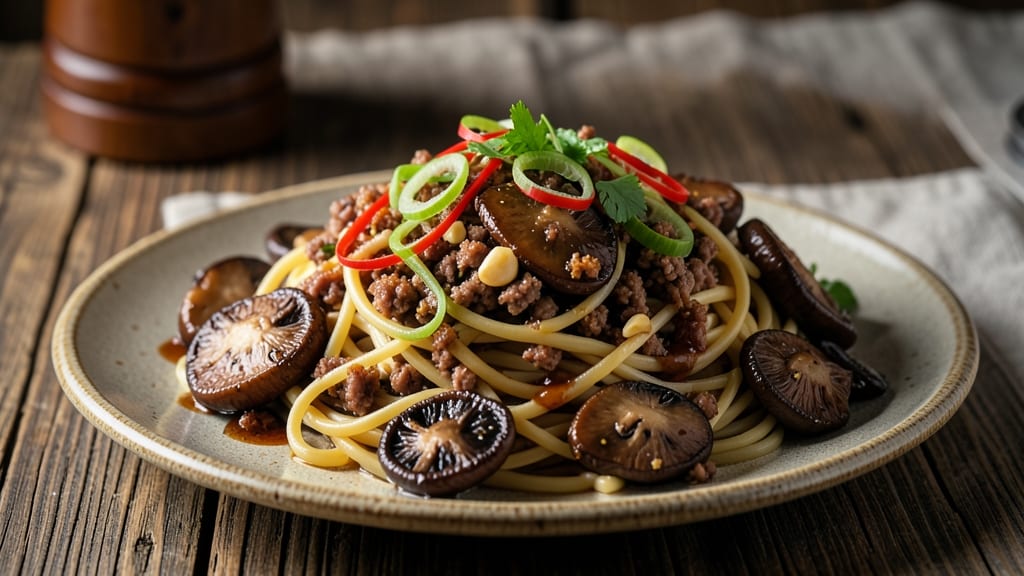
This minced pork and mushroom noodle recipe delivers restaurant-quality depth in every bite, blending tender pork with earthy mushrooms and aromatic noodles. 💛 I developed this stir-fry after perfecting the balance between quick cooking and rich umami flavors—ideal for weeknight dinners that feel like a special occasion.
The secret lies in high-heat stir-frying and proper seasoning, transforming simple ingredients into a dish that's both comforting and sophisticated.
What sets this recipe apart is the way the pork and mushrooms caramelize together, creating a savory sauce that clings to the noodles. I use a combination of shiitake and cremini mushrooms for their meaty texture and deep umami flavor, while the pork stays tender yet develops a subtle crust.
This method delivers a dish that's restaurant-quality but requires just 30 minutes of active cooking time.
The result is a perfectly balanced stir-fry with tender pork, chewy mushrooms, and al dente noodles coated in a fragrant sauce. The dish maintains its texture even when reheated, making it perfect for meal prep or serving a crowd.
Each forkful delivers a harmonious blend of savory, umami, and slightly sweet notes that keep you reaching for more.
Whether you're serving this as a main course or a hearty side, the adaptability of this recipe makes it a staple for any home cook. The flavors develop as you eat, rewarding patience with each delicious bite.
Let's get started on creating this comforting yet refined dish that's sure to become a family favorite.
Ingredients for minced pork mushroom noodle
These ingredients transform simple noodles into a restaurant-worthy stir-fry with rich umami depth.
| Ingredient | Amount | Notes |
|---|---|---|
| Minced Pork 🐖 | 1 lb | Ground pork, 80/20 fat ratio |
| Shiitake Mushrooms 🍄 | 8 oz | Fresh, stems removed |
| Cremini Mushrooms 🍄 | 8 oz | Sliced, for texture |
| Egg Noodles 🍜 | 12 oz | Fresh or dried, al dente |
| Green Onions 🧅 | 4 whole | Thinly sliced, white and green parts |
| Garlic Cloves 🧄 | 4 cloves | Minced, aromatic base |
| Ginger Root 🌿 | 1 tbsp | Freshly grated, zesty kick |
| Soy Sauce 🍶 | ½ cup | Light or all-purpose |
| Sesame Oil 🫒 | 1 tbsp | Toasted, for aroma |
| Oyster Sauce 🍶 | 2 tbsp | For umami depth |
| Vegetable Oil 🫒 | 3 tbsp | High smoke point |
| White Pepper 🌶️ | ¼ tsp | Freshly ground |
| Salt 🧂 | ½ tsp | Kosher or sea salt |
| Sugar 🍯 | 1 tsp | Balances flavors |
| Cornstarch 🌾 | 1 tbsp | For thickening sauce |
The mushrooms are the flavor anchors here—shiitake for deep umami and cremini for meaty texture. Grab them fresh at Whole Foods or Trader Joe's for the best quality, or use dried shiitake if that's what's on hand (soak them first). I always check for vibrant color and firmness—no slimy mushrooms! The pork should be 80/20 fat ratio for juiciness, and you can find it pre-minced in most grocery stores. If you're feeling fancy, Costco sells it in bulk for better value. Don't skip the ginger—freshly grated makes all the difference, and it's the secret to that bright, aromatic base.
No shiitake? Portobello mushrooms work in a pinch, but they're denser, so slice them thinner. Running low on oyster sauce? A splash of fish sauce plus a pinch of sugar gets you close. The sesame oil is non-negotiable for that nutty aroma—Kadoya brand is my go-to, but any toasted sesame oil works. For the noodles, fresh egg noodles cook faster and hold up better to stir-frying, but dried works too (just check the package time). The cornstarch slurry is what gives the sauce that perfect glossy finish—mix it with a splash of water before adding to the pan.
This stir-fry reheats beautifully—just toss with a little water and sesame oil. Keeps for 3-4 days in the fridge, and freezes for 2 months if you portion it into airtight containers. I always make extra because it tastes even better the next day as the flavors meld. Store the sauce separately if you're prepping ahead—just toss it with the noodles when reheating. The mushrooms and pork can be prepped in advance and kept in the fridge for 2 days before cooking.
Why You'll Love This Recipe
- One-Pan Magic: I swear by this recipe when I’m too tired to scrub pots—just brown the pork, toss in the mushrooms, and let the noodles soak up the sauce. The shiitakes and creminis release their own juices, so you barely need to stir.
- Umami Bomb: That combo of shiitake and cremini mushrooms? It’s like a flavor explosion in every bite—earthy, meaty, and just enough savory to make you forget about sad desk lunches. (Yes, I’ve tested this on coworkers.)
- Lunchbox Hero: Between us, this is my go-to for meal prep—packs well, reheats like a dream, and my kids actually eat it. Toss in extra green onions for color, and suddenly you’ve got a lunch that doesn’t look like a sad, limp noodle pile.
- Budget Win: Minced pork and dried shiitakes stretch further than you’d think, and egg noodles are cheap enough to buy in bulk. Honestly, I make this twice a month just to keep groceries from getting out of hand—without sacrificing taste.
Step-by-step instructions for minced pork and mushroom noodles
Here's how to create a restaurant-quality stir-fry with tender pork and earthy mushrooms.
🍳 Step 1: Cook the Egg Noodles to Al Dente Perfection
Bring a large pot of water to a rolling boil and add the 12 oz egg noodles. Stir immediately to prevent sticking. Cook for 8-9 minutes until they're al dente—they should have a slight bite but be tender throughout. I like to test by tasting a piece—it should be firm but not crunchy.
Reserve ½ cup of the pasta water before draining. This starchy liquid is your secret weapon for creating a silky sauce later. Drain the noodles and set them aside, covered with a clean kitchen towel to keep them warm and prevent drying out.
🍳 Step 2: Stir-Fry the Mushrooms Until Golden
Heat 2 tablespoons vegetable oil in a large wok or skillet over medium-high heat until shimmering. Add the 8 oz sliced cremini mushrooms and 8 oz shiitake mushrooms (stems removed). Stir-fry for 4-5 minutes until they release their moisture and begin to brown at the edges.
Here's the thing—don't overcrowd the pan. If your mushrooms are too packed, they'll steam instead of sear. Work in batches if needed, but aim to keep them moving constantly. You want those mushrooms to develop deep caramelized flavors, not just cook through.
🍳 Step 3: Cook the Minced Pork Until Fully Browned
Push the mushrooms to one side of the pan and add the remaining 1 tablespoon vegetable oil. Add the 1 lb minced pork, breaking it up with a wooden spoon. Cook for 3-4 minutes until the pork loses its raw color and becomes deep golden brown in spots.
Watch the heat carefully—if it gets too hot, the pork will burn before cooking through. You want it to crisp up slightly at the edges while staying tender inside. Once fully browned, stir the pork into the mushrooms and cook together for 1 minute to combine flavors.
🥘 Step 4: Build the Umami-Packed Sauce
Add the 4 cloves minced garlic and 1 tbsp freshly grated ginger root to the pan, stirring for 30 seconds until fragrant. Pour in the ½ cup soy sauce, 2 tbsp oyster sauce, and 1 tsp sugar. Stir well and let the sauce simmer for 2 minutes until it thickens slightly.
Here's where the magic happens: sprinkle the 1 tbsp cornstarch mixed with 1 tablespoon water into the sauce. Stir vigorously for 1 minute until the sauce becomes glossy and coats the back of a spoon. If it's too thick, add 1-2 tablespoons of the reserved pasta water to reach your desired consistency.
🥘 Step 5: Combine Everything and Finish with Aromatics
Add the cooked egg noodles to the pan and toss everything together for 2-3 minutes until the noodles are fully coated with the sauce. The residual heat will finish cooking the noodles perfectly while absorbing all those delicious flavors.
Turn off the heat and stir in the 1 tbsp sesame oil and 0.25 tsp white pepper. Garnish with the 4 whole green onions (thinly sliced) and 0.5 tsp salt. Taste and adjust seasoning if needed—you might want a touch more soy sauce for saltiness or a splash of water if the sauce is too thick.
Pro Tips For Making Minced Pork Mushroom Noodle
- STIR FAST, STOP TOASTING: You’ll see the pork turn gray and think it’s done—it’s not. Keep the heat high and stir every 15 seconds for the first 2 minutes. Mushrooms release water like crazy, so don’t let them steam; they’ll turn soggy and dull. Once the pork is no longer pink, then add the mushrooms.
- SLICE MUSHROOMS THIN: Cremini mushrooms hold moisture like a sponge, and thick slices will turn to mush. Cut them paper-thin (1-2mm) and shiitake caps into ¼-inch strips—this guarantees they crisp up instead of turning into a watery glaze. Pat them dry with a paper towel first, or you’ll regret it.
- DON’T BOIL THE NOODLES: Egg noodles finish cooking in the pan, not the pot. Cook them al dente (1 minute less than the package says) in salted boiling water, then shock them in ice water to stop cooking. Tossing them straight into the hot stir-fry will make them gummy—trust me, I’ve ruined a batch this way.
- SAVE TIME WITH A MUSHROOM SOUP BASE: Simmer ½ cup of the mushrooms in ¼ cup water for 3 minutes before stir-frying. Strain the liquid, reduce it by half, and use it to deglaze the pan—it adds depth without extra effort. (Yes, even if you’re impatient like me.) The broth keeps the noodles from drying out while adding a rich umami kick.
Essential equipment for great minced pork mushroom noodle
Wok or Skillet
You absolutely need a carbon steel wok or cast iron skillet for this recipe—I use my 14-inch Lodge cast iron because it retains heat like a dream and develops a natural non-stick patina over time.
The high sides prevent splatter, and the flat bottom ensures even cooking. If you don't have a wok, a heavy-bottomed stainless steel pan works too, but watch your heat control more carefully. 🔥
High-Heat Cooking Tools
Invest in a silicon spatula (like OXO Good Grips) for stirring—it won't scratch your pan and handles high heat beautifully. I also keep a wooden spoon handy for breaking up the pork.
A fine-mesh strainer is essential for rinsing fresh mushrooms and draining noodles properly. These tools make all the difference in texture and flavor development.
Knife Skills Essentials
Sharp knives are non-negotiable for this dish. A 8-inch chef's knife (I love Shun Premier) and a small paring knife for ginger and garlic will make prep faster and safer.
Practice your mushroom slicing technique—thin, even slices ensure consistent cooking. A cutting board with a damp cloth underneath prevents slipping while you chop. 💡
Temperature Control
You'll need a thermometer (I recommend Thermoworks Smoke) to monitor your pan's temperature—medium-high heat should be around 375°F. The right heat is crucial for caramelizing mushrooms and browning pork without burning. A tongs set helps you move ingredients quickly without overcrowding the pan.
Sauce Thickening Kit
For the perfect sauce consistency, keep a small bowl and whisk (like Macalla) ready for mixing your cornstarch slurry. A measuring spoon set ensures precise amounts of soy sauce, oyster sauce, and sesame oil.
I also keep a small pitcher for reserved pasta water—this is your sauce's secret weapon for that silky finish.
Nutrition facts
Frequently asked questions
Can I substitute ground pork with another protein?
For a lighter option, use ground chicken or turkey, but reduce cooking time by 1-2 minutes since they cook faster. For extra richness, try ground duck or beef chuck—just increase the soy sauce by 1 tablespoon to balance the fat. The texture will differ slightly, but the umami profile remains strong.
How do I prevent the mushrooms from turning mushy?
Work in batches if needed and keep the heat at medium-high—never overcrowd the pan. Thin, even slices cook faster and develop better texture. Also, pat mushrooms dry with a paper towel before cooking to remove excess moisture. If they release too much liquid, push them to the edges and let it evaporate for 30 seconds before stirring.
Can I make this gluten-free?
Yes! Swap the soy sauce for tamari or a gluten-free soy sauce alternative, and use rice noodles instead of egg noodles. For extra umami, add 1 teaspoon fish sauce to the sauce mixture. The dish will still be packed with flavor, just without the gluten. Check all sauces for hidden gluten—some brands process them in shared facilities.
What's the best way to reheat leftovers?
Toss cold noodles with 1 teaspoon sesame oil and 1 tablespoon water per serving, then microwave for 90 seconds. For stovetop reheating, cook over medium heat with a splash of water for 3-4 minutes, stirring constantly. The sauce will cling better if you reheat it uncovered to let excess moisture evaporate. Add fresh green onions after reheating for brightness.
Why does my sauce turn out too thick?
This usually happens when the cornstarch slurry thickens too much before adding reserved pasta water. Next time, mix the cornstarch with 2 tablespoons water instead of 1, and add the pasta water gradually while stirring. If the sauce is already too thick, thin it with 1-2 teaspoons warm water or a splash of chicken broth while reheating.