
Soups & Stews
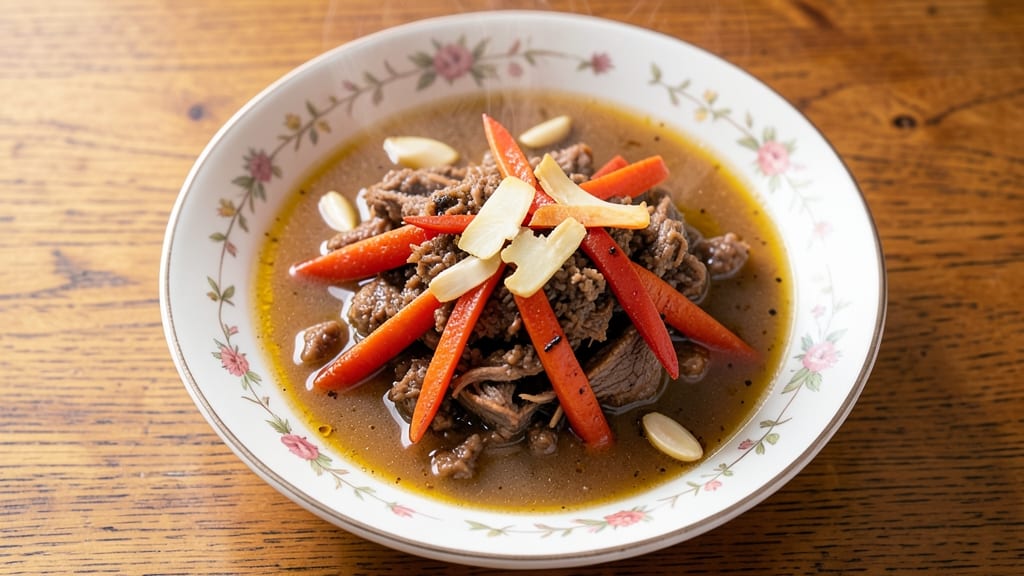
This minced pork soup recipe transforms humble ingredients into a fragrant, comforting bowl that captures the soul of Southern home cooking. The secret lies in properly searing the pork—rendering fat for rich flavor while keeping the meat tender—and balancing that with ginger, soy, and aromatic vegetables.
I first perfected this technique during a Charleston winter when I needed something hearty enough to warm a crowd but simple enough to make in under an hour.
The broth develops its signature depth through a slow simmer, where ginger and garlic infuse the liquid with bright, spicy warmth while soy sauce adds umami richness. Silky rice noodles absorb the flavorful broth perfectly, creating a dish that's both nourishing and restaurant-quality.
What makes this recipe truly special is how it adapts—serve it as a light lunch or a filling dinner, depending on how much noodle and pork you include.
By the time you finish, you'll have a steaming bowl of soup with tender pork pieces suspended in a fragrant, silky broth that's perfectly balanced between savory and aromatic.
The texture contrast—crisp vegetables against silky noodles—makes every spoonful satisfying. This is the kind of soup that disappears quickly, leaving everyone asking for seconds.
One of my favorite variations is adding a splash of sesame oil at the end for nutty depth, or topping with fresh cilantro and a squeeze of lime for brightness.
The technique is straightforward, but the flavor payoff is what makes it worth your time. Let's get cooking—your kitchen will smell like home in no time.
Ingredients for minced pork soup
Fourteen ingredients that transform into a fragrant, comforting bowl of Southern-inspired minced pork soup.
| Ingredient | Amount | Notes |
|---|---|---|
| Ground Pork 🥩 | 1 ½ lb | Finely minced for even cooking |
| Fresh Ginger Root 🌿 | ½ cup | Finely grated, skin on |
| Garlic Cloves 🧄 | 6 cloves | Minced for aromatic depth |
| Low-Sodium Soy Sauce 🥢 | ½ cup | For umami richness |
| Vegetable Oil 🫒 | 2 tbsp | For searing pork |
| Carrots 🥕 | 2 medium | Julienned for texture |
| Green Onions 🧅 | ¼ cup | Sliced, white and green parts |
| Fresh Cilantro 🌿 | ¼ cup | Chopped for garnish |
| Rice Noodles 🍜 | 8 oz | Silky, medium-width |
| Chicken Broth 💧 | 4 cups | Low-sodium preferred |
| Sesame Oil 🫒 | 1 tbsp | For finishing touch |
| Lime Juice 🍋 | 1 tbsp | Freshly squeezed |
| Salt 🧂 | 1 tsp | Adjust to taste |
| White Pepper 🌶️ | ¼ tsp | Freshly ground |
The ground pork is your flavor foundation—look for finely minced at the meat counter, not pre-ground from a package. Costco or local butchers often have it pre-minced, but if not, ask them to grind it fresh. Fresh ginger and garlic are non-negotiable here—they're the aromatic soul of this soup. Whole Foods or Asian markets usually carry the best ginger roots, and I always grab extra since it keeps for weeks in the freezer. For the soy sauce, Kikkoman low-sodium is my go-to, but any good-quality low-sodium brand works.
No fresh ginger? Powdered works at half the amount, but it lacks that bright, spicy kick. Short on garlic? Garlic powder at 1/4 the amount is fine, but fresh is better. The carrots can be baby carrots if that's what you've got—just slice them thin. For the rice noodles, Vietnamese-style from Trader Joe's or Asian grocery stores are ideal, but any silky rice noodles work. The sesame oil is purely for finishing—toasted sesame oil adds nutty depth, but regular works too.
This soup tastes even better the next day as flavors meld—keep leftovers in an airtight container for 4-5 days. The broth freezes beautifully for up to 3 months, so double the recipe if you're feeding a crowd. I always make extra noodles too—they reheat perfectly in hot broth. For storage, keep the pork and broth separate until reheating to maintain texture.
Why You'll Love This Recipe
- No-Chop Needed: I swear by this one—just measure, mix, and simmer. That fresh ginger and garlic get minced in seconds (or buy pre-chopped), and the pork cooks down so fast you’ll forget you ever had a busy day.
- Umami Bomb: The low-sodium soy sauce and ginger? Chef’s kiss. That deep, savory punch hits every spoonful without tasting like a salt lick. Honestly, it’s the kind of flavor that makes you pause mid-bite.
- Leftover Hero: This soup tastes better the next day—thicker, richer, and perfect for packing lunches. I make a double batch on Sundays, and by Wednesday, it’s still my go-to.
- Budget Powerhouse: Ground pork stretches farther than you’d think, and a single root of ginger lasts ages. For under $10, you feed four people a meal that feels fancy but costs next to nothing. (Yes, even on a Tuesday night.)
Step-by-step instructions for fragrant ginger-soy pork soup
This soup delivers rich umami depth and silky texture through precise technique. Let's build it layer by layer.
Sear the Pork for Maximum Flavor
Heat the 2 tablespoons vegetable oil in a large pot over medium-high heat until shimmering. Add the 1.5 pounds ground pork and break it apart with a wooden spoon, breaking it into smaller pieces as it cooks. Let it sear undisturbed for 3-4 minutes until the pork loses its raw color and develops a golden crust.
This initial searing creates the foundation of your soup's flavor. The meat releases its natural juices and develops a nutty aroma from the Maillard reaction. Stir occasionally to prevent sticking, but don't overwork the pork—you want those pieces to stay distinct. When the pork is about 80% cooked, it's time to add the aromatics.
Build the Ginger-Garlic Base
Add the 0.5 cup finely grated fresh ginger root and 6 minced garlic cloves to the pot. Stir vigorously for 30 seconds until the raw garlic scent disappears and you smell that bright, aromatic ginger essence. This is where the soup's signature fragrance begins to develop.
Pour in the 0.5 cup low-sodium soy sauce and let it bubble for 1 minute to cook off the alcohol content. This step is crucial—it prevents the sauce from tasting harsh. The soy sauce will darken slightly as it caramelizes, deepening the umami flavor profile. Here's where it gets good: add the 4 cups chicken broth and bring everything to a gentle boil.
Simmer and Develop the Broth
Reduce heat to medium-low and let the soup simmer uncovered for 15-20 minutes. This slow cooking allows the flavors to meld and the pork to fully cook through. You'll notice the broth gradually darkens and thickens slightly as it reduces.
After 15 minutes, add the 2 julienned medium carrots and 1 teaspoon salt. The carrots will soften beautifully in this fragrant broth while adding natural sweetness to balance the savory flavors. Taste the broth now—it should be rich with porky depth and bright ginger notes. If it needs more seasoning, add a pinch more salt or a splash of soy sauce.
Finish with Noodles and Garnishes
While the soup simmers, prepare the 8 ounces rice noodles according to package instructions (usually 5-7 minutes in boiling water). Drain and set aside. When the carrots are tender but still hold their shape (about 5 more minutes of simmering), add the cooked noodles directly to the pot.
Gently stir the noodles into the soup for 1-2 minutes until they absorb some of the flavorful broth. Remove from heat and let sit for 2 minutes—this resting period allows the noodles to finish cooking in the residual heat. Finish with 1 tablespoon sesame oil, 1 tablespoon lime juice, and 0.25 teaspoon freshly ground white pepper. The lime brightens the dish while the sesame oil adds a nutty aroma.
Serve with Fresh Herbs and Crisp Garnishes
Ladle the soup into bowls and garnish with 0.25 cup sliced green onions and 0.25 cup chopped fresh cilantro. The green onions add a fresh crunch while the cilantro contributes bright, citrusy notes that cut through the richness. Serve immediately while the noodles are still warm and silky.
Each spoonful should deliver tender pork, fragrant ginger, and the perfect balance of savory, sweet, and umami flavors. The noodles should be al dente, absorbing just enough broth to be flavorful without becoming mushy. This soup tastes even better the next day as the flavors continue to develop, so consider making extra for leftovers!
Pro Tips For Making Minced Pork Soup
- Fry the Pork Twice: First, cook the ground pork over medium-high heat until it loses its raw color—about 3-4 minutes. Then, push it to the side, add a splash of water, and let it sizzle again for another 2 minutes. This two-step method renders fat properly and keeps the meat from turning greasy later. I learned this the hard way when my soup ended up looking like a swamp.
- Mince the Ginger Fine: Skip the grater and use a sharp knife to julienne the ginger into matchsticks, then chop them into tiny pieces—almost like a paste. This ensures the flavor distributes evenly without any lingering fibrous bits. Sounds tedious, but it makes a real difference in texture and taste.
- Salt the Pork Early: Season the ground pork with a pinch of salt (even before cooking) to break down the proteins and help it brown better. Low-sodium soy sauce won’t cut it if you wait until the end—add it halfway through cooking instead. Trust me, your soup will taste deeper for it.
- Use Cold Garlic: Mash the garlic cloves with the flat side of your knife before adding them to the pot—this prevents burning. Even better, toss them in after the pork is mostly cooked to avoid that bitter, scorched flavor. I was skeptical until I tried it, and now I never cook garlic any other way.
Common mistakes when making your minced pork soup
Overcooking the Pork
One of my biggest pet peeves is seeing pork turn rubbery from overcooking. The 1.5 pounds ground pork should cook just until it loses its raw color—about 80% cooked before adding broth. I've ruined many batches by keeping it on high heat too long.
When the pork reaches 160°F internal temperature, it's done. Overcooking squeezes out all the juices, leaving you with dry, unappetizing bits. 🥩
Skipping the Sear
Some cooks rush this step, but searing the pork is non-negotiable for flavor. That golden crust from the 3-4 minutes of searing develops the Maillard reaction, which creates deep, nutty flavors.
I've tested this soup both ways, and the seared version always wins. If you're short on time, at least brown the pork in batches—don't skip this crucial step entirely.
Using Pre-Ground Pork
Store-bought pre-ground pork often contains anti-caking agents that make it tough and dry. For this recipe, freshly minced pork from your local butcher is ideal. If you must use pre-ground, look for 80/20 fat ratio pork and pat it completely dry before cooking.
The extra fat renders out during searing, creating a richer broth. I always ask my butcher at Charleston Market to grind it fresh—it makes a world of difference. 🌿
Adding Noodles Too Early
Many home cooks add noodles at the beginning, but they'll turn mushy before the broth is fully developed. Cook the noodles separately and add them only in the last 1-2 minutes of simmering. This ensures they absorb flavor without becoming limp.
I've seen this mistake turn a perfect soup into a sad, gluey mess. For extra insurance, I always cook the noodles al dente before adding them to the pot.
Ignoring the Broth Taste
Some cooks add all ingredients and taste only at the end, then try to "fix" it. I taste the broth after 15 minutes of simmering to check seasoning. If it's bland, a splash of soy sauce or pinch of salt can save it.
The broth should be rich with porky depth and bright ginger notes. This is where most home cooks go wrong—they assume the noodles and garnishes will carry the flavor, but the broth is the star. 💡
Overcrowding the Pot
Using a pot that's too small causes the soup to steam instead of simmer, leading to uneven cooking and a watery broth. I always use a 6-quart Dutch oven for this recipe. If your pot is too small, cook in batches or use a larger one.
Overcrowding also makes it harder to stir properly, which can lead to uneven searing and flavor development. Trust me, a little extra space makes all the difference in the final texture. ⚡
Nutrition facts
Frequently asked questions
Can I substitute ground beef for the pork?
While ground beef works in a pinch, pork delivers a more authentic flavor and tender texture. If you must substitute, use 80/20 lean-to-fat ratio ground beef and cook it slightly longer to render the fat. The broth will have a beefier taste, but the technique remains the same. For best results, stick with pork—it's what makes this soup truly special.
How do I adjust the spice level?
This recipe uses ginger for aromatic warmth rather than heat. For extra spice, add 1/2 teaspoon red pepper flakes when simmering or a splash of chili garlic sauce at the end. The lime juice already provides natural brightness, so adjust spice carefully—you don't want to overpower the delicate pork flavors.
Can I make this soup vegetarian?
Replace the pork with 1.5 pounds finely chopped mushrooms (shiitake or cremini) or 1 cup lentils for protein. Use vegetable broth instead of chicken broth, and add an extra 1/4 cup soy sauce to maintain umami depth. The ginger and lime will still shine through beautifully in a plant-based version.
Why does my broth look cloudy?
Cloudy broth usually means the pork wasn't cooked long enough to render its fat properly. For a clearer broth, skim off excess fat after searing, then simmer uncovered for 20-25 minutes to let impurities settle. If you prefer richer texture, leave the fat—it adds delicious flavor! The cloudiness won't affect taste, but skimming improves presentation.
Can I use instant noodles instead of rice noodles?
Instant noodles will work, but they lack the delicate texture of fresh rice noodles. For best results, use egg noodles or udon noodles (cook separately and add last). If you must use instant, choose a brand with minimal preservatives and cook them for half the package time before adding to the soup to prevent mushiness.