
Main Courses
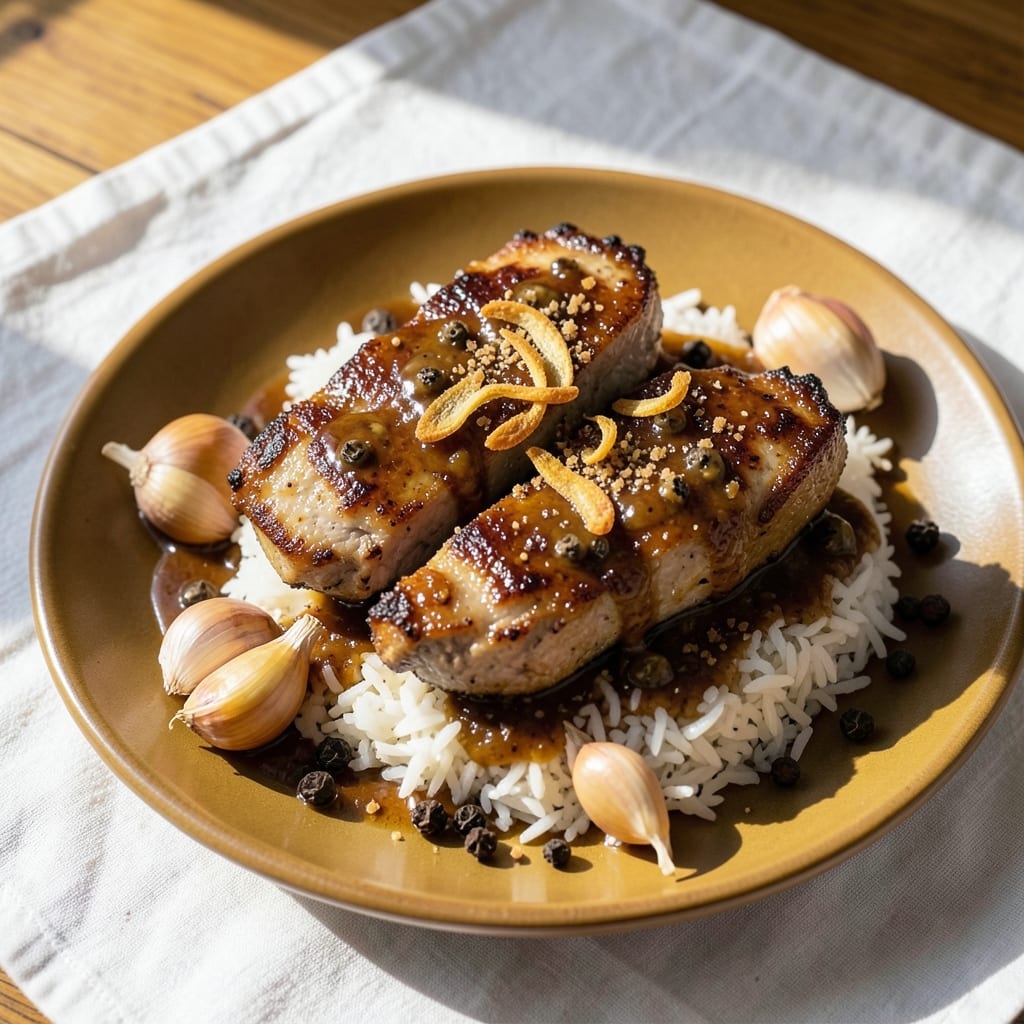
This Filipino pork chop adobo recipe transforms tough cuts into melt-in-your-mouth perfection through a tangy-sweet marinade and slow braising. 🔥 As someone who's spent years perfecting pork techniques, I can confidently say this method delivers restaurant-quality tenderness at home—no fancy equipment required. The magic lies in the balance of soy sauce, vinegar, and garlic, which tenderize the meat while building deep, complex flavors.
The process begins with a marinade that works its magic overnight, breaking down the fibers for effortless slicing. We'll pan-fry the chops to develop a caramelized crust before completing the cooking in a simmering sauce. This dual approach ensures you get both texture and flavor in every bite—crispy edges and fork-tender meat that falls apart with minimal effort. The soy-vinegar base creates that signature Filipino tang, while garlic and spices add aromatic depth.
What you'll end up with is a dish that's equally impressive for weeknight dinners and special occasions—golden-brown chops swimming in a glossy, slightly thickened sauce that clings perfectly to each piece. The aroma alone will have everyone gathering around your table, and the first bite delivers that perfect balance of sweet, salty, and tangy that defines adobo. This is pork cooking at its finest, where simple ingredients create extraordinary results.
Serve with steamed rice to soak up every last drop of that flavorful sauce, or pair with garlic fried rice for a complete meal. The leftovers actually taste better the next day as the flavors continue to meld. Let's get started on creating your most tender pork chops yet—this recipe is a game-changer for anyone who loves Filipino flavors.
Ingredients for filipino pork chop adobo
Simple ingredients that work magic on tough pork chops for fall-apart tenderness.
| Ingredient | Amount | Notes |
|---|---|---|
| Bone-In Pork Chops 🥩 | 1 ½ lb | 1-inch thick, center-cut preferred |
| Soy Sauce 🍶 | ½ cup | High-quality, dark variety |
| White Vinegar 💧 | ½ cup | Distilled preferred for balance |
| Garlic Cloves 🧄 | 8 cloves | Minced, fresh for best flavor |
| Brown Sugar 🍚 | ¼ cup | Light or dark, packed |
| Black Peppercorns 🌶️ | 1 tsp | Crushed, freshly ground |
| Bay Leaves 🌿 | 2 whole | Dried, standard size |
| Olive Oil 🫒 | 2 tbsp | Extra-virgin, for searing |
| Water 💧 | ½ cup | Room temperature |
| Salt 🧂 | 1 ½ tsp | Kosher or sea salt |
| Ground Black Pepper 🌶️ | ½ tsp | Freshly ground |
| Green Onions 🧅 | 3 whole | Sliced, for garnish |
The pork chops are the star—center-cut with bone-in for flavor and moisture. Costco or local butchers usually carry the best cuts; look for good marbling and even thickness. If you can't find bone-in, use boneless but pound them to 1-inch thickness. The soy sauce should be the dark, salty kind—Lee Kum Kee is my go-to, but any good-quality brand works. Vinegar matters too: distilled gives the cleanest tang without overpowering. I always grab extra garlic because half goes in the marinade and half gets minced for the sauce later.
No dark soy sauce? Light soy sauce plus 1 tsp molasses mimics the depth. Short on vinegar? White balsamic vinegar works too. The brown sugar can be swapped for coconut sugar if you prefer, but don't skip it—it balances the acidity beautifully. Fresh bay leaves are ideal, but dried are fine if that's what you have. For the olive oil, Trader Joe's or local olive oil shops often have great extra-virgin options at reasonable prices. The green onions are just for garnish, so use whatever's freshest in your fridge—scallions or chives work too.
Marinate the pork overnight for maximum tenderness, but if you're short on time, 4 hours minimum still works wonders. The sauce thickens as it simmers, so don't stress if it looks thin at first. Store leftovers in the fridge for 4-5 days—the flavors actually deepen overnight. For freezing, portion the sauce and chops separately; reheat the sauce first, then add the pork to warm through gently. The rice will soak up every last drop, so make extra if you're hungry.
Why You'll Love This Recipe
- One-Pan Magic: I swear by this—just toss the pork chops, garlic, and vinegar in a single pan, then let the soy sauce and sugar work their alchemy. No fussing with multiple dishes, no sticky messes to scrub later.
- Crispy-Tender Perfection: That bone-in magic happens when you sear the chops first—they get this unreal caramelized crust while staying juicy inside. The vinegar cuts through the richness, and the brown sugar? It’s like a little flavor hug for your taste buds.
- Leftover Goldmine: Between us, this dish begs to be made in bulk. The sauce thickens beautifully over time, and reheated chops? Still just as good the next day—slap them on rice or toast for a lazy breakfast. My freezer’s full of these, honestly.
- Budget Weeknight Win: Bone-in pork chops stretch further than you’d think, and the ingredients? Basic pantry staples. A few cloves of garlic, a splash of vinegar, and you’ve got a meal that feels fancy but costs next to nothing. (Yes, even on a Tuesday night.)
Step-by-step instructions for Filipino pork chop adobo
Here's how to transform tough pork chops into melt-in-your-mouth perfection using this classic Filipino technique.
🔥 Step 1: Sear the Pork Chops for Maximum Flavor
Pat the 1.5 lb bone-in pork chops completely dry with paper towels—this ensures a proper sear. Heat 2 tablespoons olive oil in a large Dutch oven over medium-high heat until shimmering. Place the chops in the pan and cook undisturbed for 3-4 minutes per side until they develop a deep golden-brown crust.
Don't rush this step—the crust locks in juices and builds flavor. I press down gently on the fillet during the first minute to prevent curling. Once both sides are deeply browned, remove the chops from the pan and set them aside on a plate. You'll notice the pan still has beautiful browned bits—those are pure flavor, so don't wipe them out.
👨🍳 Step 2: Build the Adobo Base with Aromatics
In the same Dutch oven, add 8 minced garlic cloves and cook for 30 seconds until fragrant—you should smell that garlic releasing its sweet aroma. Add 1 teaspoon crushed black peppercorns and cook for another 10 seconds, stirring constantly to prevent burning.
Now pour in 0.5 cup soy sauce and 0.5 cup white vinegar, scraping up all those browned bits from the bottom with a wooden spoon. This deglazing step captures all the meaty flavors that would otherwise stick to the pan. The mixture will bubble vigorously—let it cook for 2-3 minutes until slightly reduced and syrupy.
🥘 Step 3: Simmer with Sugar and Herbs
Add 0.25 cup brown sugar, 1.5 teaspoons salt, 0.5 teaspoon ground black pepper, 2 whole bay leaves, and 0.5 cup water to the pan. Stir everything together until the sugar dissolves completely. Return the pork chops to the pan, bone-side down, and bring the mixture to a gentle simmer.
Here's the thing—adobo needs patience. Cover the pan and simmer on low heat for 45-50 minutes, turning the chops occasionally. The sauce should reduce to a thick, glossy consistency that coats the back of a spoon. You'll know it's ready when the meat is fork-tender and pulls away from the bone with just a gentle tug.
⏰ Step 4: Finish and Garnish for Perfect Presentation
Once the pork chops are tender, remove them from the pan and let them rest for 5 minutes. Meanwhile, transfer the sauce to a saucepan and simmer uncovered for 5-7 minutes until it thickens further. If it's too thin, simmer longer—you want that signature adobo sauce that clings beautifully to the meat.
Slice the 3 whole green onions into thin rounds and stir them into the sauce. Return the pork chops to the pan, spooning the sauce generously over the top. Serve immediately with steamed rice to soak up every last drop of that tangy, savory sauce. The chops should be fork-tender with a caramelized exterior, and the sauce should have a perfect balance of sweet, salty, and tangy flavors.
Pro Tips For Making Filipino Pork Chop Adobo
- Sear the Pork First: Hit the bone-in chops with a screaming-hot pan for 3-4 minutes per side before adding anything else—this locks in juices and builds flavor you can’t get from simmering alone. I used to skip this, and my adobo always tasted like it was missing something.
- Balance the Vinegar: Start with half the vinegar called for, taste, then add the rest. Too much upfront makes the pork tough; too little later leaves it bland. My grandmother’s trick: "Vinegar is like salt—you can always add more, but you can’t take it back."
- Crush Garlic Properly: Smash those cloves flat with the side of your knife before mincing—this releases more flavor. I was lazy and just chopped them fine, and the dish never had that deep, aromatic punch.
- Simmer Low and Slow: Once the pork is cooked, reduce to a bare simmer (tiny bubbles, not rolling) and cover for 20 minutes. Rushing this step makes the sauce watery and the meat dry. Sounds counterintuitive, but it’s the thing that matters most for tender chops.
Dietary considerations for this recipe
Gluten-Free Adaptations
Traditional adobo uses soy sauce, which contains gluten, but there are excellent alternatives. I recommend using tamari—a gluten-free soy sauce substitute that has a similar umami depth. For ½ cup soy sauce in the recipe, use ½ cup tamari instead. Brands like San-J Tamari or Edamame Tamari work beautifully. The flavor profile remains rich and savory, just without the gluten. 💫
Dairy-Free Considerations
This recipe is naturally dairy-free, making it perfect for those avoiding lactose or following vegan diets. The sauce relies on soy, vinegar, and spices for flavor rather than any dairy components. If you're serving alongside dairy-based sides (like creamy mashed potatoes), simply swap those for dairy-free alternatives like coconut milk rice or roasted vegetables.
Low-Sodium Options
For those watching their sodium intake, reduce the salt by half—use ¾ teaspoon kosher salt instead of the full 1.5 teaspoons. To compensate for the reduced saltiness, add an extra ½ teaspoon of garlic powder or 1 teaspoon of fish sauce (if you're okay with umami depth). I also recommend using a low-sodium soy sauce like Kikkoman Low Sodium to cut sodium by about 30%.
Vegetarian Substitutions
While adobo traditionally features pork, you can create a vegetarian version using extra-firm tofu or portobello mushrooms. Cut tofu into 1-inch thick slices and press out excess water before searing. For mushrooms, use 4 large portobellos sliced into thick cutlets. Follow the same cooking process, but reduce the simmering time to 20-25 minutes—vegetables cook faster than pork. The sauce will still cling beautifully to the tofu or mushrooms.
Allergen-Friendly Swaps
For nut allergies, this recipe is already safe—it contains no nuts. However, if you're avoiding garlic, substitute with 1 teaspoon garlic powder plus 1 tablespoon onion powder (though you'll lose some aromatic depth). For vinegar allergies, try apple cider vinegar instead of white vinegar—it adds a subtle sweetness that complements the soy and sugar. Always check labels on soy sauce and spices for cross-contamination warnings if allergies are severe.
Keto-Friendly Adjustments
To make this keto-friendly, reduce the brown sugar to 1 tablespoon and increase the vinegar slightly to ⅔ cup to balance flavors. Skip the green onions if you're strict about carbs (they're low-carb but not zero-carb). Serve with cauliflower rice instead of white rice—it absorbs the sauce beautifully. The pork chops remain the star, providing 30+ grams of protein per serving while keeping carbs minimal. 💪
Nutrition facts
Frequently asked questions
Why do we marinate pork chops for adobo?
The overnight marinade in soy and vinegar breaks down the tough muscle fibers, creating fall-off-the-bone tenderness. The acidity from vinegar tenderizes while the soy adds depth. Even 4 hours minimum makes a noticeable difference, but overnight is ideal.
Can I use boneless pork chops instead?
Yes, but pound them to 1-inch thickness for even cooking. Bone-in chops stay juicier, but boneless work perfectly with the same method. Just reduce cooking time by 5-10 minutes since they cook faster without bone insulation.
What if my sauce is too thin?
Simmer uncovered for 5-10 extra minutes to reduce it. For thicker sauce faster, mix 1 tablespoon cornstarch with 2 tablespoons water, stir into the hot sauce, and cook for 2 minutes until thickened.
How do I make this spicier?
Add ½ teaspoon ground black pepper to the marinade and 1-2 sliced Thai chilies to the braising liquid. For heat lovers, stir in 1 teaspoon sriracha at the end. Remember—Filipino adobo is traditionally mild but balanced.
Can I prepare this ahead of time?
The flavors deepen overnight. Cook completely, then refrigerate for 4-5 days or freeze for 3 months. Reheat gently in a saucepan with 1-2 tablespoons water to prevent drying. The sauce will thicken further when reheated.