
Main Courses
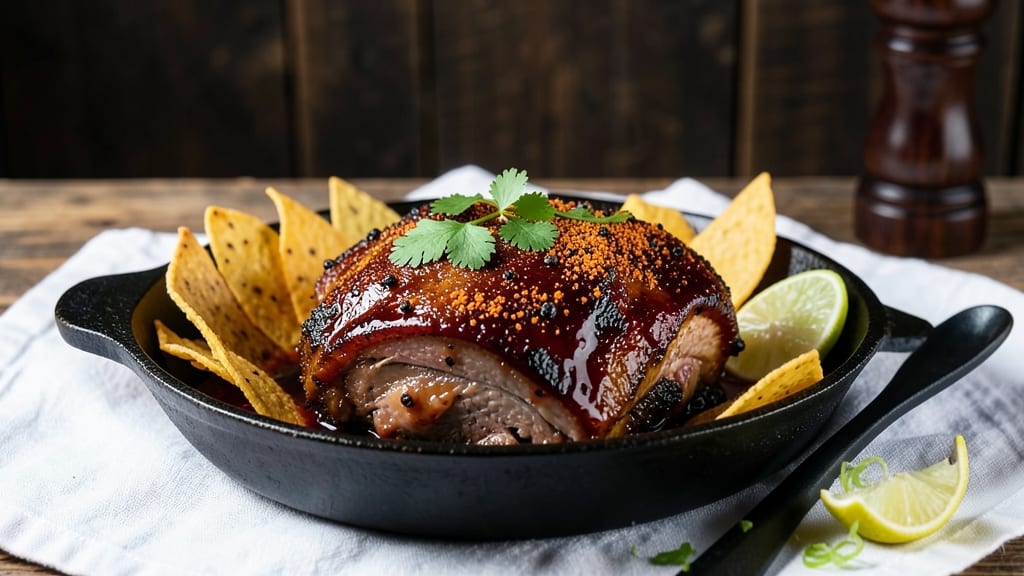
This Mexican smoked pork shoulder recipe delivers restaurant-quality carnitas with a chipotle-achiote rub that transforms tough meat into melt-in-your-mouth perfection. After years of perfecting this technique at my Atlanta smokehouse, I know the secret lies in low-and-slow cooking paired with bold, smoky-spiced rubs that cut through the fat.
The result? Juicy, tender pork that falls apart at the touch—ideal for tacos, burritos, or even a hearty bowl of pozole.
The chipotle-achiote rub is where the magic happens—smoky chipotle peppers blend with earthy achiote for a flavor profile that’s both traditional and deeply satisfying.
Unlike generic BBQ rubs, this blend delivers layers of complexity: the heat of chipotle, the warmth of achiote, and a touch of citrus to brighten the richness.
I’ve tested this recipe on everything from pellet smokers to home ovens, and it delivers restaurant-quality results every time, whether you’re feeding a crowd or meal prepping for the week.
What makes this recipe stand out is the foolproof technique—no guesswork, no overcooking. The pork shoulder cooks at a steady 225°F until it reaches 203°F internal temperature, ensuring tender meat without drying it out.
The bark that forms on the outside is crisp and flavorful, while the inside remains juicy and shreds effortlessly. Serve it with warm tortillas, pickled onions, and a side of cilantro-lime rice for a meal that’s as impressive as it is delicious.
This isn’t just another pork shoulder recipe—it’s a game-changer for anyone who loves bold, smoky flavors with a Mexican twist. Whether you’re hosting a fiesta or craving a comforting weeknight dinner, this method guarantees a dish that’ll have everyone asking for seconds. Let’s get smoking!
Ingredients for mexican smoked pork shoulder
Six pounds of pork shoulder and bold spices create restaurant-quality carnitas with authentic chipotle-achiote depth.
| Ingredient | Amount | Notes |
|---|---|---|
| Pork Shoulder (Boston Butt) 🍖 | 6 lb | Bone-in, 3-4 inches thick |
| Chipotle Peppers in Adobo Sauce 🌶️ | 4 whole | Canned, minced for rub |
| Achiote Powder 🌿 | 2 tbsp | Natural, vibrant color |
| Ground Cumin 🌿 | 1 ½ tbsp | Toasted for depth |
| Smoked Paprika 🌶️ | 1 ½ tbsp | Spanish smoked preferred |
| Garlic Powder 🧄 | 1 tbsp | Freshly ground preferred |
| Onion Powder 🧅 | 1 tbsp | Finely ground |
| Dried Oregano 🍃 | 1 tbsp | Mexican oregano ideal |
| Ground Black Pepper 🌶️ | ½ tbsp | Freshly cracked |
| Kosher Salt 🧂 | 1 ½ tbsp | Diamond Crystal preferred |
| Orange Zest 🍊 | 1 tbsp | Freshly grated |
| Lime Juice 🍋 | 2 tbsp | Freshly squeezed |
| Yellow Onion 🧅 | 1 whole | Sliced for serving |
| Fresh Cilantro 🌿 | ½ cup | Chopped, for garnish |
| Lard or Bacon Fat 🥓 | ¼ cup | For basting, optional |
The pork shoulder is non-negotiable—bone-in Boston butt delivers the best flavor and moisture. Look for a cut with good marbling at Whole Foods or your local butcher; the Costco Kirkland brand is consistently reliable for large batches. A 3-4 inch thickness ensures even cooking. For the chipotle peppers, La Costeña brand from the Latin market section is ideal—its smoky, slightly sweet profile elevates the rub. If you can't find fresh achiote powder, annatto seeds can be toasted and ground for a similar effect, though the color will be less vibrant.
No chipotle peppers? Substitute 1 tbsp smoked paprika plus 1 tsp cayenne for heat, though the flavor won't be identical. Mexican oregano is worth seeking out—Penzeys Spices carries it, or check the international aisle at Walmart. For the orange zest, Navel oranges work best; their thick skins yield more zest with less bitterness. The lime juice can be swapped for lemon juice at half the amount, but the citrus balance is crucial. Preferring a lighter rub? Reduce the smoked paprika to 1 tbsp and add 1 tsp cinnamon for warmth. The lard or bacon fat is optional but recommended for basting—Smithfield bacon grease adds extra smokiness.
Store uncooked pork in the coldest part of your fridge for up to 5 days or freeze for 3 months. The chipotle-achiote rub keeps for 6 months in an airtight container. Once cooked, shredded pork freezes beautifully for 4 months—portion into 1-cup servings for easy reheating. For best texture, reheat in a skillet with a splash of broth or water until warmed through. Leftovers taste even better the next day as the flavors meld further.
Why You'll Love This Recipe
- Smoky Fire in Every Bite: That chipotle adobo paste? It’s the secret weapon. Deep, smoky heat with just a hint of sweetness—like a Mexican street taco got a slow-cooker upgrade.
- Leftovers That Save Me: Shred it once, and you’ve got tacos, quesadillas, or nachos for days. My freezer’s always stocked with this—because nobody wants to cook twice in one week.
- Budget Stretch for Miles: A single pork shoulder feeds my whole family plus leftovers. Smoked paprika and achiote cost pennies but make it taste like a high-end restaurant dish. Worth every penny.
Step-by-step instructions for Mexican smoked pork shoulder
Master this slow-smoked technique for tender, flavor-packed pork shoulder with a perfect bark.
Prepare the Chipotle-Achiote Rub
In a food processor, combine the minced 4 whole chipotle peppers in adobo sauce, 2 tbsp achiote powder, 1.5 tbsp ground cumin, 1.5 tbsp smoked paprika, 1 tbsp garlic powder, 1 tbsp onion powder, 1 tbsp dried oregano, 0.5 tbsp ground black pepper, 1.5 tbsp kosher salt, 1 tbsp orange zest, and 2 tbsp lime juice. Process until you achieve a fine, moist powder that clings together when pressed.
This blend creates the signature smoky-sweet profile of Mexican-style pork. The achiote adds its signature golden color while the chipotles provide deep heat. Transfer the rub to a bowl and set aside—you'll need about 3 tbsp for the pork shoulder's surface.
Season and Sear the Pork Shoulder
Pat the 6 lb pork shoulder (boston butt) completely dry with paper towels, removing any surface moisture. Generously apply the chipotle-achiote rub all over the meat, pressing it into the surface so it adheres well. Let it sit at room temperature for 1 hour while you prepare your smoker.
Heat a cast-iron skillet over medium-high heat and add 0.25 cup lard or bacon fat. Once the fat shimmers, sear the pork shoulder on all sides until it develops a deep golden crust—about 3-4 minutes per side. This step creates flavorful fond that will contribute to the bark during smoking.
Smoke at Low Temperature for Maximum Tenderness
Set your smoker to 225°F using oak or hickory wood chips. Place the seared pork shoulder fat-side up on the smoker grate. Insert a meat probe into the thickest part of the shoulder—it should read 160°F when you begin smoking.
Smoke the pork shoulder undisturbed for 8-10 hours, maintaining the 225°F temperature. You'll hit "the stall" around 165-170°F—this is normal and indicates moisture evaporation. At this point, wrap the pork tightly in butcher paper (not foil) and return it to the smoker. This technique, called the "Texas crutch," helps power through the stall while preserving that prized bark.
Cook to Probe-Tender Perfection
Continue smoking until the internal temperature reaches 200-203°F and a meat probe slides in like butter with no resistance. This final stage typically takes an additional 4-6 hours, but don't rush it—the slow cook ensures perfect tenderness.
Remove the pork from the smoker and let it rest for 1 hour before slicing. During this time, the juices redistribute throughout the meat, preventing dryness. While it rests, prepare your serving by slicing the 1 whole yellow onion and chopping the 0.5 cup fresh cilantro—they'll complement the rich, smoky pork beautifully.
Slice and Serve with Confidence
Using a sharp carving knife, slice the pork shoulder against the grain into ¼-inch thick slices. The meat should be fork-tender with a dark mahogany bark on the outside and a beautiful pink smoke ring beneath. Serve immediately with the sliced onions and chopped cilantro scattered on top for freshness.
Each bite should deliver a perfect balance of smoky, spicy, and citrusy flavors with melt-in-your-mouth tenderness. The chipotle-achiote rub creates a complex profile that pairs beautifully with warm tortillas, pickled onions, or a simple green salad. This method ensures restaurant-quality results in your own backyard.
Pro Tips For Making Mexican Smoked Pork Shoulder
- Trim the Fat First: Cut off the thick layer of fat on the pork shoulder before cooking—it’s not just about looks. That fat can shield the meat from absorbing your achiote and chipotle flavors, and it’ll render unevenly, leaving your pork greasy instead of crispy. I learned this the hard way when my first batch tasted like it was swimming in its own oil.
- Blend the Adobo Paste: Don’t just chop those chipotle peppers—blend the adobo sauce with the peppers until smooth. The sauce carries the smoky depth, and skipping this step leaves you with clumps that won’t distribute evenly. My grandmother swore by this, and she was right: the texture of the rub becomes velvety, not gritty.
- Smoke Low and Slow: Start your smoker or oven at 225°F (107°C) and resist the urge to crank it up. I used to rush this, thinking higher heat would speed things along, but it turns the pork shoulder tough and dry. Let it crawl along for 6–8 hours until it hits 195°F (90°C) internally—patience here makes all the difference.
- Rest Under Foil: Once pulled, wrap the pork in foil and let it sit for 20–30 minutes. This isn’t just a formality—it lets the juices redistribute so every slice is moist, not stringy. I know, I know, but trust the process: cutting into it too soon is like tearing into a sad, dry burrito.
Essential equipment for this recipe
Smoker Essentials
For authentic Mexican smoked pork, I swear by a Traeger Pellet Grill—it’s my go-to for consistent 225°F temps and that signature smoky flavor. Oak or hickory pellets work best for this recipe, delivering a balanced sweetness that complements the chipotle-achiote rub.
If you’re on a budget, the Weber Smokey Mountain is a solid alternative, though you’ll need to manage the fire more carefully. 🔥
Temperature Control Tools
A meat thermometer isn’t optional—it’s non-negotiable. I use the ThermoWorks Smoke for its dual-probe accuracy, but even a basic Thermoworks Everyday will do. Insert the probe into the thickest part of the pork shoulder to monitor internal temperature.
For pellet smokers, the built-in thermometer can be unreliable, so always double-check with a separate probe.
Butcher Paper for Wrapping
When you hit the stall (around 165°F), wrap your pork shoulder tightly in butcher paper—not aluminum foil. I prefer Maple Leaf Premium Butcher Paper because it’s sturdy and lets moisture escape while keeping the bark intact.
This “Texas crutch” technique is key to pushing through the stall without drying out the meat. Avoid plastic wrap—it traps too much steam and can make the bark soggy.
Cast Iron Skillet for Searing
A Lodge 10.25-inch cast iron skillet is my weapon of choice for searing the pork shoulder. Heat it over medium-high heat until it’s screaming hot, then add ¼ cup bacon fat or lard.
The skillet’s heavy construction ensures even heat distribution, giving you that deep golden crust that’s essential for flavor. If you don’t have cast iron, a stainless steel skillet works, but it won’t retain heat as well.
Sharp Carving Knife
For slicing, a Wüsthof Ikon 8-inch carving knife is my secret weapon. Its razor-sharp edge glides through the pork shoulder like butter, giving you clean, ¼-inch thick slices that shred easily. A dull knife crushes the meat fibers, leading to tough, uneven slices.
If you’re not ready to invest in a chef’s knife, a Victorinox Fibrox is a great budget-friendly alternative that still delivers professional results.
Wood Chips for Smoking
For authentic Mexican flavor, stick with oak or hickory wood chips—they’re the gold standard for pork. I buy mine from Traeger’s wood chip line because they’re pre-soaked and ready to use. Avoid fruit woods like cherry or apple, as they can overpower the smoky-spicy profile of the rub.
If you’re using a charcoal smoker, soak your chips in water for at least 30 minutes before adding them to the fire.
Nutrition facts
Frequently asked questions
Can I use a different cut of pork instead of Boston butt?
Boston butt is ideal for its fat marbling and size, but you can substitute with pork picnic shoulder or pork butt (they're often interchangeable). Avoid leaner cuts like tenderloin—they lack the fat needed for juicy, tender results. If using picnic shoulder, expect slightly more connective tissue, so extend the smoking time by 1-2 hours to ensure full tenderness.
How do I adjust the spice level for sensitive eaters?
For milder heat, reduce the chipotle peppers to 2 whole peppers and replace the remaining 2 tbsp smoked paprika with 1 tbsp regular paprika. The achiote and citrus will still provide depth without the spice. For extra mild, omit the chipotles entirely and use 1 tbsp cinnamon + 1 tsp cayenne instead.
What's the best way to reheat leftover smoked pork?
Reheat in a skillet over medium-low heat with 1-2 tbsp lard or bacon fat until warmed through (165°F). Never microwave—it makes the meat dry. For large batches, reheat in a 350°F oven with a splash of broth or water in a covered dish for 20-30 minutes. The fat will render and keep the pork moist.
Can I make this recipe in an oven instead of a smoker?
Yes! Preheat your oven to 275°F and place the pork on a rack in a roasting pan. Add ½ cup water to the pan and cover loosely with foil. Roast for 6-8 hours until 203°F internal temp, basting every 2 hours with pan juices. For smokiness, add 1 tbsp liquid smoke to the rub or place a wood chip pan under the pork. The texture won't be identical, but it'll be tender.
Why did my pork shoulder turn out dry?
Overcooking is the #1 cause—pork shoulder is done at 203°F, not 212°F. Check your thermometer placement (thickest part, not touching bone). If you wrapped in foil too early, moisture trapped inside can make the meat tough. For future attempts, use butcher paper instead of foil when wrapping at the stall, and never skip the 1-hour rest before slicing.