
Main Courses
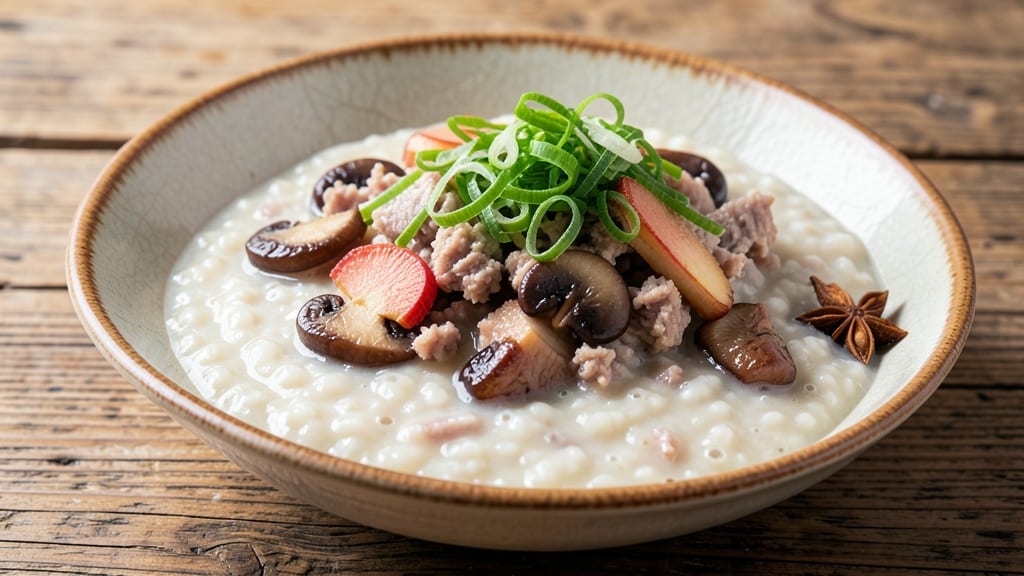
This minced pork congee recipe delivers the perfect balance of silky rice porridge and tender, savory pork bites—comfort food at its finest. 💛 After perfecting this dish through years of Southern cooking, I've developed a method that transforms simple ingredients into a restaurant-quality bowl that's both nourishing and deeply satisfying.
The foundation lies in properly soaking the rice to achieve that signature silky texture while keeping the broth rich and flavorful. Minced pork cooks gently until tender, absorbing the aromatic essence of ginger, scallions, and star anise—classic flavors that elevate this humble dish into something extraordinary.
The secret? Low, slow simmering that develops deep, comforting flavors without overpowering the delicate rice.
What you'll end up with is a steaming bowl of congee with perfectly tender pork pieces suspended in a velvety porridge, ready to be topped with your favorite garnishes.
The aroma alone will transport you to a cozy kitchen in the South, where this dish has been a staple for generations. It's the kind of meal that warms both body and soul on chilly days.
Serve with a drizzle of chili oil, fresh scallions, and a soft-boiled egg for added richness. This recipe scales beautifully—perfect for a single serving or feeding a crowd. Let's get cooking!
Ingredients for minced pork congee
Transform simple pantry staples into restaurant-quality minced pork congee with this Southern-inspired recipe.
| Ingredient | Amount | Notes |
|---|---|---|
| Ground Pork 🐷 | 1 ½ lb | Finely minced for even cooking |
| Jasmine Rice 🍚 | 1 cup | Uncooked, long-grain preferred |
| Fresh Ginger 🧄 | 2 tbsp | Finely grated, aromatic |
| Green Onions (Scallions) 🧅 | ½ cup | Sliced, white and green parts |
| Star Anise 🌟 | 2 whole | Whole pods, crushed lightly |
| Dried Shiitake Mushrooms 🍄 | 4 whole | Rehydrated in hot water |
| Dried Tangerine Peel 🍊 | 1 tbsp | Dried, finely chopped |
| Light Soy Sauce 🥄 | 2 tbsp | Kikkoman preferred |
| Dark Soy Sauce 🥄 | 1 tbsp | For deep umami flavor |
| Water 💧 | 8 cups | Filtered preferred |
| Sesame Oil 🫒 | 1 tsp | Toasted, for finishing |
| Chili Oil 🌶️ | 2 tbsp | For serving, optional |
| Salt 🧂 | 1 tsp | Diamond Crystal preferred |
| White Pepper 🌶️ | ¼ tsp | Freshly ground |
The star anise and dried tangerine peel are non-negotiable for authentic flavor—look for them in the Asian aisle at Whole Foods or H Mart. Fresh ginger should be vibrant and firm; avoid any with soft spots or sprouting. For the pork, ground pork with visible fat (about 20% fat content) ensures tender, juicy bites. If you can't find dried shiitake mushrooms, fresh shiitakes work too—just slice them thinly and use half the amount. The jasmine rice is key; Thai Kitchen brand is widely available and reliable for consistent texture.
No star anise? Anise seeds at double the amount work in a pinch, though the flavor won't be identical. Substitute dried tangerine peel with orange zest, but reduce to half the quantity. For the soy sauces, light soy sauce can substitute for dark if needed, though it'll be less complex. The scallions can be swapped for green onions, but the white parts are essential for flavor. If you're making this ahead, pre-soak the rice for up to 4 hours—it keeps better and cooks faster. The sesame oil should be toasted; look for 'toasted' on the label or lightly toast it yourself in a dry pan for 30 seconds.
Congee reheats beautifully—simmer gently for 10 minutes to restore its velvety texture. Store leftovers in the fridge for 3-4 days or freeze for up to 3 months. For freezing, portion into single-serving containers and thaw overnight in the fridge. The chili oil and scallions can be added fresh when serving—they keep for 2 weeks in the fridge if stored properly. This recipe doubles easily; just scale the water and rice proportionally. The pork can be cooked separately and reheated in the congee before serving for extra tenderness.
Why You'll Love This Recipe
- Here’s what sold me: the ground pork sears up golden and crispy at the edges while the rice turns into a creamy, fragrant porridge. Slurp that first bite—ginger’s zing cuts through the richness, and the scallions add a fresh finish that keeps it bright. Honestly, it’s the kind of balance that makes you pause mid-bite.
- Few Ingredients, Big Payoff: I swear by this recipe—just pork, rice, ginger, and a star anise pod. That’s it. No fancy prep, no crowded pantry raid, and still ridiculously satisfying. The star anise alone gives it this warm, earthy depth that makes it taste like a restaurant dish, not a quick fix.
- Crispy Pork, Silky Rice: Here’s what sold me: the ground pork sears up golden and crispy at the edges while the rice turns into a creamy, fragrant porridge. Slurp that first bite—ginger’s zing cuts through the richness, and the scallions add a fresh finish that keeps it bright. Honestly, it’s the kind of balance that makes you pause mid-bite.
- Leftovers That Don’t Suffer: Between us, I make this on Sundays because the leftovers are better the next day. The flavors meld even more, and reheating it just adds to that cozy, simmered-down goodness. Pack it for lunch or freeze portions—it’s my go-to for lazy mornings or post-work slumps.
Step-by-step instructions for silky minced pork congee
Master this delicate balance of texture and flavor with precise technique.
🍳 Step 1: Rehydrate Shiitake Mushrooms and Prepare Aromatics
Place the 4 whole dried shiitake mushrooms in a heatproof bowl and pour 8 cups water over them. Let them soak for 20 minutes until fully rehydrated and pliable. This step infuses the water with deep umami flavor that will permeate your congee.
While the mushrooms soak, crush the 2 whole star anise pods lightly with a mortar and pestle or the side of a knife—just enough to release their aromatic oils without turning into powder. Finely grate the 2 tbsp fresh ginger and slice the 0.5 cup green onions (scallions) into ¼-inch pieces, separating the white and green parts. The ginger and scallions will provide bright, fresh contrast to the rich pork and mushrooms.
🍳 Step 2: Cook the Minced Pork Until Fully Rendered
Heat a large, heavy-bottomed pot over medium-high heat until hot. Add the 1.5 lb ground pork and cook, stirring constantly with a wooden spoon, for 8-10 minutes until the pork loses its raw color and develops a deep golden brown crust in spots. This caramelization builds complex flavor.
I press down gently on the pork with the spoon during the first 2 minutes—this prevents it from sticking and ensures even contact with the pan. Once the pork is fully cooked, remove it from the pot and set aside. The rendered fat will form the flavor base for your congee, so don't drain it.
🍳 Step 3: Build the Congee Base with Aromatics and Rice
Return the pot to medium heat and add the crushed star anise, finely chopped dried tangerine peel, and 2 tbsp light soy sauce. Stir for 1 minute until fragrant, then add the 1 cup jasmine rice and 1 tbsp dark soy sauce. The dark soy sauce will give your congee its signature deep color while adding umami depth.
Pour in the rehydrated mushroom water (including the soaked mushrooms, drained) and bring to a gentle boil. Immediately reduce heat to low and add the 1 tsp salt and 0.25 tsp white pepper. The congee will bubble vigorously at first, but you want it to simmer steadily—not roll over. This low-and-slow approach is critical for achieving that signature silky texture.
⏰ Step 4: Simmer for 45-50 Minutes Until Perfectly Silky
Cover the pot with a tight-fitting lid and let the congee simmer undisturbed for 45-50 minutes. The rice will break down completely, creating a smooth, velvety texture with a gentle sheen on top—this is your visual cue that it's ready. I check for doneness by tasting a spoonful: the rice should be fully tender with no discernible grains, and the broth should coat the back of a spoon.
If the congee starts to thicken too much before reaching this stage, add hot water ½ cup at a time to maintain the proper consistency. The key is patience—rushing this step will result in a gluey, pasty congee rather than the luxurious porridge we're after.
🥘 Step 5: Finish and Serve with Pork Bites and Toppings
Once the congee reaches the perfect silky consistency, stir in the reserved cooked pork and green onion whites. The pork should warm through in 2-3 minutes without overcooking. Remove from heat and stir in the 1 tsp toasted sesame oil—this adds a nutty aroma and rich finish that ties all the flavors together.
Ladle the congee into deep bowls and garnish with the green onion greens and a drizzle of chili oil if desired. The contrast of temperatures—warm congee with cool toppings—enhances the dining experience. Serve immediately while the pork remains tender and the congee maintains its silky texture. Each spoonful should deliver a perfect harmony of creamy rice, savory pork, and aromatic mushrooms.
Pro Tips For Making Minced Pork Congee
- Preheat the oil hot: The moment you add ground pork, it should sizzle like it’s auditioning for a commercial—not simmer like a sad office potluck. I used to rush this, and the pork just sat there, turning into a gray paste. Crank the heat to medium-high, let that oil shimmer, then toss in the pork. You’ll know it’s ready when the edges start to crisp in under 30 seconds.
- Slice ginger paper-thin: No, your knife skills don’t need to be Michelin-level, but if you’re hacking at ginger like it owes you money, you’re missing out. Use a mandoline or the thinnest setting on your peeler—you want slices so delicate they practically dissolve. Thick chunks just sit there, stubborn and unyielding, while thin slices perfume the broth like a whisper. (Yes, even if you’re impatient like me.)
- Stir the congee constantly: I learned this the hard way—walking away for “just a minute” while the rice simmers is how you end up with a lumpy, gluey disaster. Once the rice is hydrated, keep a wooden spoon moving in lazy figure-eights, especially near the edges where the heat clings. If you’re really busy, set a timer for 5-minute intervals and come back to stir like you’re conducting an orchestra. The goal is silk, not soup-thick porridge.
- Toast star anise first: Skip the whole “toss it in raw” approach—this spice needs to sing, not sulk. Dry-toast the star anise in the same pan you crisped the pork, just until it smells like a Christmas market. The aroma alone tells you it’s ready: deep, resinous, like someone cracked open a secret. Then crush it lightly before adding to the broth—this releases the oils and flavors that’ll linger in every spoonful. (Your future self will notice the difference.)
Make-ahead tips for this dish
Prep Ahead Basics
Start by prepping your aromatics and pork the night before—this cuts active cooking time by 30 minutes. Finely mince the 1.5 lb ground pork and store it in an airtight container in the fridge.
Grate the 2 tbsp ginger and slice the 0.5 cup scallions, keeping the whites and greens separate. I keep these in small glass jars with tight lids for easy access. This prep ensures you're ready to hit the stove first thing in the morning. 💡
Rice Soaking Hack
Soak the 1 cup jasmine rice in cold water for 4-6 hours before cooking—this dramatically improves texture. Use a large bowl with enough water to cover the rice by 2 inches.
I like to add 1 tsp salt to the soaking water, which infuses the rice with flavor while preventing mushiness. Drain just before cooking to maintain the right consistency. This step is non-negotiable for silky results. ⏰
Broth Prep Shortcut
Make your mushroom broth ahead of time for maximum convenience. Soak the 4 dried shiitakes in 8 cups water overnight in the fridge. This deepens the umami flavor and makes morning assembly effortless. Strain and reserve the liquid—it's the backbone of your congee.
I keep it refrigerated in a glass mason jar for up to 3 days. The mushrooms can be stored separately and added fresh when cooking. 🍄
Pork Cooking Strategy
Cook the pork completely ahead of time and refrigerate it in its rendered fat. This creates a flavorful base that reheats beautifully in the congee. Store the cooked pork in a small lidded container with about 1 tbsp of its fat to prevent drying.
When reheating, simply stir it into the simmering congee for 2-3 minutes—it warms through perfectly without overcooking. This approach saves 15 minutes of active cooking time. 🐷
Make-Ahead Serving
Congee reheats beautifully, making it perfect for meal prep. Store in airtight containers in the fridge for 3-4 days or freeze for 3 months. To reheat, simmer gently on the stove with 2 tbsp water per serving until hot.
Add fresh toppings like chili oil and scallions just before serving—they keep beautifully in separate containers. I often make a big batch on Sundays for quick lunches all week. The texture remains silky when reheated properly. ✨
Freezing Tips
For freezing, portion into single-serving containers with 1-inch headspace to prevent expansion cracks. Label with dates and freeze flat for efficient storage. Thaw overnight in the fridge—never microwave directly from frozen. When reheating, add 1 tbsp water per serving and simmer until steaming.
The pork stays tender, and the rice maintains its creamy texture. This method preserves all the comforting qualities of homemade congee. ❄️
Nutrition facts
Frequently asked questions
Can I substitute ground pork with another meat?
While pork is traditional, you can use ground chicken or turkey for a lighter version, or ground beef (80/20 blend) for richer flavor. For authentic results, pork's fat content creates the perfect tender texture. If substituting, reduce cooking time by 2-3 minutes since lean meats cook faster.
Why does my congee turn out gluey instead of silky?
Gluey congee usually means either too much rice or not enough liquid. The ratio should be 1 cup rice to 8 cups liquid. Stir occasionally during simmering to prevent sticking, and add hot water ½ cup at a time if it thickens too soon. Patience is key—rushing the 45-minute simmer is the #1 mistake.
What's the best way to reheat leftover minced pork congee?
Gently reheat on the stove over low heat with 2 tbsp water per serving until steaming. Never microwave directly from the fridge—it creates a gummy texture. For best results, add fresh toppings like chili oil and scallions after reheating. The pork stays tender when warmed through slowly in the broth.
Can I make this recipe vegetarian?
Replace the pork with mushroom crumbles (from rehydrated shiitakes) or tofu (pressed and cubed). Boost umami with 1 tbsp soy sauce + ½ tsp mushroom powder. For protein, add soft-boiled eggs or crispy fried shallots as toppings. The texture remains creamy while keeping it plant-based.
How do I adjust the spice level for sensitive eaters?
Skip the chili oil entirely and reduce the star anise to 1 pod. For a mild version, use ½ tsp white pepper instead of the full amount. Garnish with extra scallions and a drizzle of toasted sesame oil for flavor without heat. The ginger and soy sauce provide plenty of depth without spiciness.