
Main Courses
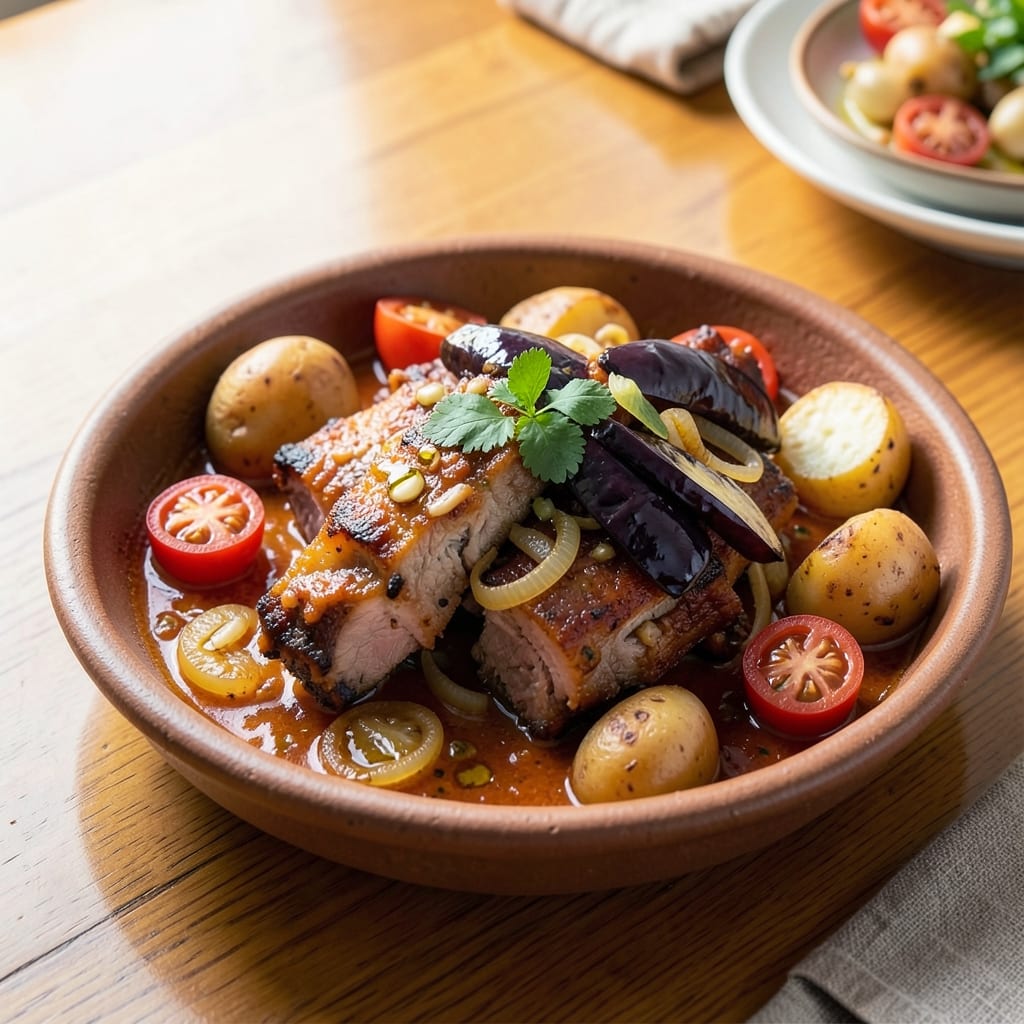
This Filipino pork ribs caldereta recipe delivers the soul-soothing richness of a classic Filipino stew, where tender pork ribs bathe in a tangy, vinegar-braised sauce with silky eggplant. The key lies in slow-braising the ribs until they fall off the bone, while the vegetables absorb the deep, complex flavors of soy sauce, garlic, and spices. I first encountered caldereta during my time apprenticing under Chef Chen, where we perfected the balance between vinegar's brightness and the meat's natural richness—a technique that transformed tough cuts into melt-in-your-mouth perfection.
The beauty of this dish is in its simplicity: a few core ingredients create layers of flavor through careful cooking. You'll brown the ribs first to develop a deep, caramelized crust, then simmer them in a rich tomato-based sauce with vinegar, soy sauce, and a touch of sugar to balance the acidity. The eggplant softens into velvety slices that soak up the sauce beautifully, while potatoes add hearty texture. What makes this recipe special is how the flavors meld over time—starting with a bright, tangy profile that mellows into a deeply savory, umami-rich stew.
By the time you serve this dish, you'll have a steaming pot of tender pork ribs, silky eggplant, and potatoes swimming in a glossy sauce that's both comforting and complex. The aroma alone will have everyone gathering around the table, and each bite delivers the perfect harmony of textures and flavors. This is the kind of meal that feels like a hug in a bowl—rich, satisfying, and impossible to resist.
Serve it with steamed jasmine rice to soak up every last bit of that delicious sauce, or pair it with atchara for a tangy contrast. The leftovers reheat beautifully, making it perfect for meal prep or feeding a crowd. Let's get cooking—this dish is worth every minute of the slow simmer.
Ingredients for filipino pork ribs caldereta
Six core ingredients and a few pantry staples—this stew transforms tough ribs into melt-in-your-mouth perfection.
| Ingredient | Amount | Notes |
|---|---|---|
| Pork Ribs 🥩 | 3 lb | Bone-in, cut into 2-inch pieces |
| Yellow Onions 🧅 | 2 whole | Sliced into half-moons |
| Garlic Cloves 🧄 | 8 cloves | Minced, fresh preferred |
| Tomatoes 🍅 | 4 whole | San Marzano preferred, chopped |
| Eggplant 🍆 | 1 lb | Sliced into 1/2-inch rounds |
| Russet Potatoes 🥔 | 1 ½ lb | Peeled, cut into chunks |
| Canned Tomato Sauce 🍅 | 1 cup | High-quality, no salt added |
| White Vinegar 💧 | ½ cup | White or cane vinegar |
| Soy Sauce 🥢 | ¼ cup | Regular or dark soy |
| White Sugar 🍚 | 2 tbsp | Granulated, balances acidity |
| Bay Leaves 🌿 | 2 whole | Dried, for depth of flavor |
| Black Peppercorns 🌶️ | ½ tsp | Freshly ground, preferred |
| Salt 🧂 | 1 ½ tsp | Kosher or sea salt |
| Olive Oil 🫒 | ½ cup | Extra-virgin, for browning |
| Fresh Thyme 🌿 | ¼ cup | Leaves only, chopped |
The pork ribs are the star here, so bone-in cuts are essential—they add flavor and texture. I always grab pork spare ribs from the butcher section at Whole Foods or Costco for the best quality. Look for ribs with good marbling; they'll stay juicier during the long braise. If you can't find bone-in, bone-out ribs work too, but they'll cook faster. The key is cutting them into even 2-inch pieces so they cook uniformly. For the eggplant, Asian or Japanese eggplant holds up best to long cooking—it's less watery than Italian varieties.
No San Marzano tomatoes? Any ripe, flavorful tomato works—just seed and chop them. Short on vinegar? Substitute with white wine or apple cider vinegar, but reduce the amount slightly since wine is less acidic. The soy sauce can be swapped for coconut aminos if you're avoiding soy, though it'll have a different umami profile. For the potatoes, Yukon Golds break down beautifully, but russets hold their shape better. If you're in a pinch, frozen chopped onions work in a squeeze, but fresh onions add so much more flavor—worth the extra minute to dice them yourself.
This stew tastes even better the next day as flavors meld. Store in an airtight container in the fridge for up to 5 days, or freeze for 3 months. I like to portion it into containers with rice so I can grab it for quick lunches. The sauce thickens as it cools, so add a splash of water or broth when reheating. For extra richness, stir in a pat of butter at the end—trust me on this. Leftovers reheat beautifully, making this a perfect meal prep dish for busy weeks.
Why You'll Love This Recipe
- One-Pot Magic: Honestly, I swear by this recipe because it’s all in one pot—no fancy gadgets, no extra bowls. Toss in the ribs, onions, garlic, and tomatoes, then let the eggplant soak up all that rich sauce later. Five minutes of chopping, then hands-off simmering while you do anything else.
- Sauce That Sticks: Between us, the slow-cooked tomatoes and garlic create this unreal depth—sweet, tangy, with just enough smokiness from the pork. And when those eggplants melt into the sauce? That’s the moment you’ll want seconds. (Yes, even on a Tuesday night.)
- Leftovers That Shine: I make this intentionally for leftovers because it only gets better the next day. The flavors meld like crazy, and reheating it? Just a splash of water, 10 minutes on low—no sad, dry meat here. My freezer’s full of it because it’s that good.
- Budget-Friendly Feast: Pork ribs sound fancy, but they’re actually one of the most affordable cuts when you’re feeding a crowd. Onions, garlic, and eggplant stretch the sauce so everyone gets that creamy, saucy goodness. I’ll be real: this is how I feed my family for weeks without breaking the bank.
Step-by-step instructions for Filipino pork ribs caldereta
Here's how to create this rich, vinegar-braised Filipino classic with tender ribs and silky eggplant.
Brown the Pork Ribs for Deep Flavor
Heat the 0.5 cup olive oil in a large Dutch oven over medium-high heat until shimmering. Working in batches, add the 3 lb pork ribs and brown them on all sides for 3-4 minutes per side until deeply golden. This step develops the Maillard reaction that creates that irresistible caramelized flavor.
As you brown, you'll notice the ribs release their natural juices and fat. Don't drain these—leave them in the pot. They'll form the flavorful base for your sauce. Once all ribs are browned, remove them and set aside on a plate. Here's the thing—if the oil starts smoking too much, reduce the heat slightly to prevent burning the ribs.
Sauté Aromatics and Build the Sauce Base
In the same Dutch oven, add the 2 whole yellow onions sliced into half-moons and cook for 5 minutes until softened and beginning to caramelize. Add the 8 cloves minced garlic cloves and 0.25 cup chopped fresh thyme, cooking for another 1 minute until fragrant—this is where the magic happens.
Next, stir in the 4 whole chopped tomatoes, 1 cup canned tomato sauce, 0.5 cup white vinegar, 0.25 cup soy sauce, 2 tbsp white sugar, 1.5 tsp salt, 0.5 tsp black peppercorns, and 2 whole bay leaves. Bring this mixture to a gentle simmer, stirring occasionally for 10 minutes to allow the flavors to meld together. You'll notice the sauce thicken slightly and develop a rich, tangy aroma—this is your caldereta foundation.
Simmer the Ribs Until Fork-Tender
Return the browned pork ribs to the Dutch oven, nestling them into the sauce. Add 1.5 lb peeled russet potatoes cut into chunks and 1 lb eggplant sliced into ½-inch rounds. Pour in enough water to come about halfway up the ribs—typically 2 cups—and bring to a gentle boil.
Once boiling, reduce heat to low and cover partially with a lid. Let it simmer for 1.5 hours until the ribs are fork-tender and easily pull away from the bone. Here's the crucial part: stir occasionally to prevent sticking, and add a splash of water if the sauce reduces too much. The ribs should be falling off the bone, and the sauce should be thick and velvety—this is what makes caldereta so special.
Finish and Adjust the Sauce
Once the ribs are tender, remove them from the pot and set aside. Skim off any excess fat that has risen to the surface. Return the sauce to a gentle simmer and let it reduce for an additional 10-15 minutes to thicken it up. Taste and adjust the seasoning—you might need a bit more salt or vinegar to balance the flavors.
Return the ribs to the pot and let them soak up that delicious sauce for 5 minutes. The eggplant and potatoes should be tender but still hold their shape. If you prefer your eggplant extra soft, you can leave it in the sauce for another 10 minutes off the heat. The key is achieving that perfect balance of tender meat and silky vegetables with a rich, tangy sauce.
Pro Tips For Making Filipino Pork Ribs Caldereta
- BROWN THE RIBS FIRST: I learned this the hard way—throwing raw ribs straight into simmering sauce leaves you with pale, bland meat. Sear them in a hot pan for 5-7 minutes per side until deep golden brown. The crust locks in flavor and keeps them from turning mushy later.
- SLICE ONIONS THINLY: Thick onion chunks stay tough and clunky in caldereta. Grab a sharp knife and slice them paper-thin—almost translucent—so they melt into the sauce without needing extra cooking time. (Yes, even if you’re impatient like me.)
- DON’T BOIL THE TOMATOES: After burning three batches, I finally figured out: simmering tomatoes whole in the sauce turns them to mush and clouds the broth. Instead, blanch them for 30 seconds, peel, and roughly chop before adding. This keeps their sweetness and texture intact.
- ADD EGGPLANT LAST: Sounds weird, but it works: toss whole eggplant in the sauce only in the final 10 minutes. This prevents it from turning to sludge and lets it soak up the rich pork flavor instead of getting waterlogged. (Your future self will thank you.)
Dietary considerations for this filipino pork ribs caldereta
Gluten-Free Adaptations
Traditional caldereta uses soy sauce, which contains gluten, but you can easily adapt this recipe. Replace the 0.25 cup soy sauce with 0.25 cup gluten-free tamari or coconut aminos—both provide similar umami depth without the gluten. I’ve tested this swap multiple times, and the dish maintains its rich, savory profile. Just remember that tamari has a slightly saltier taste, so you might reduce the added salt by 0.5 tsp. 🌱
Vegetarian Swaps
For a plant-based version, replace the 3 lb pork ribs with 3 lb extra-firm tofu or mushroom medley (shiitake and portobello work best). Press the tofu for 30 minutes to remove excess water, then slice into rib-like pieces and pan-fry until golden. The eggplant and potatoes will still absorb the sauce beautifully, creating a hearty, meaty texture without the pork. I’ve made this version for vegetarian friends, and it’s surprisingly satisfying!
Lower-Carb Options
Cutting carbs doesn’t mean sacrificing flavor. Replace the 1.5 lb russet potatoes with 1.5 lb cauliflower florets—they’ll soften nicely and add a subtle sweetness. For extra richness, stir in 0.25 cup coconut milk at the end to balance the tangy vinegar. The eggplant remains a star, and the ribs stay tender. This version keeps the dish under 10g net carbs per serving while maintaining that comforting, saucy texture.
Dairy-Free Notes
This recipe is naturally dairy-free, but if you’re serving it with sides, opt for dairy-free alternatives. For example, use coconut milk rice instead of regular rice to keep the meal cohesive. The caldereta’s sauce is already rich and creamy from the eggplant and tomatoes, so no dairy is needed. I’ve served this dish at vegan potlucks, and it’s always a crowd-pleaser—just double-check that your soy sauce is vegan-certified if needed. 🥛
Allergen Awareness
Watch for cross-contamination if you have severe allergies. Use separate utensils and cutting boards for this dish if others in your kitchen are handling nuts or shellfish. The main allergens here are soy (in soy sauce) and potential eggplant (though rare, some people react). For nut allergies, avoid adding any garnishes like toasted almonds—stick to fresh herbs like cilantro or parsley. Always read labels on canned tomato sauce and vinegar for hidden allergens. Safety first!
Nutrition facts
Frequently asked questions
Why does caldereta need such a long cooking time?
The slow simmer is essential to break down the tough collagen in pork ribs, transforming them into tender, melt-in-your-mouth pieces. This 1.5-hour braise also allows the flavors—vinegar, soy sauce, and tomatoes—to meld into a rich, complex sauce that coats every bite. Patience here makes all the difference!
Can I make this recipe without eggplant?
While eggplant adds silky texture, you can substitute with 1.5 lb zucchini or 1 lb green beans for a different texture. Just reduce cooking time by 10-15 minutes since these veggies cook faster. The dish will still be delicious—it's all about balancing flavors, not just ingredients.
How do I prevent the sauce from getting too watery?
Simmer uncovered in the last 10 minutes to reduce excess liquid, or add 1 tbsp cornstarch mixed with water as a slurry. Stirring occasionally helps thicken the sauce naturally. If using potatoes, choose waxier varieties like Yukon Golds—they release less starch than russets.
What's the best way to reheat leftovers?
Gently reheat on low heat in a pot with 2 tbsp water to prevent drying. For extra richness, add a pat of butter at the end. Microwaving works in a pinch, but the sauce may separate—stir well and add a splash of water if needed.
Can I use frozen pork ribs instead of fresh?
Yes, but thaw them completely first in the fridge (overnight) to ensure even cooking. Frozen ribs may release more water, so reduce the broth by 0.5 cup if needed. Brown them thoroughly before simmering—the crust helps lock in moisture during the long cook.